Thursday, June 11, 2020

         Earlier this week, in the Zoom meeting of my atheist discussion group, we talked, again, about the possibilities of CRISPR.  As you may recall, CRISPR is a remarkable technique, still very nascent yet very much in experimentation, which enables people to literally change genes in a human being.  CRISPR means that researchers can, in effect, prevent a person from developing a genetic disease such as sickle cell anemia by merely altering this person's genes.
     That's the good news.  On the other side of the coin, researchers can also use CRISPR to "make" a human being according to a parent's specifications.  By altering genes, researchers can ensure that a baby will be born, say, highly intelligent or extraordinarily good looking.  Or emotionally stable.  Or something else.
      The question we therefore face is this:  where do we draw the line?  And the group had no ready answers.  In the end, it seemed that the group landed on a sort of pragmatism, that is, if it works to human betterment, it is right.  But how do we define human "betterment"?  Or how do we define "what works"?  Or what is "right"?
      The weakness of a morality constructed around itself became immediately apparent:  if all we have is this world to decide, then we will use this world to decide.  And we will be right back to square one.

Tuesday, June 9, 2020

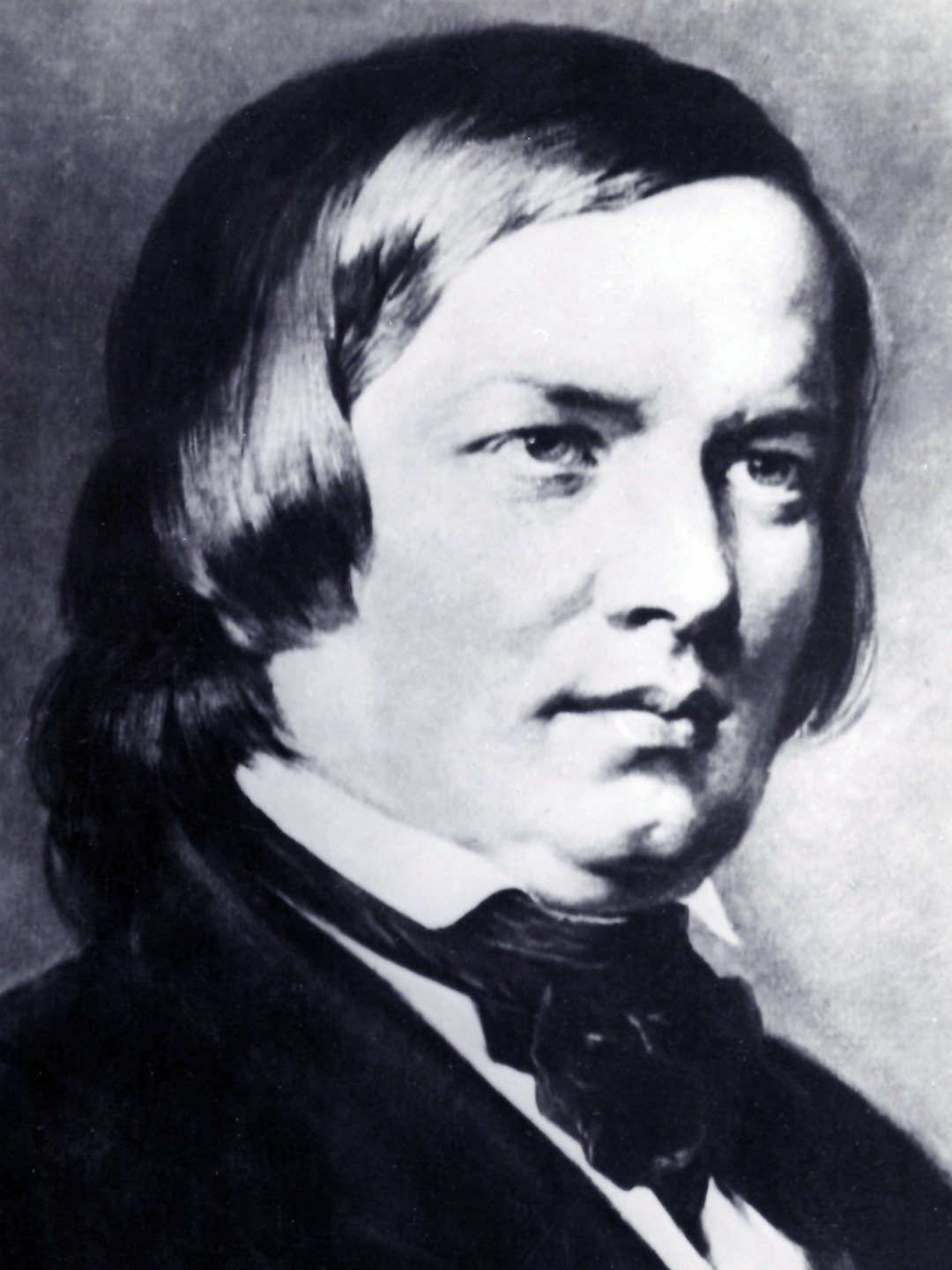
     A couple of days ago, the world of classical music remembered the birthday of the composer Robert Schumann.  Like so many of his contemporaries, Schumann died young, passing out of this world at the age of 45.  In his relatively short life, however, he composed some of the most lovely and ethereal melodies of all time.  His music was full of fantastic and images of other worlds, calling us to dream of things beyond ourselves.

Image result for robert schumann     Ah, the Romantics.  Rebels to the Industrial Revolution, advocates of the senses and imagination, creators of a new picture of God.  Sliding in and out of the nineteenth century, the Romantics strove to push Western Europe past its obsession with technology and open its eyes to new possibilities of what humanity can be.  We are not mere robots of mind and materiality, they said, but creatures of the heart.

     And why not?  We live in a personal world created by a personal God.  Unless we acknowledge this, we would not otherwise know what to do with whom we suppose ourselves to be.

Friday, June 5, 2020

     It was my dear aunt Jeanne who introduced me to the art of Paul Gaugin.  Over twenty years ago, she and my mother traveled to Chicago to take in an exhibit of his work at the Art Institute.  I'm so happy she did.  Today, Gaugin is most well known for his depictions of the people of Tahiti, the island on which he spent his later years.  These paintings depict another world, a world of rest and leisure, openness and unconstructed possibility, a world which people do not try to shape for their own ends, but a world they allow to speak to them.  And from which they learn.
Image result for day of the god gauguin


     Many Christians point to God's commands, as they are recorded in Genesis, to Adam and Eve to "rule and subdue" the world as justifying anything people might do to survive on this planet.  This is risky exegesis.  To rule well is to care and steward that which one rules, to let the world be as it should be.
     Not to twist it into what we think it should be.  The freneticism of the West often blinds it to what life is.
     Thanks, Monsieur Gaugin.  Happy trails.

Thursday, June 4, 2020

     Although for some of us, fire can be an enormous challenge, a force that can, in the space of a few minutes, destroy everything we own.  For others, for instance, those of us who live without electricity and access to the appliances that come with it, fire is a wonderful thing.  For still others, for people who spend time outdoors, camping, hiking, and backpacking, fire can be a welcome comfort on a chilly evening.  And for some more of us, a fire is an added delight in an already warm house on a winter night.
     Many decades ago, when I was doing community development and activism in East Texas, I often visited homes, homes in the poorest parts of the county in which I worked, homes whose sole heating source was a fire.  With dirt floors.  In the United States of America.  Given the systemic racism of the region, I was not surprised:  many people of color were excluded from the economic mainstream.  But I was appalled.
Fire - Wikipedia     In many religious traditions, Rastafarian to Hinduism to Zoroastrianism to Judaism and Christianity, however, fire plays a formative role in spirituality.  Symbolically and figuratively, fire is a great purifier.  It speaks of refinement, it speaks of enablement, it speaks of power.  Fire is a phenomenon that frames the call of our lives, a summons to step into the greater power around us so as to capture what we otherwise cannot.  To find the hidden truth of reality.  To embrace the knowing unknown.
     In this week of Pentecost, a Jewish as well as Christian holiday, think about fire.  Think about its wonder and its tragedy, yes, but think also about its posture of transcendence, a transcendence that opens a new world of light.  A light that never ends.


Wednesday, June 3, 2020

Did you know the Arabian desert used to be a green jungle?     I've written before about the power of the desert.  It's weighty and timeless.  As I have been reading Wilfred Thesiger's Arabian Sands, his account of his long ago travels in the so-called Empty Quarter of Arabia, I find myself struck anew at the profundity of those distant sands.  As Wilfred writes, "Time and space were one.  Round us was a silence in which only the winds played, and a cleanness which was infinitely remote from the world of men."  It's no accident that prophets of all religious ilk frequently found their calling in the desert:  where else can we find a place, on this planet, in which time and space are one?
     Or a "cleanness" that is "infinitely remote" from all else?  It is the desert's ability to scour our hearts, minds, and imaginations that represents the core of its power.  We're helpless in its grip.
     And being helpless, be it, as Neil Young sang many decades ago, the inability to fathom the meaning of geese flying across a full moon in late summer, or, even more deeply, feeling inadequate before the idea of God, is what we, frail humans we are, ought to be.  Yes, we can reason, and yes, we can investigate and discover, but no, apart from opening ourselves to the metaphysical unknown, we will never know the full meaning of who we are.
     Helpless we live, helpless we die.  Why?

Tuesday, June 2, 2020

     Are you hungry?  Probably not.  At least not in a way that approaches starvation.  World hunger has always been with us, of course, but it seems even more pronounced in the wake of the coronavirus pandemic sweeping the globe.  Most tellingly, it has hit places  in which one would not normally expect it to happen:  the West.
     On the other hand, it's not surprising.  In many ways, the Western economies are built on debt, a massive web of interconnected debt.  Nations owe nations, states owe states, corporations owe banks, people owe each other.  Remove one pillar of this shaky edifice, and millions suffer.  Those at the bottom have nowhere to go:  their lives and jobs are expendable.  But those at the top are fine.  They can insulate themselves from the pain.
     This is not God's way.  God doesn't want people to go hungry.  God doesn't want people to be exploited.  God doesn't wish for the few to live at the expense of the many.
     Did not the early church, as Luke so carefully writes, "Hold everything in common?"

Monday, June 1, 2020

     As violence over the death of George Floyd continues to sweep across America, numerous government officials, media pundits, and other commentators have weighed  in.  All reject the mayhem, and most, in some way, affirm the rightness of the protestors' anger.  Almost uniformly, they say that, well, they understand the reasons for the rage.
     Unless one is African-American, however, she cannot really understand the experience of being, even after over one hundred and fifty years since Abraham Lincoln announced the Emancipation Proclamation, socially, economically, and culturally disenfranchised.  Such shoes can only really be worn by those who own them.  Not to say that an outsider cannot support or sympathize, just that, unlike being poor, for instance, being a person of color is an entirely different type of cultural experience.  It's hard to "walk a mile" in another's shoes if those shoes are shoes that one will never be able to wear.
     I weep over George Floyd's passing; I tremble at the racial animosity in America.  I feel profoundly sorry for those who feel so unwelcome in their own country.  But I'm white.  I don't normally encounter high levels of racism; I do not regularly experience being the target of focused and intentional social hatred.  I can't possibly know what that is like.
     It may seem trivial, it may seem trite, but I believe, with Martin Luther King, Jr., that, as he once observed, the arc of the universe bends toward justice.  And like King, I don't believe this only because of the power of social movements, though I endorse them strongly.  I ultimately believe this because I believe that, when all is said and done, we live in a world created, in some fashion, by a loving and personal God.