Wednesday, January 20, 2021

      As many Americans, and likely many non-Americans as well know, today is the inauguration of Joe Biden as the president of the United States.  Although too many people in America continue to insist that Biden didn't really win the election, that his "forces" stole the election from the incumbent, happily for the country, every single American court to which they have appealed has dismissed their objections over a profound lack of evidence.
     Where does America go from here?  More to the point, where do the, again, too many evangelical Christians who have chosen to cast their lot with the conspiracy theorists and others who continue to promote these specious claims?  I'm not sure, really, I'm just not sure.  While I believe in the fact of God as much as they, I continue to be deeply puzzled by such epistemological schizophrenia:  whatever are they thinking?
     Or does faith as trust in God in the end hinge on no more than one's political leanings and convictions?

Monday, January 18, 2021

     As many of you may know, today the U.S. remembers the birthday of civil rights activist Martin Luther King, Jr.  Central to this commemoration is King's belief, a belief he shared with millions of others, that freedom, the ability to do what one chooses, when one chooses to do it, is one of humanity's greatest privileges and blessings.  We all deserve to be free.

Martin Luther King Jr.

     For this is what God wants.  He made us to be free, to free to choose, to be free to do.  To be free to live as we like.

     Freedom is wonderful, and freedom is intoxicating.  But freedom can be frightening.  We often do not know what to do with it.  We frequently do not know what its fullness really means.  We frequently miss the point.  We abuse it terribly.
     Maybe that's why, as John records it in chapter eight of his gospel, Jesus told his audience that, "You shall know the truth, and the truth shall make you free."  True freedom is to know the truth:  the truth of the fact of God.  King knew this well, and steadfastly centered his call for freedom in the presence of God.  He knew that freedom is only meaningful if it is grounded in something bigger than itself.
     He knew that freedom is more than a release from physical bondage, a slip of one material experience to another. 
     As we remember King's birthday, we also remember that the freedom he preached is ultimately, as Gandhi observed in his explication of satyagraha, self-discovery in truth.  We are not free in an accidental universe, a cosmos without definition; we are free in a universe made real by truth itself.

Wednesday, January 13, 2021

      Despite the controversy it provokes in many parts of the world today, euthanasia is not a novel concept.  It did not suddenly emerge in modern times.  Literally "good death," euthanasia has been practiced for nearly the entire history of humankind.  Some have labeled it merciful, others have called it merciless.
     On one side of the debate is the steadfast insistence on human freedom.  On the other is the equally steadfast insistence on the freedom of God.  In other words, if I may express it rather vernacularly, who is charge?
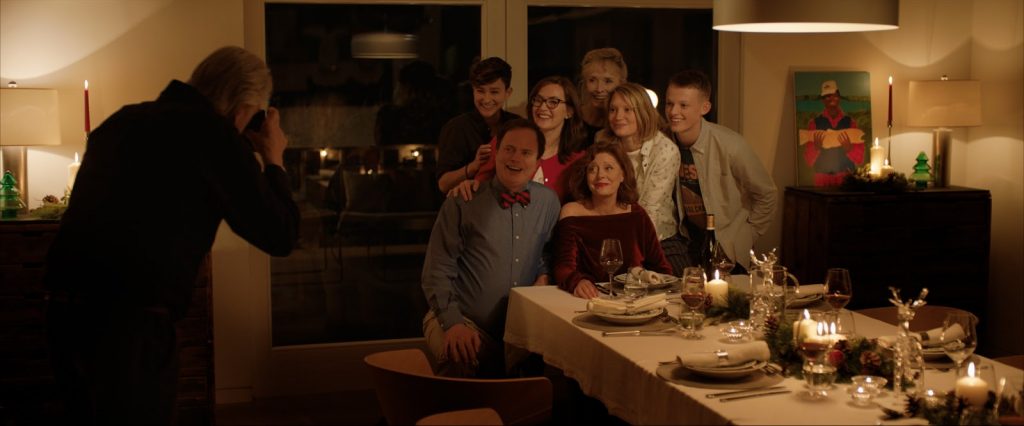
     I pondered these questions anew when the other night my wife and I watched "Blackbird," a movie featuring Susan Sarandon as a woman who, overwhelmed with the prospect of a life with ALS, has decided to end her life.


     The weekend before she has scheduled her passing, this woman invites her children and their children to the lovely oceanside home she shares with her husband of many years.  Everyone spends the weekend together, laughing, crying, even celebrating Christmas.  Quarrels and fights happen, too, but are smoothed out in the end.  Throughout the movie, we are invited to observe the thoughts of a person who knows precisely when she will die.
     Theology and philosophy aside, would I like to know precisely when I die?  Would you?  It's a complicated question.  Countless writers have remarked on the virtue of suffering and its role in the human experience.  Many others have responded that, while suffering is part of existence, why let it happen when we can prevent it?  When do we decide when a life is over?
     No one can.  Nor should anyone want to.  Though we humans are fully capable of starting and ending life, we in no way can define it.  Nor will we ever be able to explain the meaning of its end.  How can we grasp the end of something we did not make?

Monday, January 11, 2021

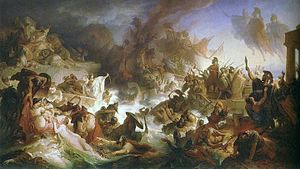
      Early on in Heaven's Breath:  A Natural Study of the Wind, his magisterial examination of wind, Lyall Watson describes the wind's role in various historical events.  In particular, he notes two of the most pivotal battles in ancient and early modern history.  One is the Greek triumph over the Persians at the Battle of Salamis in 480 BCE, the other is Britain's defeat of the Spanish Armada in 1588 CE.
     In both instances, it was wind that ensured the outcome of the fight.  With his intimate knowledge of wind patterns in the Gulf of Argos and the Aegean Sea, the Greek commander Themistocles managed to lure a much larger Persian fleet into a place in which the Persians were at the mercy of the prevailing waves and winds.  Had the Greeks not won, the world may not have been introduced to the powerful philosophical and political observations on which we base Western civilization.

Kaulbach, Wilhelm von - Die Seeschlacht bei Salamis - 1868.JPG

     Similarly, although the British navy did indeed defeat the Armada in open sea combat, its task was made much, much easier by a powerful southwesterly wind which had previously hit and seriously crippled the Spanish fleet.  The armada that Britain fought in the Straits of Dover was a pale facsimile of its original size.  As a result, Protestantism went on to flourish in England and, eventually, the entire British empire.  One subsequent outcome was the founding of the United States of America.
     What's the point?  Although actors on both sides of these conflicts undoubtedly prayed that their god would prevail, we are left to wonder how did, if God did take sides, an unanswerable question at best, his action interface with that of the actions of the natural world.  Whose action really prevailed?
     And whose history is most important in the eyes of the divine?

Friday, January 8, 2021

     In her Blockchain Chicken Farm, a set of "Stories of Tech in China's Countryside," Xiaowei Wang recounts what they (Wang prefers the "non-gendered" form of address) has seen after exploring and examining how various parts of rural China are faring in the "Internet" age.  Some, they report, have capitalized on the opportunity this "age" presents, and are doing very well financially.  Others continue to be left out of the cultural and economic mainstream.
     I share this not because I wish to evaluate the state of rural China, but rather to consider an observation which Wang makes midway through their text.  “Yet the irony is, freedom will always slip away when grasped too firmly.”  As laissez-faire capitalism, a system which is, in truth, rather Darwinian, continues to capture minds and hearts around the word, we must always ask:  at what price?
     Unfettered and untamed, the laissez-faire marketplace, as a senior partner at the investment firm Goldman Sachs noted recently, makes profit the sole criterion of success.  Profit is the only thing worth pursuing.
     Morality is not the point.
     Is this really what freedom should be?


Thursday, January 7, 2021

      George Blake.  Ever heard of him?  Blake served as a spy for Great Britain for a number of years, then became a double agent for the Soviet Union.  Eventually caught, he served forty-two years in prison before staging a dramatic escape to Moscow.  He lived there the remainder of his life.  He was ninety-eight when he died.  Vladimir Putin himself heaped lavish praise on Blake in announcing his passing.
George Blake spy.jpg     

     And why not?  Blake's work for the Soviets deeply undermined, even fractured British espionage efforts in Eastern Europe.  In addition to transmitting much top secret information from Britain to the Soviets, Blake's work also resulted in the death of several British spies who had buried themselves deep in the Soviet networks.  The damage was incalculable.
     Yet Blake lived a very long life.  Others of much more noble character and activity, relatively speaking, lived very short lives.  On the tiny orb we call Earth, we wonder why, given the few years each of us has to live, this is.  It's an unanswerable question.
     Even if we believe in an afterlife and, perhaps, God.
     Life may be a mystery too complex for us to ever understand.  But we live it anyway.
     Why?  Only because it has a purpose exceeding itself.


Wednesday, January 6, 2021

     Today is Epiphany.  The "last gasp" of the Christmas season, Epiphany (a word meaning, literally, "the manifestion of a divine being"), reminds us of the faith of a group of Persian travelers in the Zoroastrian and biblical prophecies about a coming king.

three wise men

     These texts, the travelers concluded, predicted that this king would, in contrast to other royalty, emerge in humble circumstances, a stable outside Bethlehem, a tiny and forgettable village in southern Palestine.
     In addition, this king would be, these travelers concluded, human and divine.  Small wonder that they made the arduous journey over the Zagros Mountains, across the arid expanse of Arabia, and onto the international trade routes that coursed through the Levant.  Who would have imagined such a thing?
     And that's the point:  who would have imagined that transcendence, God, would appear as a human being?
     Epiphany reminds us that only when we open ourselves to the possibilities of transcendence (which are nearly countless) will we understand what the world is really all about.