Wednesday, December 21, 2022

      If you live in the Northern Hemisphere, you may know that today, December 21, is the winter solstice.  The "shortest" day of the year.  Or as Robert Frost puts it in his "Stopping by Woods on a Snowy Evening," "the darkest night."  Happily, although it may not seem like it, the winter solstice is actually the grand turning point of the year, the day and night in which time and light begin to grow.  It's the end of the light, yes, but its genesis, too.  We lose, yet we win, moving, ever so slightly, toward the greater light to come. 

    I love the winter.  I love how it masks and shrouds, I love how it engages reflection, I love how it sends us into places we would not otherwise go.  And I love how winter helps us "see" what sight can be.  As we trek through these darker days, we come to understand that light is not illumination only.  Light is rather the underlying rhythm of all creation, a continuity of divine favor, a favor that speaks in gloom as well as joy, a favor that underscores the fact of a purposeful planet:  "The Light of the world."

50 Wonderful Winter Pictures — Smashing Magazine      


    Step into the darkness, treasure the light.  Enjoy the marvel of a remarkably consistent--and persistent--personal creation.

Tuesday, December 20, 2022

    As we remember the fourth and final Sunday of Advent and look towards its culminating event, Christmas, I think frequently about its origins.  As the gospel accounts make clear, Jesus was born in Bethlehem (literally, "house of bread"), a town that we might today call a hole in the wall, a little village largely forgotten by the rest of the world. 

    Few people cared what happened in Bethlehem.

     Nor did few people care when, after God told Joseph to take Mary and Jesus and flee the country to avoid King Herod's deadly predations, Jesus lived for a time in Egypt.  Mary and Joseph were likely viewed as just one more set of refugees, one more group of aliens moving through the flotsam of the Empire, their lives a mirror of countless migrations before:  no big deal.

    But this is precisely the point.  Though Jesus was an alien and refugee, born in obscurity and forgotten and overlooked by the rest of the world, he was the one in whom God chose to make himself known.  In Jesus, the poor and forgotten refugee, resided the greatest hope of all time.  It's the ultimate irony, the greatest surprise.  It's God's way of demonstrating to us that just when we think we have everything figured out, be it our views about immigration, aliens, refugees, or anything else, we really do not.

    But isn't that what God is all about?

Monday, December 19, 2022

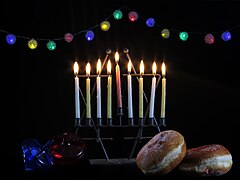
 Hanukkah חג חנוכה.jpg

    Hanukkah (Chanukah) has begun!  Although it is a minor holiday on the Jewish liturgical calendar, because Hanukkah usually occurs around Christmas, it has tended to generate a significant amount of attention in the Western world.  For some, it is considered the Jewish "equivalent" of Christmas.

    While this conclusion is far from the historical and theological truth, it does communicate an important point.  Although Chanukah commemorates the rededication of the Temple after it had been profaned by the Seleucid emperor Antiochus Epiphanes (he sacrificed a pig on the inner altar) in the second century B.C.E. and not the birth of Jesus, it is nonetheless a time to rejoice.

    To rejoice in lights.  To rejoice in the light and faithfulness of God, to delight in God's continuing bestowal of life and illumination to human beings.  Chanukah reminds us that whether we know it or not, each day we walk in the grace of a infinitely remarkable light, a light without which we would not be.

    The light of a personal God.

Friday, December 16, 2022

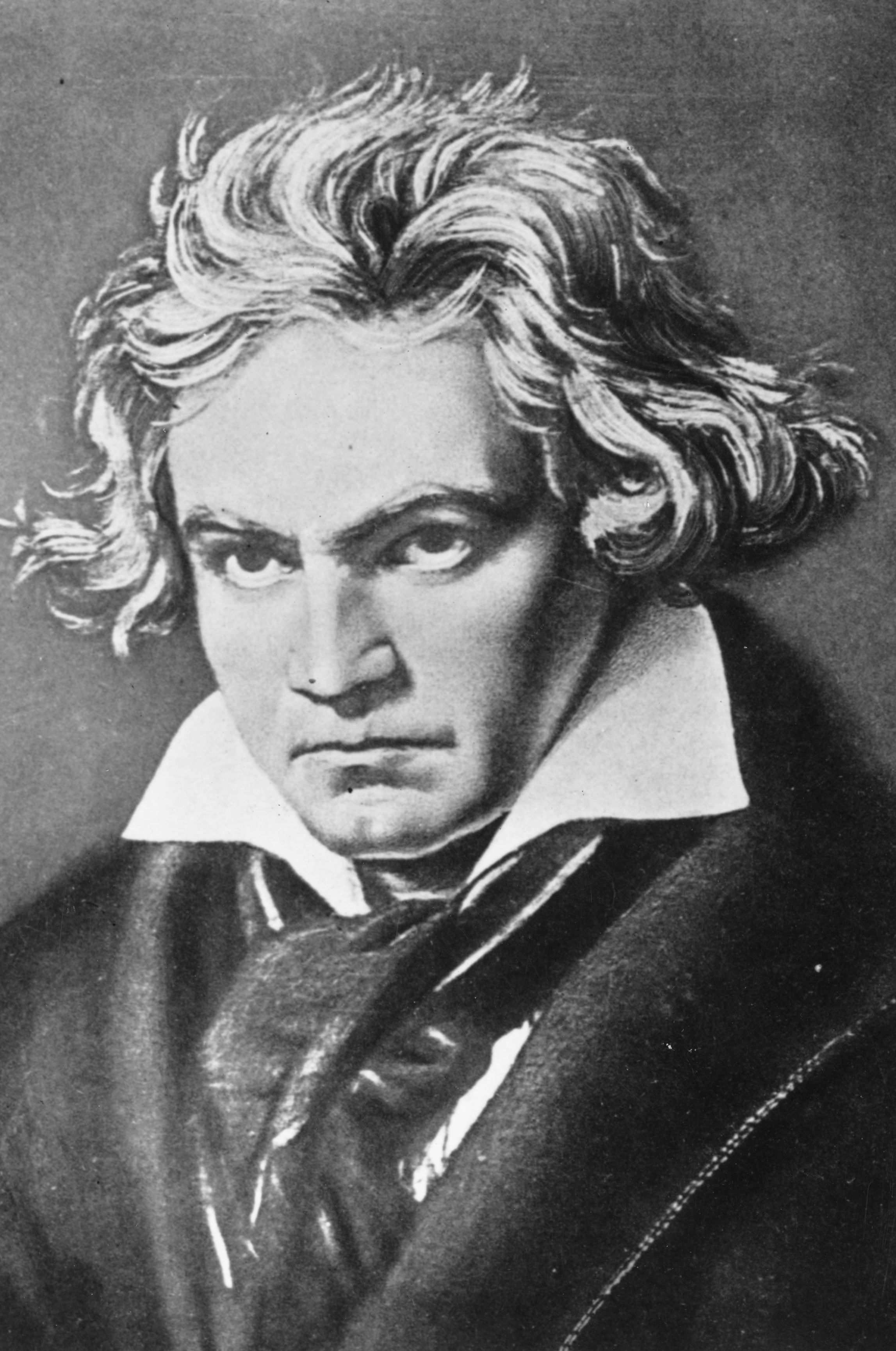
          Today is Beethoven's birthday:  his 252nd.  What can we say about Ludwig von Beethoven?  This famous portrait of him captures how many of us see him:  a brooding, brilliant composer.  Beethoven's music comes to us as a force of nature, barreling and twisting its way into our hearts, breaking our souls apart, forcing us to grapple with and contemplate the deeper forces that drive human existence.  We swoon over the viscerality of Beethoven's melodies, we wonder about the power of the humanness and universe which his songs describe.  A Romantic in the purest sense, Beethoven reminds us of other worlds and other things, of the presence and possibilities of transcendence.

    I thank God for Beethoven.  I thank Beethoven for showing us as we are, beings of mind as much as creatures of heart, dynamically personal entities who are made to step bravely into the contingencies of life, to take hold of everything that is before us.  Although we may never know exactly how Beethoven felt about a personal God, we nonetheless recognize that his music forces us to ponder the mystery that such a being--and presence--lends to existence.

     I thank God for using Beethoven to open and unfold for us glimpses of what we, life, and God, can be.

Thursday, December 15, 2022

 Vassily Kandinsky and Abstract Art    

      Defining spirituality is difficult.  If we attribute it to a god, we miss that many unbelievers attest to having spiritual experiences.  If we assign it to a nebulous immaterial presence, we encounter the problem of making something amorphous and undefinable into something that is physically real.  And if we say that spirituality is thoroughly human, we run into the perennial dilemma of understanding how consciousness can emerge from inert matter.

    Wassily Kandinsky, a Russian surrealist painter, thought much about spirituality in regard to art.  He did so as a way of explaining how art overwhelmed what he considered to be the spiritual darkness of Marxism.  In art, Kandinsky said, we feel hints of transcendence, intimations of things we cannot easily fathom, emotional insights that we do not experience otherwise.  We look into another world, a world of purer light, real or imagined, a world that eclipses the rigid (and, to him, meaningless) materialism of the Marxist worldview.

    Kandinsky's art reflects his words aptly.  It is highly abstract and difficult to grasp easily, but that's the point:  spirituality isn't supposed to be simple.  If it were, it would be no more than another product of our material human whims.
   
    Maybe that's why the Incarnation is so true yet so befuddling.


Wednesday, December 14, 2022

     As I heard about the recent arrests of a group of people, led by a German prince, who had conspired to topple and German government and establish a far right state, I thought about a book published in 1934, shortly after Adolf Hitler became chancellor of Germany.  Written by Lion Feuchtwanger, this book is titled The Oppermanns.

Die Geschwister Oppenheim (Oppermann).jpg

    The Oppermanns is a study in the horrifyingly insidiousness of the creep of anti-Semitism.  It describes the lives of a few Jewish families trying to live in the aftermath of Hitler's rise to power.  One by one, each family comes to grasp the reconditely burgeoning enormity of the anti-Semitism that is sweeping across Germany as the Nazis solidify their hold on the hearts and minds of the populace.  Yet initially, they suppose that everything will be fine.  As the days go by, however, they come to realize that, no, things will not be fine.  The State is intent on eradicating every vestige of Jewish existence.

    So it is with us today.  We are often unwilling to accept that our freedom is threatened.  Be patient, be hopeful, we tell ourselves.  Do not worry unduly.  Things will change.

    Sometimes things do change.  Other times, however, they do not.  And then what do we do?

    Isn't liberty, personal, cultural, spiritual, and otherwise, precious?

                                              More than we think.

Tuesday, December 13, 2022

     Perhaps you're familiar with the "heavy" metal group called Metallica.  One of the biggest bands of the Eighties and Nineties, Metallica pioneered the so-called "thrash" metal music that captivated millions of people in their time.  Incredibly fast guitar playing, pounding drums, and screaming and morbid lyrics ripple through their music.

    But it's immensely popular.  Why?  It captures the angst so many people feel, the sense of ennui and helplessness that runs through the hearts and lives of countless people around the planet, the feeling of lost control and empty future that dominate the thinking of so many human beings.

Members of Metallica onstage

    Yet the irony of all this is that, according to a profile of James Hetfield, Metallica's lead guitarist, which I read recently, he, too, struggles to find some sense of permanency in his life and heart.  Though largely happy and immensely wealthy, Hetfield continues to search for his meaning.  He knows there's something more.

    Aren't we all?  Ask almost anyone whether he or she is happy and most of the time that person will respond positively.  Dig beneath the surface, however, and that person will acknowledge that, yes, things are good, but that more often than not, that person isn't sure why or what everything means.

    What does that say about us?

    Maybe there really is a God.

    Advent is upon us.