Wednesday, March 8, 2023

     As March continues on its merry way, I take a moment to mention that today is International Women's Day!  Moreover, March is, as a drinking mug I inherited from my mother always reminds me, Women's History Month.  It's about time.  For too long, historians tended to overlook women and the role they played in moving humanity forward.  Conditioned by the social nuances of their times, and driven, perhaps, by various levels of cultural chauvinism or myopia, most historians, traditionally male, dismissed the contributions that women have made to the human adventure.

    If we are to hold that men and women are both made in the image of God and are therefore of equal worth, we err, err seriously, when we ignore, reject, or pass over the many ways that women have shaped human history for its good.  It's tragic, really:  we are in truth forgetting the meaning of the framework, physical as well as metaphysical, in which the universe functions.  It's no accident that when the writer of Proverbs 8 described wisdom, he personified it as a woman.  He knew.  He knew that male and female are woven deeply into the created order.

    And why not?  Without women, none us would be here today.  Therefore, whether you believe in God or not, believe in the worth of every human being, male and female all.  Celebrate who we are!

Tuesday, March 7, 2023

ChatGPT logo.svg

     Have you experimented with Chat GPT?  It's rather amazing, yes, but at the same time rather unnerving.  Yet those who have developed it insist that Chat GPT will enhance our lives.  Maybe so, but maybe not, too.  This raises one of the thorniest issues about the technology that daily makes increasing numbers of inroads into our lives.  Even if we can do it, that is, develop AI to the level of Chat GPT, should we?  And if we should, why should we?

    The human mind is extraordinarily supple and fecund.  It is capable of astonishing things, AI being one of them.  Yet the mind really has no master.  We humans cannot tame it.  We can only use it.

    And is utility a starting point for morality?

Thursday, March 2, 2023

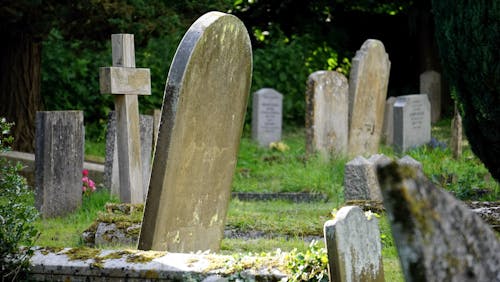
Close-up Photography of Concrete Tombstones     This past Sunday marked the first Sunday of Lent.  Repentance and circumspection dominate, as those so inclined spend ever more time pondering the exigencies within their lives, the fleeting puffs of materiality in which we have life and breath.  Life looks more remarkable than ever:  a befuddling experience, yes, but the only experience, at this point, we have.


    Given the wonder of the world, it's easy to rejoice in life without also wondering why life is, why we have it, why this existence has been given to us.  To what end do we live?
 
    This is Lent's call.  Lent invites us to look at what matters most.  Who will we really be when we leave this world:  ashes or creatures of eternity?

Wednesday, March 1, 2023

    March 1:  the birthday of the composer Frederic Chopin.  One of the most dazzling musicians of the Romantic Era, Chopin in his too short life (he died at the age of 39) composed a host of memorable pieces for the piano.  His works are marked by an exuberance of life that resonates with the sounds of memory and contemplation.  We listen to them today and think about how his modest Polish origins blended with his relatively cosmopolitan lifestyle (he was well acquainted with Hungarian composer Franz Liszt and the novelist George Sand) to produce melodies that speak to many parts of our souls.

    As Lent continues apace, we find special call to remember Chopin.  We remember his creativity, we remember his vision.  We remember his angst and his brief existence.  And we realize, again, that we live in a beautiful yet tragic world, that we dance on a very narrow line between being here and not, and that we, human beings, magnificent creators though we be, find our humanness most profoundly when we submit to the mystery of who we may not really believe we are.

    But what we will one day be.

    More, in a couple of days, on my trip into the desert wilderness last week.

Friday, February 17, 2023

    Although I will be traveling next week, camping and hiking in the deserts of Southern California, I did not want to let to pass up that next Wednesday is Ash Wednesday, the first day of Lent.  Ash Wednesday reminds us that, whether we believe in an afterlife or not, we are ultimately no more than dust.  When we die and pass out of this life, what remains of us will soon be no more, too, returned to the earth from which it has come.

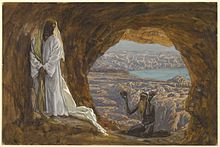
    The illustration on this page is of Jesus during his forty days in the deserts of Israel.  After his baptism but before he began his public ministry, Jesus spend forty days and nights in the desert.  While we do not know exactly what he did in that time (other than fending off the temptations of Satan), we can be sure that he meditated and prayed.  Of what he prayed we cannot be certain, but we can probably be safe on assuming that he, like many of the Jewish prophets before him, found profound solace and insight in the desert.  Being in the desert is an apt picture of journeying through Lent.  It's a constant reminder of who we, frail and fragile humans, really are:  ashes and dust.

    Before my siblings and I scattered my mother's ashes atop her favorite mountain in the San Gabriel Mountains of California in October of 2011, we opened the box that contained "her."  All that Mom ever was had been reduced to a small pile of ashes.  All her years, all her love, all her joy, all her meaning, all her hopes and dreams now no more than a bag of ashes.  It was sobering.

    Even more sobering is that one day, every one of us will be exactly the same.  Happily, however, even as it reminds us of our mortality, Ash Wednesday also reminds us to realize that we are not dust and ashes only. We are spiritual beings, physical creatures with spiritual form and transcendent vision, created by a spiritual and eternal God.

    Much more than this we do not need to know.

Thursday, February 16, 2023

      Alone they were and, like the protagonist of James Joyce's Portrait of the Artist as a Young Man, free.  Quitting their corporate jobs and leaving everything to explore and experience the world, Lauren Geoghegan and Jay Austin traveled as they wished, stepping into cultures and times far from anything they had ever known.

     And along the way, they experienced the goodness of humanity.  Everywhere Lauren and Jay went, they were overwhelmed with outpourings of compassion and hospitality.  People, they wrote, are good.

     One day, however, they encountered a group of men who had sworn allegiance to ISIS. The fairy tale quickly came to a tragic end.  Lauren and Jay are gone forever.

     Nonetheless, Lauren and Jay were not mistaken.  People are good.  Every one of us, every last one of us, is made in the image of a good God.  We are all unique and special and loved by God.  But sin has fractured God's image in us; sin has cracked the mirror.  And horribly bad things happen.

     I don't despair, however.  As the Dutch missionary Corrie ten Boom, arrested and sent to Auschwitz for sheltering Jews during the Holocaust, once said, "There is no pit that God's love is not deeper still."

     Nothing can conquer transcendent love.

Tuesday, February 14, 2023

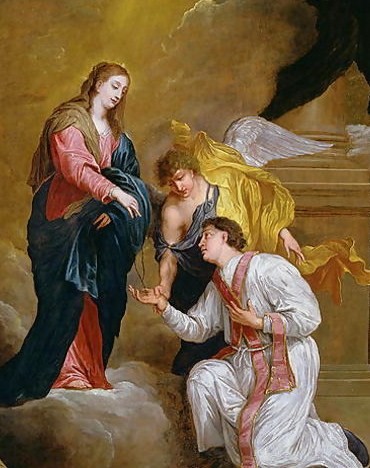
     Although in many ways Valentine's Day, which we remember today, has become (or, I might say, degenerated into) a Hallmark holiday, it actually has a measure of legitimate historical origin.  Its name comes from St. Valentine, one of many martyrs in the early years of the Christian Church.  Valentine gave his life for what he believed to be the greater good of God.

Image result for st valentine    Subsequently, however, as the early Church faded into history, the name Valentine morphed into a day associated with earthly love and romance.  Nonetheless, it's still a good day.  What harm can come from thinking about love?
    
    Years ago, the Beatles sang that, "All you need is love."  In more ways than the Fab Four likely thought at the time, this is one of the truest statements in all the world.  In an impersonal universe, a beautiful but empty cosmos, love remains the greatest thing.
    
    But wait:  how can love exist in a universe without meaning and therefore no words for it?

    Maybe that's why Valentine was willing to die:  he knew that, ultimately, love cannot be without the fact of God.