Wednesday, August 31, 2022

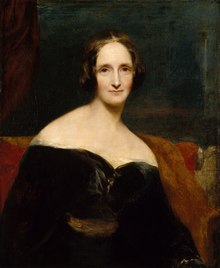
 Half-length portrait of a woman wearing a black dress sitting on a red sofa. Her dress is off the shoulder. The brush strokes are broad.

         Creator of the novel Frankenstein (when she was but in her early twenties)Mary Shelley led a highly fascinating and somewhat tragic life.  Her father was the anarchist author William Godwin, her mother Mary Wollstonecraft, author of A Vindication of the Rights of Women (and who died shortly after giving birth to Mary).  She was also married to the outspokenly atheistic poet Percy Shelley until he tragically died in the Bay of Spiza in Italy in 1822.

    Although most people believe Mary Shelley wrote Frankenstein to critique the Industrial Revolution's focus on the life of the mind while overlooking the supremely important place of the heart, and she did, there might be more to the story.  More precisely, Frankenstein is a parable about the limits of humanness.  In the person of the "monster" (who turns out to be far more intelligent than the 1931 Hollywood movie makes him out to be), Shelley provides an incisive narration of the ultimate emptiness of the human condition.  She powerfully demonstrates that for all of its magnificence, humanity is finally as confused and shallow as the world over which it purports to rule.

    Dr. Frankenstein's words, in the movie, upon seeing the "monster" move its hands, exclaims, "Now I know what it feels to be God!" speaks volumes about Shelley's vision.  What would we do, really, if we were God?  Would we create the world as it is, or would we do something entirely different?  And how would we know either way?

      Can any of us bear the burden?

Tuesday, August 30, 2022

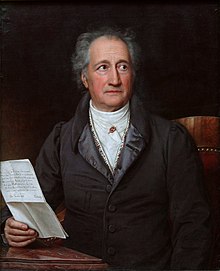
Goethe in 1828, by Joseph Karl Stieler

    "The purpose of this novel was to show how the unmanageable and invincible is often better restrained by love and pious feeling than force."  So said the revered German writer Johann Wolfgang von Goethe in his "Novelle," which he published in 1828.  The "Novelle" is considered to be Goethe's initial foray into constructing a moral narrative, that is, a narrative intended to make a moral point.  Rather than constructing a story with no real point, as many novels published in the twentieth-first century often do, Goethe used the "Novelle" to demonstrate that narrative can be used in ways that transcend plot.  Indeed, the plot is often the moral.

    This notwithstanding, in offering these lines, Goethe is suggesting that, broadly speaking, we can often deal with what seems insuperable or ummanageable in ways beyond brute force.  That it is love which, in the way that love tends to transcend our arrogant human pride and selfishness, often in a manner we cannot readily comprehend, wins the day.  Yes, wars are often won through overwhelming military force.  However, overwhelming military force cannot change the human heart.  For it is the heart in which we find who we most are:  force has no traction when piety and love confront it.  Though militarily speaking force may win, it really does not.

    For if love is not the greatest thing, and if love does not prevail, we are merely spinning our wheels in this complex game we call life.  What otherwise is the point?

Tuesday, August 16, 2022

      Have you seen "Thirteen Lives"?  It presents, in a very dramatic way, the 2018 rescue of twelve members of a Thai soccer team who, due to unexpected flooding, found themselves trapped in the Tham Luang Nang Non cave in the Chiang Rai Province of northern Thailand.  Directed by Ron Howard, "Thirteen Lives," among other things, underscores the immense capacity, despite all that we see in the world each day, of human beings to care for each other.  Over 5000 people from all over the globe came to help get the boys, and their coach, out of the cave.  Every boy, and the coach, survived.  (Sadly, two Thai Navy SEALS who were involved in the rescue effort, died, one to asphyxiation, the other to a blood diseases he contracted in the course of the rescue.)

Image result for thai soccer team rescue photos    Whatever else we may say about the evil that people do, we can point to the rescue of the boys and conclude that, without doubt, people still love to love and they still love to be loved.  Moreover, the world, despite its many malfunctions, is a really good place.

    After the rescue, one of the SEALS remarked, "We are not sure if this is a miracle, or what, [but] all of the 13 Wild Boars are now out of the cave."

    Indeed.  Regardless what forces or agencies that we choose to laud for this remarkable achievement, we can all rejoice.  Life, and the God who made it, are good.

    By the way, I'll be traveling for the next week or so.  Talk to you upon my return.  Thanks for reading!


Monday, August 15, 2022

     Have you ever had a pet rat?  I had three when I was growing up.  They were fun pets, really: active, friendly and cuddly, and adventurous.  The downside is that they do not live very long:  three years at most.

    So it was that my daughter, who loves animals, lost her pet rat recently.  She was quite devastated:  despite appearing to be in excellent health, he only lived two and a half years.  We thought he might beat all the odds and live for five years.  Alas, it was not to be.

Five Things to Know About Rats | Tufts Now

    Those of us who have had pets, particularly mammalian ones, can testify to the hold they exert on us and how easy it is to become attached to them.  In many cases, such pets become like members of one's family, so when they pass on, we mourn, often deeply.

    We could debate for some time about why pets attach themselves to us.  I will only say this:  such attachment serves to underscore how incredibly personal we, and our mammalian friends are.  We are personal beings who live in a personal universe.

    Out of this comes my question:  if the cosmos began with impersonal matter, how did it ever become personal?

Friday, August 12, 2022

     "As for the days of our lives, they contain seventy years, or if due to strength eighty years, yet their pride is but labor and sorrow; for soon it is gone and we fly away."

    So observed Moses, the revered leader of the nascent nation of Israel who led its people out of captivity in Egypt, where they had been enslaved for four hundred years.  These words come from Psalm 90, which tradition holds to be the only psalm Moses wrote.

    Recently, I helped a very good friend, someone I've known for over fifty years, celebrate turning seventy.  Today, at least in the West, in contrast to Moses' words, most of us view seventy as far from the end of living; indeed, if a person dies at the age of eighty, many of us wonder what happened.  My friend believes he has many more years to enjoy his existence.  And, all things being equal, he probably does.

Dust devil Stock Photos, Royalty Free Dust devil Images ...

    But Moses' words belie the quick conclusion that they reflect the thinking of his time and not our own.  His larger point is that, regardless of how many years we live, relatively speaking, the total span of our life is not long.  As one of the characters in the movie "Cloud Atlas" remarked, "Your life is but a drop in an endless sea."

    True enough.  That's why just a few verses further on in the psalm, Moses asks God to "teach us to number our days, that we may present to You [God] a heart of wisdom."

    Nonetheless, life is an amazing gift.  Use it wisely.

    Coram Deo.

Thursday, August 11, 2022

     How do we adjudicate life and death medical decisions?  In 2014, one of my cousins passed away from mesothelioma, an insidious, and largely incurable, form of cancer which doesn't regularly strike women in their sixties.  It was tragic, really:  she left behind a husband, two children, and three grandchildren.

8,951 Hospice Stock Photos, Pictures & Royalty-Free Images ...

    I mention my cousin because a few months ago her husband and I were talking about the ethics of medical costs and decision making.  We agreed that it was very easy for someone to assert that the nation needs to ration, or at least curtail the disbursement of medical care to someone who is clearly dying.  However, as he put it, "I would have done anything to preserve Liz's life."  When we come face to face with death in our family, ethics and financial considerations suddenly become very fungible:  ethics, be they deontological or consequential, quickly fall prey to human emotion.  Numbers and politics cease to matter, and a living outcome becomes the only thing.

    How sad it is when we "weaponize" medical care and decision making and make them political or moral animals in service of larger, and usually irreverent, ends.  I venture to say that, in the big picture, there is a balance.  The deeper problem is understanding enough to find it.

    When we are dealing with matters of death and the deep feelings of longing and transcendence that accompany it, we will eventually find ourselves confronting something far greater:  God.

    And what will we do?

Wednesday, August 10, 2022

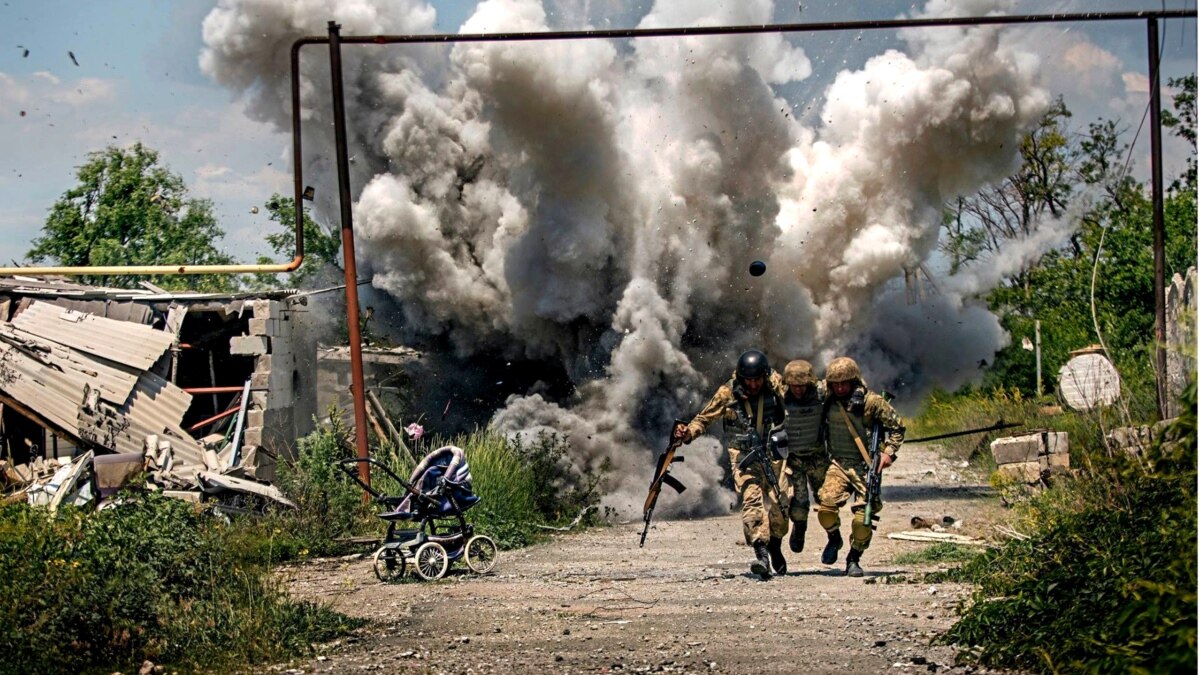
War Of Words Over Ukraine 'Combat' Photo

     Although I realize that war in Ukraine no longer dominates the newsfeeds in the way that it did at the moment of the Russian invasion in February of this year, this war, unfortunately, continues to create immense difficulties and hardships for the people of Ukraine.  Its human toll is singularly devastating:  thousands of lives lost, thousands of homes destroyed, hundreds of businesses gone forever.

    And for what?  In his mad obsession to restore Russian "greatness," Vladimir Putin seems willing to ruin the lives of millions of people, and not just in Ukraine.  If not for the recent agreement to allow Ukrainian grain to be shipped to other parts of the world, the Russian leader's war threatened to drag millions of people into starvation.  It's unconscionable.

    I struggle with the war's destruction, I struggle with the mind of a person bent on aggrandizing himself, and I struggle with the person and place of God.  Though for the first two of these I can find some material explanation, for the latter, I have no ready answers.  It is the dilemma that it poses that constitutes the ultimate challenge of faith.

    For it will not do to respond that, "Well, God has a plan."  For whom?

    No, it is these times that force those of us who believe in an infinite and loving God to make an extremely revolutionary stand:  will we affirm the fact of loving and transcendent purpose in worldly darkness or will we continue to believe that, in a random world, bad things happen and we will never know why?

    The choice is upon all of us.