Wednesday, November 30, 2022

GolodomorKharkiv.jpg

     In an article I read recently, some commentators compared the way in which Russian president Vladimir Putin is systematically destroying Ukraine's energy infrastructure, causing untold hardship to millions of people, to a similar act of genocide, that of the famine that Josef Stalin unleashed in Ukraine ninety years ago.  Holodomor, the Ukrainians called it, "death by hunger," an act of merciless tyranny the nation will never forget.

    Will this present suffering ever stop?  Will the Russians ever relent?  Aside from arming and encouraging the Ukrainian army, the rest of the world can do little to halt the destruction and, concomitantly, the genocide.  How, one asks, will justice ever be done?

    Other than casting this situation in what can be at times a rather opaque and bewildering metaphysical framework of meaning, I don't know.  I really don't know.  The impunity seemingly enjoyed by the Russians at the moment appears to defy all rules of moral logic, present and future:  why?  Darkness, a deep epistemological darkness, covers the land.

    Nonetheless, the world really does have a point.

    How can we suppose otherwise?

Tuesday, November 29, 2022

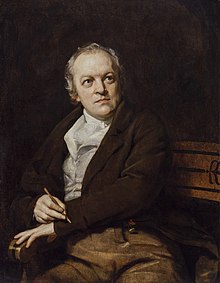
       Widely renowned for his profound and otherworldly poetry, William Blake, whose birthday we remembered last month, wrote some of the most memorable verses in the English language.  Millions of seekers, spiritual and otherwise, have used his lines (in his "Auguries of Innocence), "To see a World in a Grain of Sand, And a Heaven in a Wild Flower Hold Infinity in the palm of your hand And Eternity in an hour" as they meditated on the meaning of their lives.  Millions more have employed the metaphysical fractures running through Blake's "Marriage of Heaven and Hell" to develop their vision for understanding a material reality which at the same time seems permeated with ethereal activity and semblance.  Blake's words capture the essence of the modern quest for wholeness and meaning:  even though life seems mysterious, even futile, we human beings still want to believe that it matters.  So what do we do?

    Blake in a portrait by Thomas Phillips (1807)

    Particularly if, as modernity avers, there is no God.  It is the perennial dilemma of being a human being.  How do we balance what we want to think with what we feel we must believe?

    Blake pushed creativity to its limits, mining life for all he could.  He took hold of existence in full.  He understood very well that if there really is no God, we will always fail to understand the metaphysical strivings of the human being.

     Maybe there's more than we think.


Monday, November 28, 2022

    Believe it or not, yesterday was the first Sunday of Advent.  Christmas is upon us.  "Level every mountain," says Isaiah, "raise every plain.  Make the rough smooth, make the way straight.

    "And all flesh shall see the glory of the Lord."
    
    Isaiah is telling us to get ready, to get ready to commemorate, once more, the culmination of centuries of prediction and longing, to make ourselves ready to remember, again, that the metaphysical is more than cosmic nebulosity, that it is personal, that it is faithful, that what it--God--promises will surely come to pass.


    Advent is about memory, the memory of God.  It brings to mind the things of God that, in the words of Gary Schmidt and Susan Felcher, may "have," for many of us, "disappeared."
    
    Advent therefore tells that we can remember with hope.  It reminds us that we can believe in the worth of the past, the past to which, rippled with the hidden movements of God, has been pointing to this very day.  It underscores the purpose of existence.
    
    Advent says to us that what seems to have disappeared (that is, for many of us, God) hasn't disappeared at all.  Advent tells us that, in the person of Jesus, God has come, and God is here, completely and wonderfully present, available, and new.

Friday, November 25, 2022

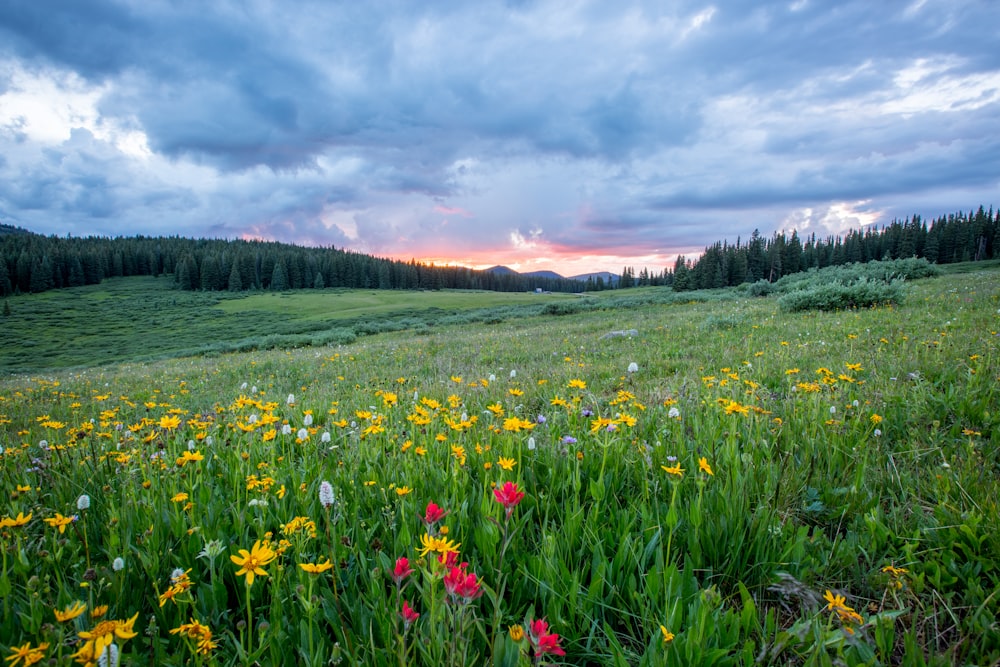
       God opens his hands," writes the psalmist, "and satisfies the desire of every living thing" (Psalm 104).  Although we all have much for which to give thanks, perhaps the most important thing for which we can be thankful is that we can give thanks.  We can rejoice that we can be aware of who we are, that we can experience the gracious bounty of the universe, that we can know, really know, that we are beings who can create life, culture, and moral sensibility.  We can be grateful that we are here.

Image result for meadow photo

     Many a theologian has observed that all truth is God's truth.  If so, we can also give thanks for that which enables us to know everything else:  living and personal truth.  Absent this truth, nothing has point.  Give thanks therefore that despite the fractured state of modern spirituality and the numerous political issues that attend this end of November celebration, truth remains.  And that truth is knowable.
     
    We live in truth's materiality yet we exist in its eternality.

    Happy Thanksgiving!

Wednesday, November 23, 2022

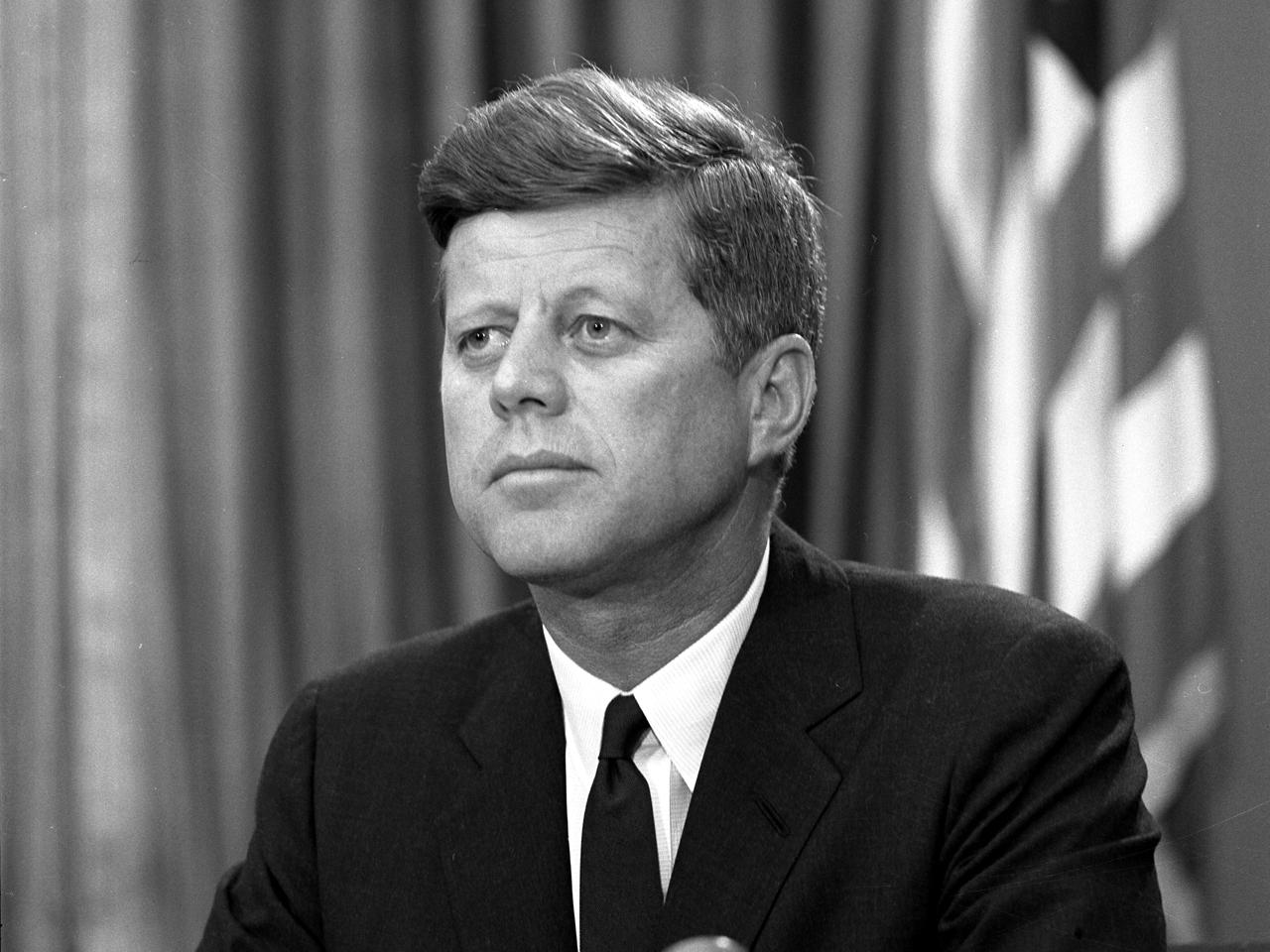
     If you're a Baby Boomer, you remember.  Fifty-eight years ago yesterday, John Fitzgerald Kennedy, the 35th president of the United States, was killed, gunned down by an assassin in Dallas, Texas.  For those of us who lived through this day, we will never forget it.  Although a number of presidents had been assassinated previously, JFK's occurred in our lifetime, in our time, in our day.  We didn't read about it in history books; we experienced it, experienced it directly and personally, in a profoundly visceral way.  Our world would never be the same.

Image result for jfk

    Setting aside the seemingly endless debates about assassination conspiracies, the relative value of JFK's presidency, or intimations that JFK might be the "AntiChrist," and looking at the bigger picture, we see one simple truth:  we live in a frighteningly capricious and unpredictable world.  Though we build our lives on concrete particulars, we construct our life meaning on universals, on hopes and dreams we cannot always see.  We are finite creatures living in a bottomless world.

    At JKF's grave in Arlington cemetery, the flame burns eternal:  
only in transcendence do we see what is really true.

     "If there were no death, there would be no rebirth," the German artist Anselm Keifer, whose work is experiencing a bit of a renaissance in the West, remarked in a recent interview.  Quite.  Even if we do not center this thought in a religious perspective, we still see that Keifer's remark recognizes the embedded rhythms of the universe.  Throughout the breadth and depth of the cosmos, nothing, be it a star, lion, or human being, can be born without someone or something, somewhere and somehow, experiencing diminishment of some kind.

    For anyone familiar with the second law of thermodynamics, which tells us that the total amount of matter and energy in the universe is constant, and that therefore when energy is lost, matter gains, and vice versa, this may not be a big surprise. On the other hand, the immutable factuality of this law simply affirms Keifer's point:  unless we live in a completely static universe (and what kind of a cosmos would that be?), we will confront, every moment of every day, this cycle of death, in some fashion, and, in some similar fashion, rebirth.

    Is some process of resurrection therefore imprinted into the fabric of the cosmos?  Maybe.  Resurrection between matter and energy, however, is one thing:  from the most ancient of times, humans have believed in it.  But resurrection into an absolutely new life is quite another.

    Therein is the greatest mystery of all.

Tuesday, November 22, 2022

     Are you familiar with the COP 25 conference?  Held in Egypt and concluded about a week ago, the COP 25 represented a nearly unprecedented gathering of representatives of the nations of the world to discuss and, it was hoped, develop concrete solutions to issues of climate change.  As the conference drew to a close, the major point of contention appeared to be establishing the responsibility of the developed--and the most polluting--nations toward the nations whose existence the developed world's actions were threatening.

COP27 Logo.svg

    After much debate, the decision was made that a fund would be established to aid these developing nations in dealing with the effects of climate change.  But of course this agreement was not necessarily legally binding upon the developing nations that signed it.  Should it be?  Though that's another debate, the principle that should prevail, from my viewpoint, is that those who have been given much, usually at the expense of those who have been given little, should be ready to give up what they have to aid those who have less.  That is, the wealthy should be ready to impoverish themselves, relatively speaking, to improve the lot of others.

    After all, no one has attained his or her affluence on their own, and no one has become wealthy independent of others or the planet.  No one can claim that he or she is fully "self-made."  That's delusional.

    There will always be enough to go around.  We just need to agree that there is.

    And trust in ourselves and God.