Wednesday, December 27, 2023

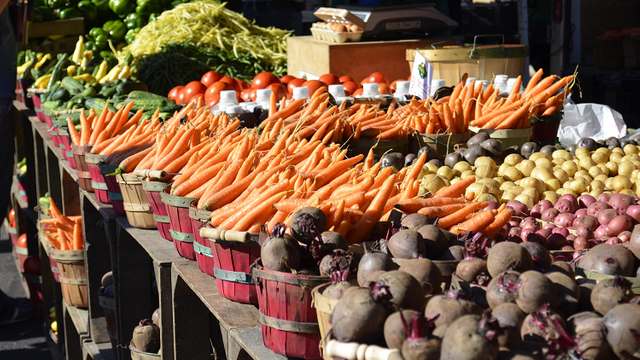
Image result for african harvest photos    Although Christmas has dominated the holiday news lately, we cannot overlook that the day after Christmas, yesterday, marks the first day of Kwanza.  Based on a Swahili term meaning "first fruits," Kwanza, its principles grounded in African culture, celebrates  harvest, bounty, and human diversity.


    Kwanza lauds the beauty and meaningfulness of this world, its harvest, its bounty, its joy of a year rightly lived.  The happiness of living in a world whose wonder speaks constantly to us, the beauty of the rhythms of the planet:  a call to treasure the immensity of existence.

     Christmas's celebration of God's presence in the world is essential, yes, but Kwanza's rejoicing in the munificence which this presence ensures is worth remembering, too.

Friday, December 22, 2023

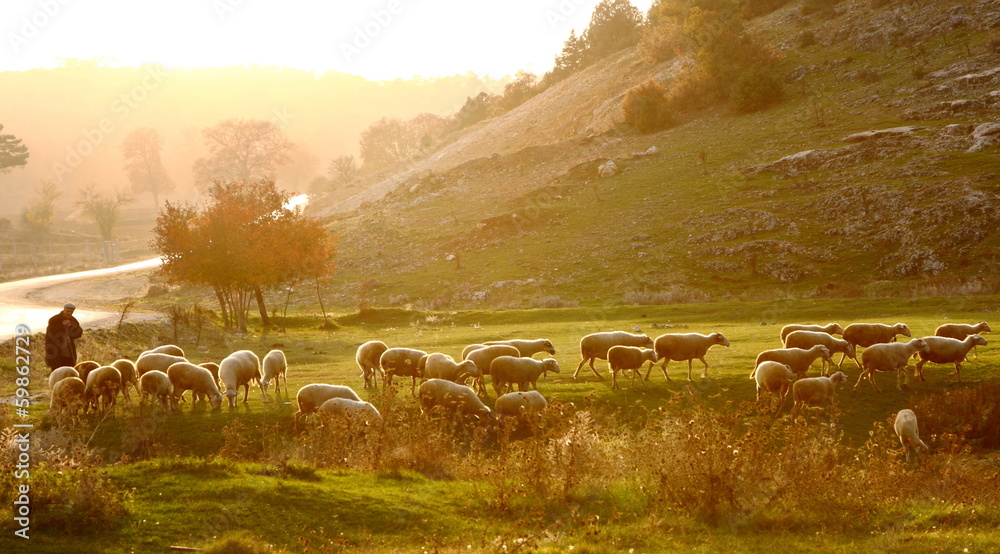
  Shepherd herding sheep at sunrise across the pasture

    Most of us have heard the "Christmas story" countless times.  Across the world for thousands of years, people have read and pondered, over and over, Luke's account of Jesus' birth.  One might almost think that there is nothing new to find in it.

    But there always is.  As I was reading it this year, I found myself struck, struck anew by the thought that the first people to hear about Messiah's birth were shepherds.  In the twenty-first century, most of us do not think much about shepherds.  In Jesus' day, however, shepherds were an integral part of the economy.

    Yet shepherds were despised, viewed as the lowest of the low, the modern day equivalent of the Roma of Europe.  Few wished to associate with them.  They spent their days--and nights--largely apart from the rest of the people, living lonely lives in the fields and hillsides of the nations.

   But the shepherds were the first to know.  They were the first to be told.  Before anyone else knew, the shepherds knew about the birth of Messiah.

    God remembered those whom the world had forgotten.

    Christmas reminds us that when all is said and done, we should understand that God, the vastness of personal transcendence, is not about greatness.  He's about humility.  Humble thankfulness for the fact of existence.

    And love.  Love for a humanity who had dismissed and fogotten about him.

    Merry Christmas!

Thursday, December 21, 2023

   Photo: Press Preview for Charles Ray: Figure Ground at the Met Museum. -  NYP20220124118 - UPI.com

     Since the days of Auguste Rodin, sculpture has often occupied a special place in the artistic imagination:  what is it really trying to say?  Consider the works of American sculptor Charles Ray and his unique ability to speak through his creations.  Even though it is clear that, in his "Archangel," this sculpture has little to do with communications from the divine, it nonetheless seems to reflect, or so the critics say, transformation.  Or what theologians call an apotheosis:  a transformation into God.

    Yet on the other hand, most of us wish, in some way, to be different than we are today.  We may wish for better people skills, increased insight into what life means, greater compassion for our fellow humans, deeper love for our spouses or significant other, and so forth.  Bottom line, we want to find our greater point.  Even if it is a point that only we define.

    And we will do so whether we believe in God or not.  When I consider Ray's "Archangel," I therefore ponder how much it expresses who we are.  Be it people in passage, people in stasis, or some blending of the two, we long to see who and what else we can be.

    After all, we're purposeful creatures in an intentionally purposeful universe.  Otherwise, we would have no claim to aspire to anything.

Wednesday, December 20, 2023

     How do we measure faith?  In the first chapter of his account of Jesus' life and doings, the gospel writer Luke tells the story of Zacharias and Mary.  Mary is the mother of Jesus, Zacharias a priest who attends the temple in Jerusalem.  As Luke relates, both are visited by the angel Gabriel, who delivers to each of them a startling prophecy, an almost overwhelming prediction about what will soon come to pass.

    You will have a son, Gabriel tells Zacharias.  Even though your wife Elizabeth is barren, she will, in the coming year, become pregnant and give birth to a son, whom you are to name John.  And, Gabriel continues, God will make your son a great prophet, one who will announce to Israel that Messiah's coming is imminent.

    As any of us would be, Zacharias is puzzled and fearful at what he hears.  So as the text tells it, he replies, "How will I know this for certain?"  He's old, his wife is barren:  can I really believe this?

    Annoyed, Gabriel reminds Zacharias that he, Gabriel, is an emissary of God, and adds that therefore how can you, Zacharias, not be willing to believe what you hear?  He strikes Zacharias mute until John is born.

    Several months later, Gabriel visits Mary.  You, Mary, will be the mother of Messiah.  Though you are a betrothed virgin, you will become pregnant, not by your husband to be, but by the spirit of God.  Your son will be named Jesus.

    In contrast to Zacharias, Mary simply responds that, "How will this be?"  That is, she doesn't ask whether she can know this for certain, but rather, yes, I believe:  tell me how this will happen.

    As we venture into the final phases of the Advent season, we can all learn from Zacharias and Mary.  When confronted with a call to believe, do we ask how can we know for certain?  Or do we simply wonder:  how will this truth happen?

    How we respond makes all the difference.
Tuesday, December 19, 2023

  Vassily Kandinsky and Abstract Art    

      Defining spirituality is difficult.  If we attribute it to a god, we miss that many unbelievers attest to having spiritual experiences.  If we assign it to a nebulous immaterial presence, we encounter the problem of making something amorphous and undefinable into something that is physically real.  And if we say that spirituality is thoroughly human, we run into the perennial dilemma of understanding how consciousness can emerge from inert matter.

    Wassily Kandinsky, a Russian surrealist painter, thought much about spirituality in regard to art.  He did so as a way of explaining how art overwhelmed what he considered to be the spiritual darkness of Marxism.  In art, Kandinsky said, we feel hints of transcendence, intimations of things we cannot easily fathom, emotional insights that we do not experience otherwise.  We look into another world, a world of purer light, real or imagined, a world that eclipses the rigid (and, to him, meaningless) materialism of the Marxist worldview.

    Kandinsky's art reflects his words aptly.  It is sometimes difficult to grasp easily, but that's his point:  spirituality isn't supposed to be simple.  If it were, it would be no more than another product of our material human whims.
   
    Maybe that's why the Incarnation is so true yet so befuddling.


Monday, December 18, 2023

wind river range | North Western Images - photos by Andy ...

     "For the people who walk in darkness," wrote the prophet Isaiah, "will see a great light (Isaiah 9:1)."  Isaiah speaks of Messiah, the one who would come to illuminate an Israel darkened by disappointment, abandonment, and sin.  He speaks of the Christ (the Messiah, "the anointed one") who would enlighten and save all those who longed for him.  He speaks of the light that would come.
     
    On the third Sunday of Advent, we remember this fact of Messiah's light.  We remember how, like the rising sun exploding over a frigid mountain ridge, Messiah--Jesus--has brought us light, the light of enlightenment, the light of hope and meaning that shines through the cold of an often Munchian existence.  It is a light that, if we embrace its rising, embrace it as fervently and without reservation, will change our lives forever.
    
    Though we may struggle with the idea of eternality, though we may question the presence of God, we all long for light. We all long for hope and meaning.  We all long for a window into a richer existence.
    
    In an accidental universe, however, richness is impossible, for value and morality cannot be.  Only in the light, the light of transcendence wrought in Jesus, Jesus the image and person of God, will hope therefore be, infused in its necessary light.
    
    The light of the world.

Friday, December 15, 2023


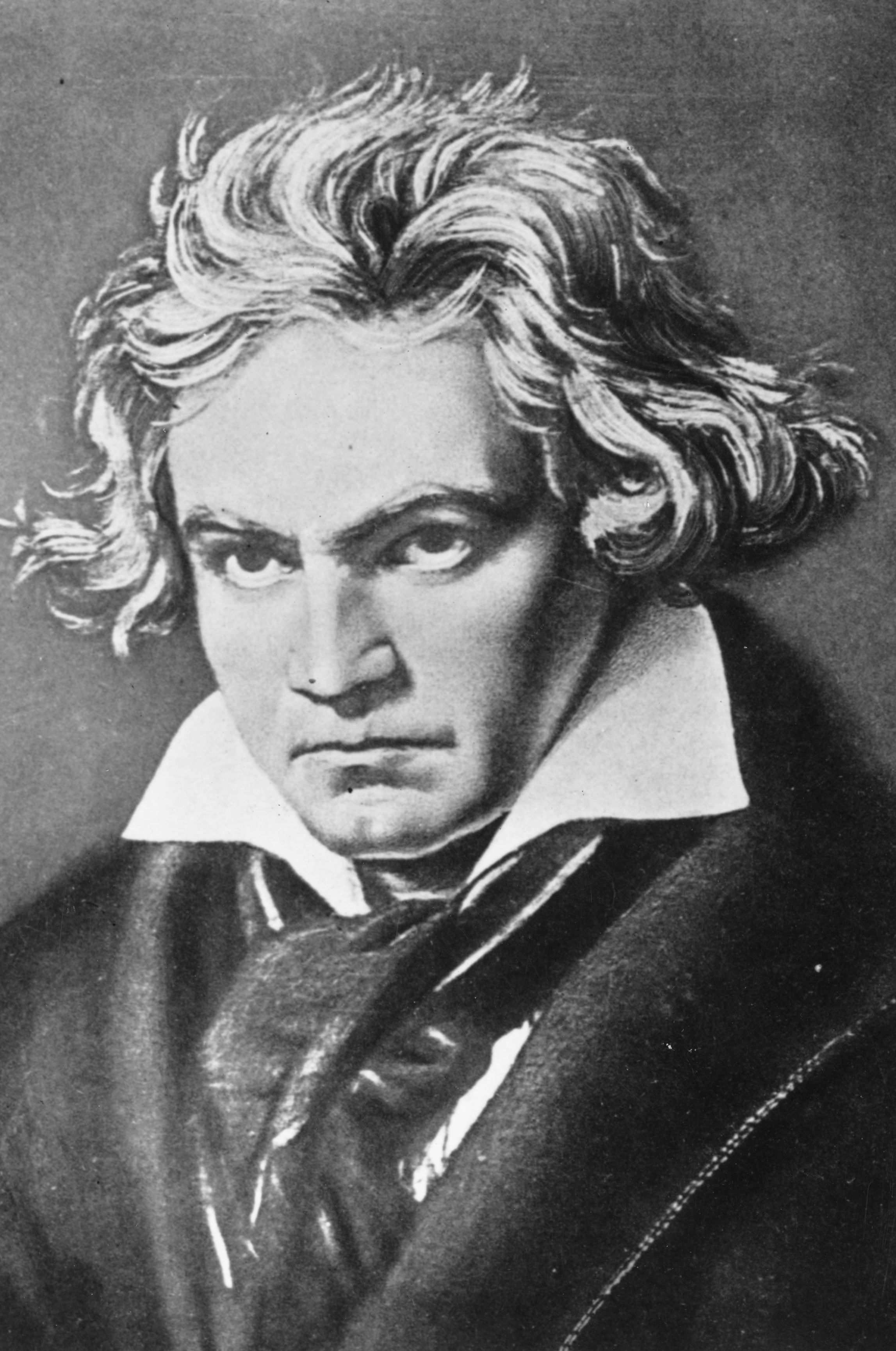
     What can we say about Ludwig von Beethoven?  This famous portrait of him captures how many of us see him:  a brooding, brilliant composer.  Beethoven's music comes to us as a force of nature, barreling and twisting its way into our hearts, breaking our souls apart, forcing us to grapple with and contemplate the deeper forces that drive human existence.  We swoon over the viscerality of Beethoven's melodies, we wonder about the power of the humanness and universe which his songs describe.  A Romantic in the purest sense, Beethoven reminds us of other worlds and other things, of the presence and possibilities of transcendence.

    I thank God for Beethoven.  I thank Beethoven for showing us as we are, beings of mind as much as creatures of heart, dynamically personal entities who are made to step bravely into the contingencies of life, to take hold of everything that is before us.  Although we may never know exactly how Beethoven felt about a personal God, we nonetheless recognize that his music forces us to ponder the mystery that such a being--and presence--lends to existence.

     Beethoven opens and unfolds for us glimpses of what we, life, and God, can be.