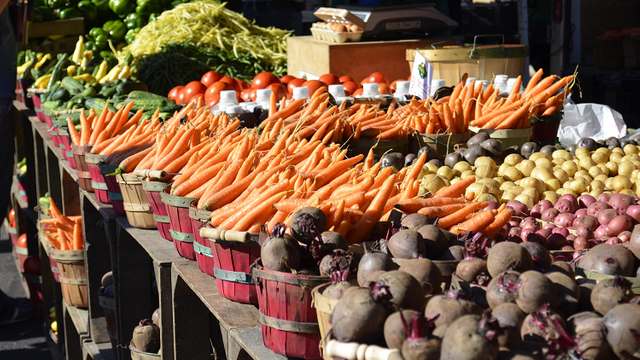
Although Christmas has dominated the holiday news lately, we cannot overlook that last week, the day after Christmas, yesterday, marked the first day of Kwanza. Based on a Swahili term meaning "first fruits," Kwanza, its principles grounded in African culture, lauds the beauty and meaningfulness of this world, its harvest, its bounty, its joy of a year rightly lived. The happiness of living in a world whose wonder speaks constantly to us, the beauty of the rhythms of the planet: a call to treasure the immensity of existence.
Wednesday, December 31, 2025
Monday, December 29, 2025
It's a very happy piece. I speak of Johann Pachabel's famous "Canon in D." Perhaps you've heard it at a wedding. The seventeenth century composer's deft blending of melody and rhythm has captivated humanity repeatedly. It's hard to listen to it without feeling at least a lilt of joy.
The Center for Faith and Culture at Yale University has devoted decades to understanding the nature of joy and human flourishing. Although its researchers recognize that theirs is a work that will always be one in progress, they have come to agree on a few things, which they have encapsulated in the Center's goal: "We seek a world in which every person can wrestle with life's most important questions and take hold of a life worthy of our humanity."
![]()
Put another way, to be able to contemplate existence and to find a meaningful life is central to being a human being. In this, the Center suggests, is true joy: to understand and flourish as we are intended to be.
But why? Because, the Center insists, we are made in the image of God. In this, perhaps we all should take a moment to step back and consider that, absent the presence of divine image in this world, we would probably not know what our joy fully is.
Friday, December 26, 2025
Christmas has come, and now it is gone. People are taking their ornaments down, stores are offering their after Christmas sales, travelers are going home. It's over for another year.
Or is it? If Christmas means anything, anything at all, it cannot possibly be contained in one day. If the Creator has come, how can anything--and any of us--ever be the same? History, and everything in it, including you and me, has irrecoverably changed.Wednesday, December 24, 2025

Most of us have heard the "Christmas story" countless times. Across the world for thousands of years, people have read and pondered, over and over, Luke's account of Jesus' birth. One might almost think that there is nothing new to find in it.
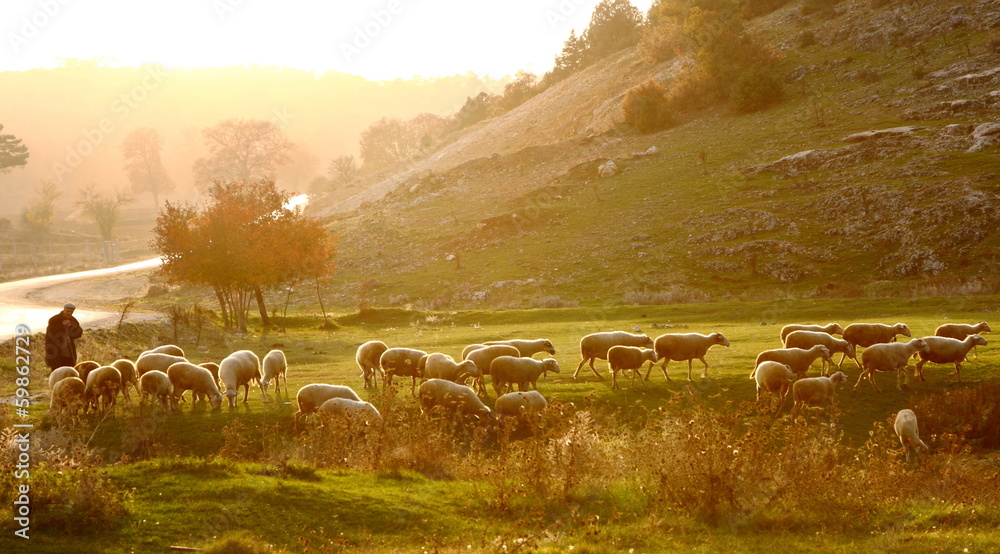
But there always is. As I was reading it this year, I found myself struck anew by the thought that the first people to hear about Messiah's birth were shepherds. In Jesus' day, shepherds were despised, viewed as the lowest of the low, the modern day equivalent of the Roma of Europe. Few wished to associate with them. They spent their days--and nights--largely apart from the rest of the people, living lonely lives in the fields and hillsides of the nations.
But the shepherds were the first to know. They were the first to be told. Before anyone else knew, the shepherds knew about the birth of Messiah.
God remembered those whom the world had forgotten.
Christmas reminds us that when all is said and done, we should understand that God, the vastness of personal transcendence, is not about greatness. He's about humility.
And love. Love for a humanity who had dismissed and fogotten about him.
Monday, December 22, 2025
![]()
"Nature is extremely subtle. I happen to think that the depth of natural substances cannot be fathomed by mankind. Because after all we only have, let's say, 100 billion neurons. How can you match that with the infinite depth of nature?" -- Chen Ning Yang
Chen Ning Yang, one of China's greatest physicists, passed away last month. His death was acknowledged by leading physicists across the globe. Chen's contributions to his field will reverberate for many decades to come. For good reason. Consider the quote above. Though I do not know Chen's position on spirituality or the transcendent, I appreciate the essence of his observation. Whether we attribute our beginnings to the "infinite depth of nature" or a transcendent presence, that is, God, we will forever try, and always fail, to understand the precise character of the natural world. We may understand how it will works, we may uncover the physical laws that govern it, but we will never grasp, fully, what it really is.
How can we? We're thoroughly human, finite bits of particles and neurons. We cannot expect to comprehend, in this life, the point of what made us.
Are we therefore happy that we're here?
Sunday, December 21, 2025
If you live in the Northern Hemisphere, you may know that today, December 21, is the winter solstice. The "shortest" day of the year. Or as Robert Frost puts it in his "Stopping by Woods on a Snowy Evening," "the darkest night." Happily, although it may not seem like it, the winter solstice is actually the grand turning point of the year, the day and night in which time and light begin to grow. It's the end of the light, yes, but its genesis, too. We lose, yet we win, moving, ever so slightly, toward the greater light to come.