Tuesday, March 3, 2026

      In this terribly broken world, we cannot help but wonder:  why cannot we control, why cannot we mitigate, why cannot we turn back the forces of evil?
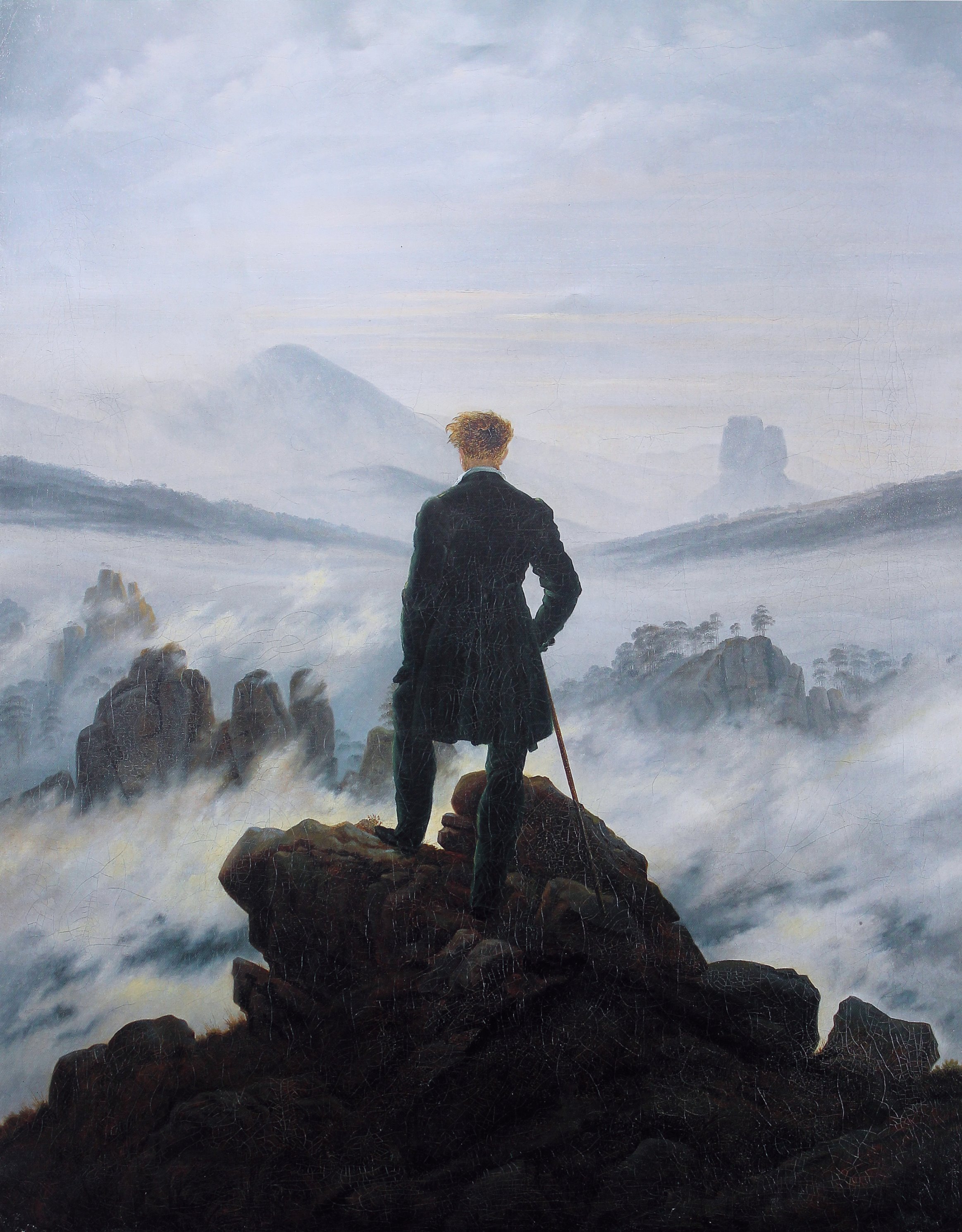

Image result    As we think about this week, the week of the second Sunday of Lent, we have opportunity to wonder about this anew.  Even if we are in a position of great authority, we cannot control everything, nor can we extinguish all evil.  Lent is about giving up, giving up our time, our pursuits, our hopes of lasting control.  We acknowledge that if we try to control everything, we will inevitably end up creating a world of us and us alone, a world without any real point.
    
    Lent is one of God's ways of telling us that though we are remarkable creatures, seemingly capable of directing the course of our life and that of the world, we will never control it all.  Lent reminds us that we are finite, that we have limits, that our marvelous attributes can only take us so far.  Sooner or later, we encounter a bump:  we realize that we are not so remarkable that we in ourselves can decide what we are and what existence means.  How can we?  We are only us.
    We in Lent are like the "Wanderer above the Sea of Fog," standing before the world, its joy, its pain, watching, planning, waiting, yet unable to exercise ultimate control over that which we see.
     
    Precisely.  To live wisely, we must give up.  We must give up who we are now to find whom we are, in truth, destined to be.

Monday, March 2, 2026

  As Purim approaches, coronavirus crashes Judaism's biggest party | The  Times of Israel


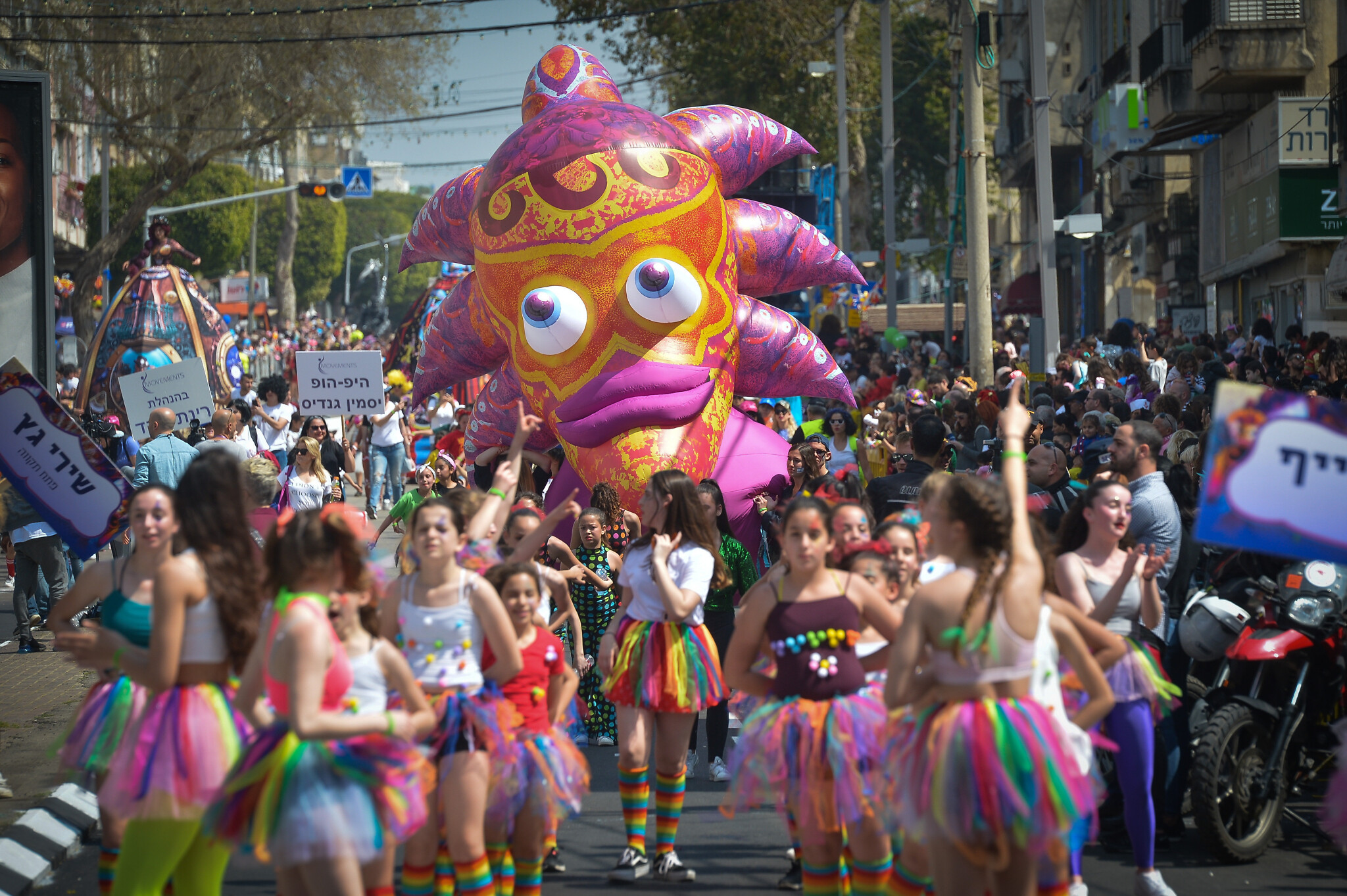
    Purim!  Today and tomorrow, our Jewish brethren celebrate Purim.  

    Purim is a remembrance of liberation, a day to recall how God, once again, rescued the Jewish people from potential annihilation.  Like the Exodus, celebrated in about a month from today at Passover, Purim recognizes that despite all the machinery we have amassed to keep ourselves safe and secure, personally and internationally, it is ultimately transcendence that provides seminal meaning and value to our efforts.  It is only the work of larger presences that ensure purpose in our dogged attempts to keep ourselves free.

    Purim tells the story of Queen Esther, a Jewish woman chosen by the Persian king Ahasuerus, probably Xerxes I, to be his bride.  As things go on, Esther's uncle, Mordecai, learns of a plot concocted by the courtier Haman to slaughter all the Jews in the Persian Empire.  In words that have resonated with believers for centuries, he goes to his niece and advises her that, "And who knows whether you have not attained royalty for such a time as this?"  It is you, Esther, and only you who can intervene with the king to save us.
    
    And Esther does, delivering her people from potential destruction.  Although we may not always see the passage of transcendence in our earthly reality, and while we may miss its intimations in the life of the world, Purim demonstrates to us that, as much as we might like to suppose that the cosmos is void of larger purpose, purpose nevertheless prevails.  Given our technologies, we may well be able to rescue ourselves from almost any situation of peril, yet we may overlook the greater point:  in a planet stripped of transcendent meaning, what does it really matter?
    
    "For such a time as this."  We really do have value.

Friday, February 20, 2026

       Ramadan, one of the greatest events in the Muslim calendar, began a couple of nights ago.  Thirty days of fasting, culminating in the feast of Eid al Fitr, Ramadan is a time for every Muslim to take time to celebrate and reflect on his or her relationship with Allah and the world.  It's a season of hope, wonder, mourning, and contemplation, a slice of the year in which Muslims, like most people of faith, take time to focus more intensely on why they live as they do.


Muslims perform the first 'Tarawih' prayer on the beginning of the Islamic Holy month of Ramadan in Iraq
    You may not agree with the tenets of Islam; you may not like the beliefs most Muslims hold; you may be uncomfortable with Islam in general; you may even be frightened of Islam.
     
    Either way, do use the fact of Ramadan to remind yourself that we live this life as a gift, that we spend our days in the aegis of a personal transcendence.  We live in the umbra of a beautiful (and often exasperating) wave of experience, balancing what we see and what we cannot.  Ramadan tells us that we are not alone. It says to us that we live in a vision, an intensely personal vision in which all things find purpose and meaning, the full truth of what is.

    There's much more to believe than what we see.

Thursday, February 19, 2026

     Yesterday was Ash Wednesday, the first day of Lent.  Ash Wednesday reminds us that, whether we believe in an afterlife or not, we are ultimately no more than dust.  When we die and pass out of this life, what remains of us will soon be no more, too, subsumed in the earth from which it has come.  A number of years ago, when my wife and I were in the Sawtooth Mountains of Idaho, I took an afternoon to hike to a meadow where, one year before, one of my dearest cousin's ashes had been scattered.  Tragically, she had died of mesothelioma at the age of 58.  Long did I stand before the meadow, catching the wind, soaking in the vista, thinking about her.  All Liz's years, all her love, all her joy, all her meaning, all her hopes and dreams now strewn among the flowers and rivers she loved so dearly.  Joyful, but deeply sobering.

    Even more sobering is that one day, every one of us will be exactly the same.  We are so fragile, so frightfully fragile.  What meaning have we?  What is our point?  As we contemplate our mortality, we see ever more clearly how thin the line is between life and death, sentience and dust, fire and ashes.  We are so contingent, so tenuous:  how can we ever hope to be?

     Yet Ash Wednesday also reminds us that we are not dust and ashes only, that life is not total absurdity.  It tells us that we are physical creatures, yes, but spiritual creatures, too.  We are created beings.  We are meaningful, we are significant.  We are loved.

    Death is not the end.

Wednesday, January 28, 2026

         What we say about Wolfgang Amadeus Mozart (his birthday was yesterday)?  Although Mozart died, sadly, at the tender age of 35, he produced an array of musical expression that most musicologists agree is unmatched.  As a contemporary said of him, "He was like an angel sent to us for a season, only to return to heaven again."

    Confronted with Mozart's prodigious talents, we marvel.  We marvel at the nature of the human being, we marvel that we are creatures of such remarkable abilities, that we are gifted in a nearly infinite number of ways.  How could such a thing be?

    Such is something for which materialistic evolution has yet to give us a convincing answer.  Its inability to do so reminds us that, consciousness and sentience aside, we, and life, are far more complex than an inexplicably fortunate blend of chemicals.  
    
    Maybe we really are not alone in the universe.

Tuesday, January 27, 2026


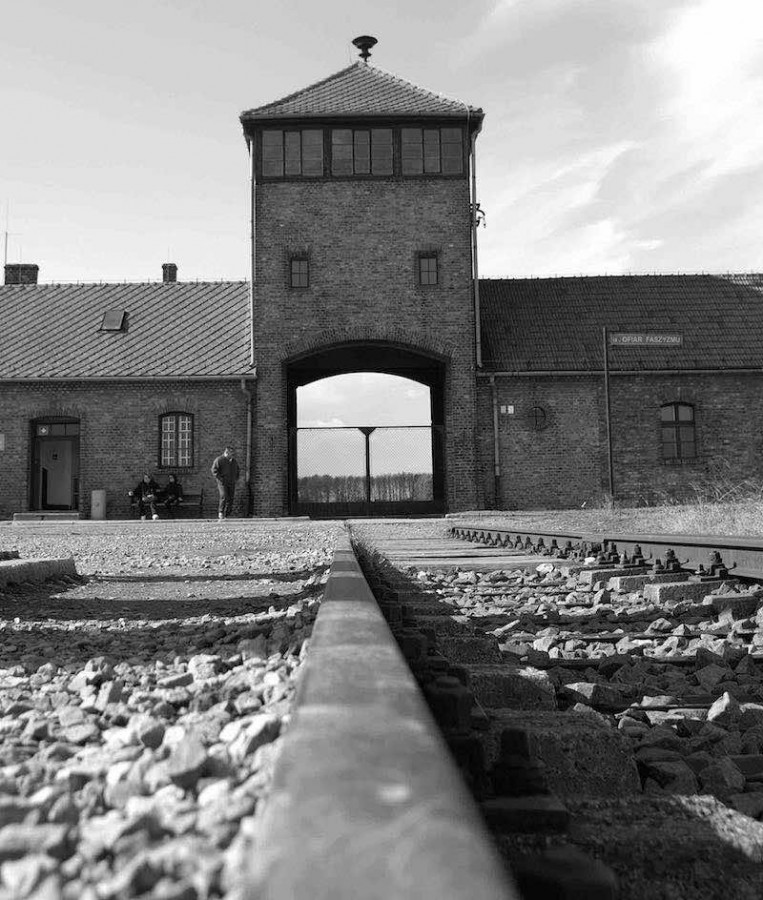
        Today, January 27, is International Holocaust Remembrance Day.  It is a day that should cause all of us to stop, think, and weep.  How does one begin to grasp the deliberately engineered deaths of over six million people?  How does one connect with a person who lost the sum of his lineage in a concentration camp?  How can we possibly comprehend being the object of such virulent hatred and racism?

    And how can we categorize those who fomented this horror?

Image result for auschwitz arbeit macht frei
     We can't.  And that's the point.  God aside, evil has no explanation.  It has no point, it has no plan.  It is beyond our ability to fully understand.  Many Holocaust scholars insist, and rightly so, that the Holocaust is an event that surpasses the widest and deepest boundaries of our ken and imagination.  It's beyond intelligibility.
     
    Yet it happened.  So does 1986 Nobel Peace Prize winner Elie Wiesel ask, "How can you not believe in God after Auschwitz?"

    Precisely.  Though the Holocaust overturns all convention notions of who God is, it also affirms him.  Take away God and all we have left is ourselves, our confused and meaningless selves in a dreadfully empty universe.

     Weep for our Jewish brothers and sisters, and pray for those who persecute them.  And believe.  At all costs, believe in the ultimacy of God.

Thursday, January 22, 2026


     "Whenever I hear that we should not teach people what makes them uncomfortable, it sends shivers down my spine."  I heard these words from a native German, one of the many guides I employed while I was leading a student trip to Central Europe a few years ago. We were in Berlin at the time, visiting various sites of memory, getting firsthand looks at the many ways that the nation of Germany was trying to never forget the atrocities of its past.

Stacks of colorful books are shown in front of a chalkboard with text reading, “22,810 instances of books banned in U.S. public schools, 2021–2025.”.

     "Whenever I hear that we should not teach people what makes them uncomfortable, it sends shivers down my spine."  I heard these words from a native German, one of the many guides I employed while I was leading a student trip to Central Europe a few years ago. We were in Berlin at the time, visiting various sites of memory, getting firsthand looks at the many ways that the nation of Germany was trying to never forget the atrocities of its past.

    Our guide had a good point.  At the moment, many people in different parts of the U.S. are seeking to ban certain books from being used in the classroom or local library or, alternately, attempting to prevent teachers from talking about anything that makes students "uncomfortable" upon hearing it.  Although I understand the wisdom of assigning or making available age appropriate texts in the classroom or community library, I also believe that, by its very nature, teaching should make people uncomfortable.  Teaching should challenge people, should jar their categories, should make them rethink their positions, and cause them to look more closely at why they believe what they believe.  While teaching can be a way of affirming or solidifying belief, it is also a way of creating conditions that allow people to consider, even change, belief.  To consider and change for the better of the student and the community in which he or she participates.

    As to book bans, well, one doesn't need to look farther than Nazi Germany to see where those can eventually land.  Discernment in material, yes, elimination of material, no:  ultimately, we're better off knowing than not.


Tuesday, January 20, 2026

Photograph of W. B. Yeats

       In the heat of existence, on the days when we are feeling particularly overwhelmed with the exigencies of being alive, we may feel as if we are like people who, as Virginia Woolf observed in her "Lives of the Obscure," are "advancing with lights in the growing gloom," heading toward obscurity, the obscurity of a life lived, a life enjoyed immensely but a life one day to end and be gone, never to return.

      Believing in more than life is hard in the morass of the material present.  We cannot see it, so why put our trust in it?

    Fair enough.  Yet as William Yeats reminds us, "And God stands winding his lonely horn, and time and the world are ever in flight."  Though time wears on and the years drag by, unyielding, sometimes burdensome, and, ever changing, something permanent remains.

    It's hard to see the end of a road at its beginning, yes, but if the world is to have any point, any point at all, there is always a road to follow.  And there is always an end.  An end rooted in the permanence of the necessarily personal ground of existence.

Monday, January 19, 2026

     Have you read anything by George Orwell?  Whether he knows it or not, his name has spawned a number of other words.  Among them is Orwellian.  What's Orwellian?  It signifies an effort to rewrite the meaning of a word or event so as to render it either of greater or lesser significance.  And then pretend the original event never happened.

    Although January 6, 2021, in the U.S. is over five years behind us, its scars remain.  I know it happened:  I watched it on live television.  It was not a "day of love;" it was an insurrection.  Many people, mostly police officers, lost their lives.  Property damage reached the millions.  Over a thousand people were eventually convicted of crimes committed that day, including sedition, and sentenced to lengthy prison terms.

    But in classic Orwellian fashion, the current U.S. presidential administration wants to act as if that day never happened.  The official White House website has recently published a lengthy rewriting of that day, producing a narrative that is totally false, and yet one that it insists is absolutely true.  Worse, every single one of those who were sent to prison have been pardoned by the same person who encouraged them to riot.

    "Without revelation [transcendent standards of value]," Proverbs 29 writes, "the people perish."  Replace law with royal whim and a nation falls.

    It's still falling, too. 


Friday, January 16, 2026

       Perhaps you can identify with a longing for outdoor adventure, a longing to step out of the regular and normal, a deep seated desire to break away from the staid rhythms of quotidian existence.  If so, you are decidedly not alone.

     But you might wish to be.  You might wish to be tromping through an uncharted wilderness area hundreds of miles from anyone or anything else.  You may seek the deepest unknown there is.

     American novelist Jack London, whose birthday fell in January, wrote profoundly on this spirit of adventure, this thirst to explore, to topple boundaries, to abandon everything in quest of inner fulfillment.  His Call of the Wild captures this urge perfectly:  the lonely yet determined human pitted against the forces of the distant and remote wilderness, the former seeking meaning, the latter inundating him with it.

     There are many wilds, there are many unknowns.  Although London focused on the wilds of the material world, it's not difficult to see that in seeking the wilds of this world, we cannot help but find the wilds of another.  Finite creatures wandering in a nearly infinite cosmos, we humans need the wilds of transcendent mystery to really see who we are.

Friday, January 9, 2026

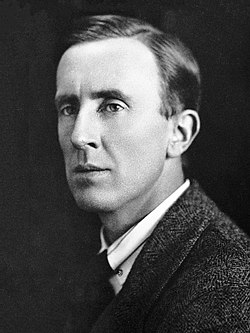
 Tolkien in the 1920s

      If you are familiar with the writer J. J. R. Tolkien, you may like knowing that the thinking of William Morris, a famous artist (and anarchist) of the late nineteenth century, exercised a significant impact on him. In his reflections on his craft, Morris talked about the notion of a Second World (Tolkien discussed this, too).  This is a world apart from present reality, a world completely unto itself, a self-contained world with its own laws, beliefs, and reality:  a world of fantasy. Tolkien's famous Lord of the Rings trilogy is a case in point.  Those familiar with this remarkable work know that Tolkien presents its events in a world that he has created and which has no connection to the world the rest of us occupy.  It's a surreal world.

    I mention this in relation to, predictably, the supernatural.  Part of the reason some of us have trouble grasping or accepting the supernatural is that it appears to function in a way that seems at odds with the world to which we are accustomed.  It does not always evince a credible connection to what we currently know.  The perfunctory response to this is of course, "Well, one must have faith."

    While no doubt this is ultimately true, if it is all that is true, then we are left with intimations of a world that we will never really know.  It's easy to reject the validity of such a world:  of what value can it possibly be to us?
    
    On the other hand, if the Second World, i.e., the supernatural, is accessible to us, its credibility magnifies considerably.  We can know it, feel it, hear it, and see it in our experience.  We connect.

     And the Second World becomes the First.
     

Thursday, January 8, 2026

     About a month ago, I traveled to Santa Rosa, California, to surprise one of my sisters on the occasion of her (gasp) seventieth birthday.  Although her husband and my other sister, who also lives in Santa Rosa, were aware that I'd be showing up, Ellen did not.

    The look on her face was priceless!  She was totally taken aback to see me strolling into her house.  As the evening spun itself out, I looked at Ellen often:  she was so thankful to be celebrating this moment with her family and friends.  She glowed with gratitude.

    Of course most of us want to live as long as we possibly can, even if we are acutely aware that we will not.  It's one of the complexities of being a human being.  So how to measure the value of our brief time on this planet?  A recent review of Ross Douthat's Believe:  Why Everyone Should Be Religious captures this dilemma well.  Although the reviewer, whose religious sensibilities clearly do not align with those of Douthat (who is a person of faith), observes that value is still possible in a world without religion, it is at the same time a condition without any significance.  In an accidental world, he writes, there is no justification to claim that any value is real.

    I agree.  Be grateful for your life, be happy for your years.  Yet remain painfully aware that if there is no reason for either one, you're just shouting into the dark.

Tuesday, January 6, 2026

     A king.  As they studied the Zoroastrian and biblical prophecies about a coming king, the magi--wise men--of  ancient Persia realized this king would be a special king.  In him, the magi saw, God would really come to earth, would really make himself known.

    Small wonder that these people made the arduous journey over the Zagros Mountains, across the arid expanse of Arabia, and onto the international trade routes that coursed through the Levant, to enter Palestine.  Who would have imagined such a thing?

    Epiphany demonstrates that only when we decide to allow the possibility of the divine made immanent will we understand what the world is really all about.
    
    Physical sight is only the beginning.

Monday, January 5, 2026

  An image of Jupiter taken by NASA's Hubble Space Telescope

     "Midnight Sky" tells the story of a scientist living alone in a research outpost in the far North who is one of the only people to survive a global catastrophe that killed most of the planet's inhabitants.  As a result of the catastrophe (whose precise nature is never fully explained), the planet's air is toxic and unbreathable.  No one will live above ground again.

    One day, however, he hears from a spaceship, Aether, on its way from Jupiter back to earth.  He tells them to go back to Jupiter's inhabitable moon.
     
    At this point, only two crew members, a man and woman, are still on the ship.  She's pregnant.  What to do?
    
    They turn back to Jupiter.
    
    As many of us reflect on the year past and wonder, sometimes with optimism, sometimes with trembling, what the New Year will bring, it's a question worth thinking about:  how much are we wiling to trust the unknown?
    
    Put another way, what are we most willing to trust:  where we know we've been or where we do not know we're going--but must go anyway?