Tuesday, September 5, 2017

Image result for labor day photos     Yesterday, America (and Canada) celebrated Labor Day.  It's a good day.  It's a day to take time to think about and honor those who, like many of us, work, those who, day after day after day, engage in some type of vocational occupation.
     Most of us accept work as an inevitable fact of existence.  In many respects, it is. Most of us must work. Not all of us of course necessarily like what we do.  Not all of us enjoy getting up for work each day. Nonetheless, to work is to be human, and to be human is to work.  Working enables us to discover our humanness most fully.  It challenges us, involves us, enables us, fills us.  Working gives us a more complete grasp of who we are in our world.
     More broadly speaking, work has a point.  When we work, however enthusiastically, imperfectly, or apathetically we do so, we echo the fact of a personal creator.  We are people made in the image of God, people who, when we work, whether we know it or not, are contributing and communicating.  We are contributing to the greater good of the planet, we are communicating the presence of a good God.  Consciously or not, we are underscoring that life has a meaning greater than merely living day to day.  We are stating that although, yes, we must in most instances work to survive, we nevertheless see hope and meaning beyond it.  We are made with purpose.
      Absent an intentional beginning, shorn of a God, the cosmos has no reason to be.  And we have no reason to work.  Beyond the authenticating boost it might give us, a boost which never lasts, why would it matter?  We live, work, and die.  We may enjoy it, yes, but we do so in a world without genuine purpose.
     Hence, whether you know it or not, if you work, you're testifying, testifying every day, to the necessity of an intelligent and personal creator.

Friday, September 1, 2017

Image result for unwomanly face of war
     Death, as most of us readily admit, is one of the most fearsome things a human being can face.  Even if one believes firmly that death is the absolute end, one must still acknowledge that looking at the prospect of dying, of leaving this life forever, is a daunting one, a massive and indecipherable black hole.

     Not to be excessively morbid, but I thought about death often as I have been reading Nobel Prize winner Svetlana Alexievich's newly translated The Unwomanly Face of War.  Alexievich spent years traveling around her native Russia, Belarus, and Ukraine interviewing Russian women who served in World War II.  She listens, she records, and she shares with us, her readers.  No judgment is offered, no assessment made:  we witness the unvarnished memories and thoughts of women in war.
     Though I could share many, many episodes from the book, I share one that struck me with particular force.  As a nurse tended a dying man, she realized that she reminded him of a woman he had left back home.  He thought that she--his girl--had come to see him. He wanted to kiss her.  Overwhelmed, the nurse "bent down and kissed him."  A tear came to her eye, falling onto the soldier's dressing.
     Then, as she put it, "he died."  And he was gone.
      Even in the midst of horrific suffering, death, and dying, love reigns.  It's the marvel of the human being:  to our last breath, we want love.
     So does God.  Deeply does he love us, and so very deeply does he want us to love him in turn.  That's why he, in the person of Jesus, lived, and that's why he, in the person of Jesus, died.  For love.

Tuesday, August 29, 2017

     Pray, pray, pray for the people of Houston.  Their pain is almost unimaginable.  Pray for the relief workers, pray for the city, pray for continued assistance to those who need it.  It's difficult to know, beyond meterological explanation, why these things happen.  It's difficult to see any goodness in such hardship and suffering.  It's very taxing to try to make sense of such tragedy.
     Indeed, we never will.  Our minds are too small.  Like it or not, in the end we can only affirm the fact of God.  Nothing more, nothing less.  God is there.  I do not claim to understand everything about God (no one should), and I am not willing to say that this disaster is his plan.  This demeans God.  It demeans us, too.  God's free, and so are we. But we live in a broken world.  It's not a random world, however, and it's not a purposeless universe.  As to how we fit these things together, well, no one knows (or should realize that he or she doesn't know).
     Hence, however difficult it may be, and to echo my thoughts on Psalm 27 yesterday, we decide to trust God.  Otherwise, we will never be free.
     (Yet as anyone who has suffered deeply knows, though trusting God may be true, it will rarely provide total explanation and relief.  How fiendishly difficult is the faith journey, yet how inevitable its call is.)

Monday, August 28, 2017

     Some years ago, I taught a student whose father had upped and left her, her sister, and her mother when she was about ten years old.  He did so abruptly, one day announcing to her mother that he was finished with her and the girls and was moving out to be with a much younger woman.
     Mom, sister, and my student were devastated.  Whenever I discussed the situation with her or her mother, however, her mother always told me, "God is good all the time."
Image result for psalm 27 photos     To someone on the outside of faith, this seems incredulous.  Why call God good when one has experienced such tragedy?  In a much more recent conversation I had with a Jewish rabbi friend, I thought about my student and her mother again.  My friend was talking about Psalm 27.  Much of the psalm, he said, is a lament to God, a lament about God's indifference to the writer's pain.  I concurred.  And, he added, despite the penultimate line's call to believe in the power of God in the "land of the living," the psalm closes with an admonition to "wait" on the Lord.  In other words, you may not see God's activity, but you are nonetheless to hope in him.
     Look at Psalm 150 (the last psalm in the Bible), my friend went on.  Its final words are a call to "praise the Lord."  Let everything that has breath, it says, says over and over, praise God.
     The rabbi's observations reminded me of those of my student's mother.  Unless we believe that God is good all the time, we may as well not believe he is good at all.  Unless we are willing to praise and laud God all the time, we may as well not do so at all.  We cannot pick and choose among what we perceive to be the actions of God when we cannot see all the ways in which he is working in this life.  It's disingenuous.  And misleading.
     Yet so very difficult to avoid doing.  God is good in a fallen world, a fallen world that misfires all too frequently.  Unless we believe he is always good, unless we are willing to acknowledge him as good all the time, however, we reduce God to a whim of our pain. He's meaningless.
     As is the world.

Thursday, August 24, 2017

     Wow!  I can finally access my blog.  It took a great deal of fiddling with Gmail, Google, and other things, but I think I have now regained my ability to post.  I am grateful.
     I had a good but often wild and crazy summer.  In early July I was diagnosed with a stress fracture (I run, bicycle, and swim and do the occasional triathlon).  The doctor said eight weeks.  OK.  One morning, as I was coming the down the stairs of our home, however, my crutches slipped and I fell down full force on my injured leg.  Ouch, ouch.  I passed out.  Ironically, a taxi was waiting for us to take us to the airport to fly to Boise, Idaho.  We went anyway.
     After an uncomfortable night in Boise, I decided I should go to the emergency room. X-rays revealed that I now had a formal fracture in the neck of my femur.  The attending orthopedic surgeon recommended immediate surgery.  So it was that barely one day after leaving my home I found myself in an operating room in Boise, Idaho!  Happily, surgeon and hospital were excellent, and I am making a good recovery.
Image result for grand tetons photos     When I got out of the hospital, my wife and I nonetheless found time to drive east and visit the Grand Tetons.  We reveled in them; they're one of our favorite mountain ranges. Originally, I had planned to backpack in the Sawtooth Mountains of Idaho, then camp in the Tetons.  Now, a change of plans.
     As I remarked in the last blog I was able to post, several weeks ago, weakness produces its own fruit.  I am very much restricted in my physical activities, which has given me more time to read, reflect, and write.  As many a mystic--of any faith--has remarked, a steady diet of reduced pace and enforced silence does wonder for the soul.  I am no different.


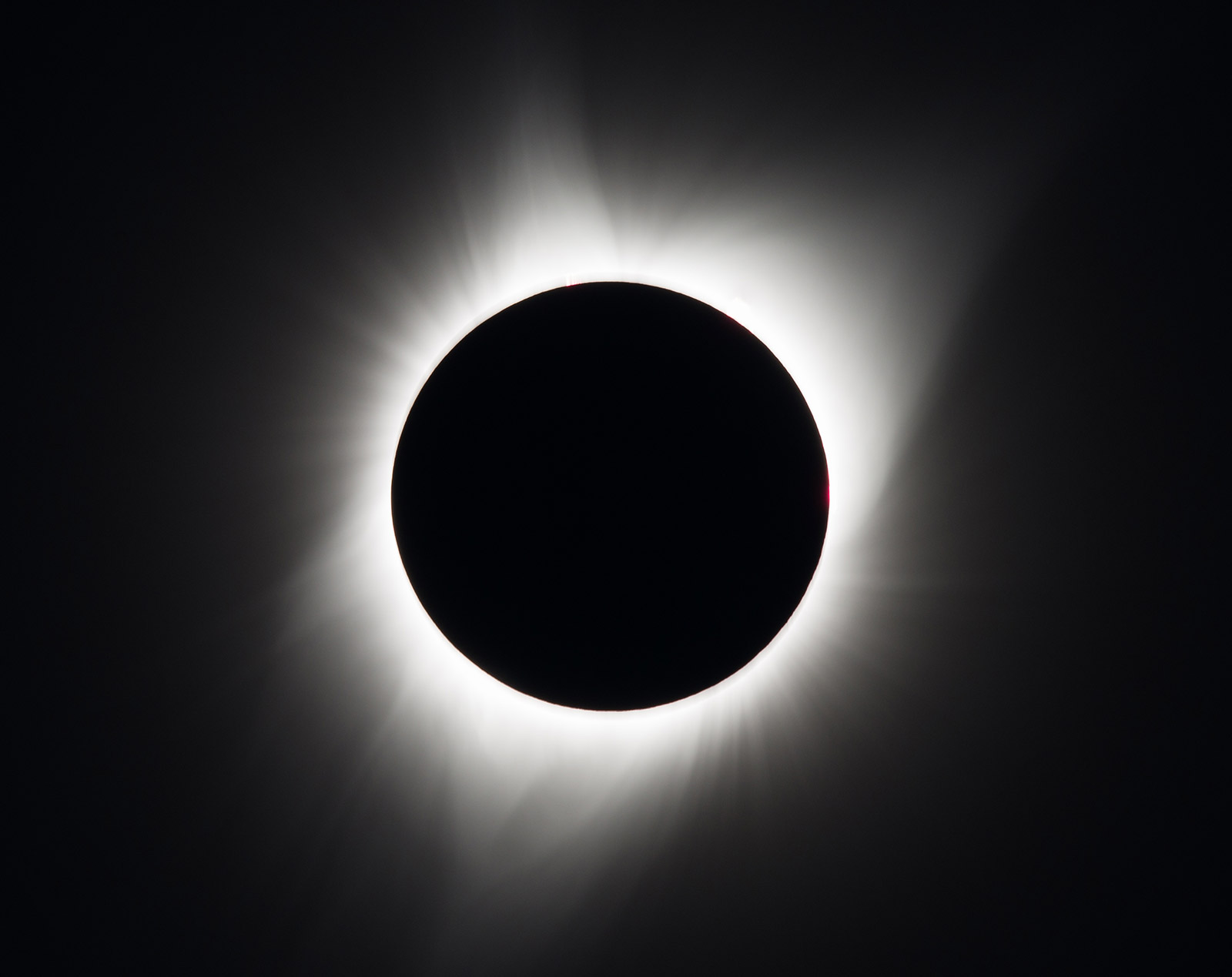
     During my recuperation, I watched with amazement as literally millions of people flocked around the U.S. to see the total solar eclipse.  How intriguing that in our allegedly "scientific" and "rational" age so
many people found various degrees of spiritual enlightenment in a natural phenomenon.  However hard we try, we cannot avoid our spiritual sides.  We may be material beings, but we are spiritually driven.
     Thanks for reading.  I hope to be posting more regularly soon.