Tuesday, March 14, 2023

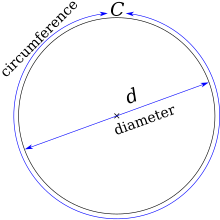
A diagram of a circle, with the width labelled as diameter, and the perimeter labelled as circumference

     If you're a scientist, or even if you're not, you may be aware that today, March 14, is colloquially known as Pi Day.  The enduring standard for countless calculations and computations, pi, otherwise known as 3.14, is used throughout the world to affect uniformity in all matters mathematical.  Pi is one of the remarkable events of mathematical constancy:  its value never changes.  And its decimal points go on indefinitely.  One could spend a lifetime calculating the decimal valuations in Pi and never reach the end:  in this regard, pi is infinite.

    Although technically Pi is the ratio of a circle's circumference to its diameter, its meaning far exceeds its usefulness.  By this I mean that in a world that, at times, seems woefully random and chaotic, the planet's structures and systems are, nonetheless, amazingly constant.  Over and beyond the unpredictability of history and time, this fragile globe on which we live is, in fact, highly predictable:  the ratio of a circle's circumference to its diameter will always be the same.  At the same time, the value of this ratio is, put another way, infinite:  it never reaches its end.

    So there we have our planet:  achingly finite, yet astonishingly infinite, a fixed point of materiality in an infinitely bound universe.

    Maybe there really is something more than what we can visibly see.

Monday, March 13, 2023

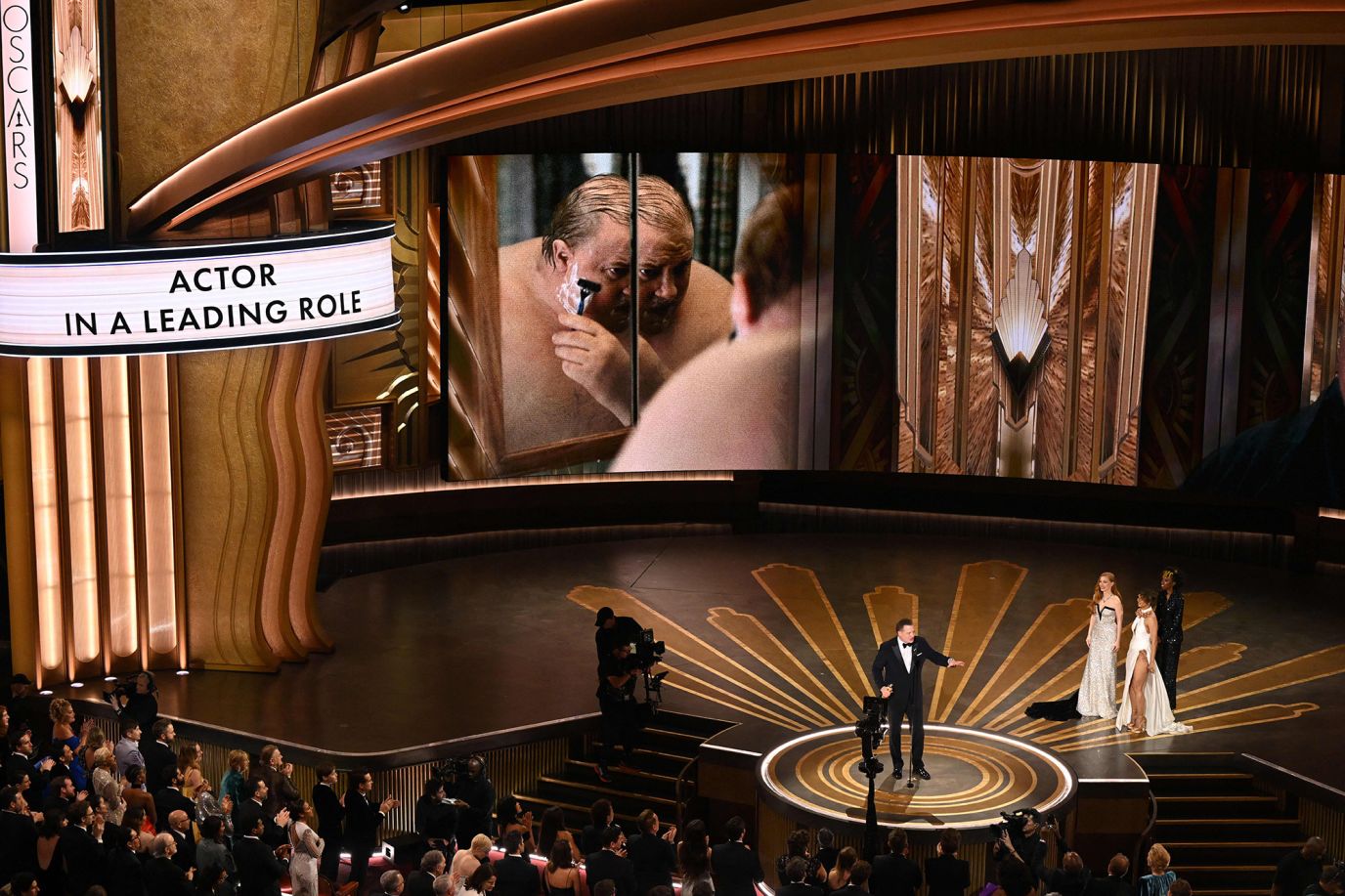
Brendan Fraser, star of "The Whale," gives a speech after <a href="https://www.cnn.com/entertainment/live-news/oscars-2023/h_930fcdac7f9573b7037ac6d70c8118cc" target="_blank">winning best actor</a>. He thanked his fellow nominees, saying, "It is an honor to be named beside you in this category."
    

    As you may know, last night was Oscar night in Hollywood.  For those who follow the Oscars, it was of course a visual feast:  the the parade of "celebrities" on the red carpet adorning the entrance to the auditorium prior to the ceremony; the interviews with numerous movie stars; the vignettes splashed on the auditorium screen, and more.  Magazines that cover "celebrities" found much fodder for their next issue.

    For the rest of us, however, the Oscars come and go as if nothing has happened.  By next year, the movies and stars which excelled this year will be forgotten, and the new winners will be forgotten promptly in the following year as well.  We wonder:  what is the point?  The movies made money, the stars made money, people were entertained, the culture grew some more furrows, and then we move on to the next thing.  It's gone as quickly as it has come.
     
    So goes much of Western culture.  It passes over and through us almost seamlessly, as if it had never happened, as if we had never experienced it at all.  Thanks to the magic of soundbites, Andy Warhol's famous fifteen minutes of fame have shrunk to less than a minute, as evanescent as they can possibly be.  We barely know they were here.

    Yet we keep moving on, keep pursuing our life dreams, perhaps thinking about one of the leading characters in the novel Perks of Being a Wallflower's wish that he not lapse into "oblivion."  We strive for presence, for presence is all, in an epistemologically empty cosmos, we have.  It's almost enough to make one wish for a God, for then, and only then, will any of the Oscars ever have any lasting point.
    
    Indeed, for then, and only then, even after every movie has run, every star has passed on, and all has turned to dust, this presence, more powerful and intense than we can presently imagine, will continue still.

Friday, March 10, 2023

      In this terribly broken world, we cannot help but wonder:  why cannot we control, why cannot we mitigate, why cannot we turn back the forces of evil?


Image result    As we think about this week, the second week of Lent, we have opportunity to wonder about this anew.  Even if we are in a position of great authority, we cannot control everything, nor can we extinguish all evil.  Lent is about giving up, giving up our time, our pursuits, our hopes of lasting control.  We acknowledge that if we try to control everything, we will inevitably end up creating a world of us and us alone, a world without any real point.
    
Lent is one of God's ways of telling us that though we are remarkable creatures, seemingly capable of directing the course of our life and that of the world, we will never control it all.  Lent reminds us that we are finite, that we have limits, that our marvelous attributes can only take us so far.  Sooner or later, we encounter a bump:  we realize that we are not so remarkable that we in ourselves can decide what we are and what existence means.  How can we?  We are only us.
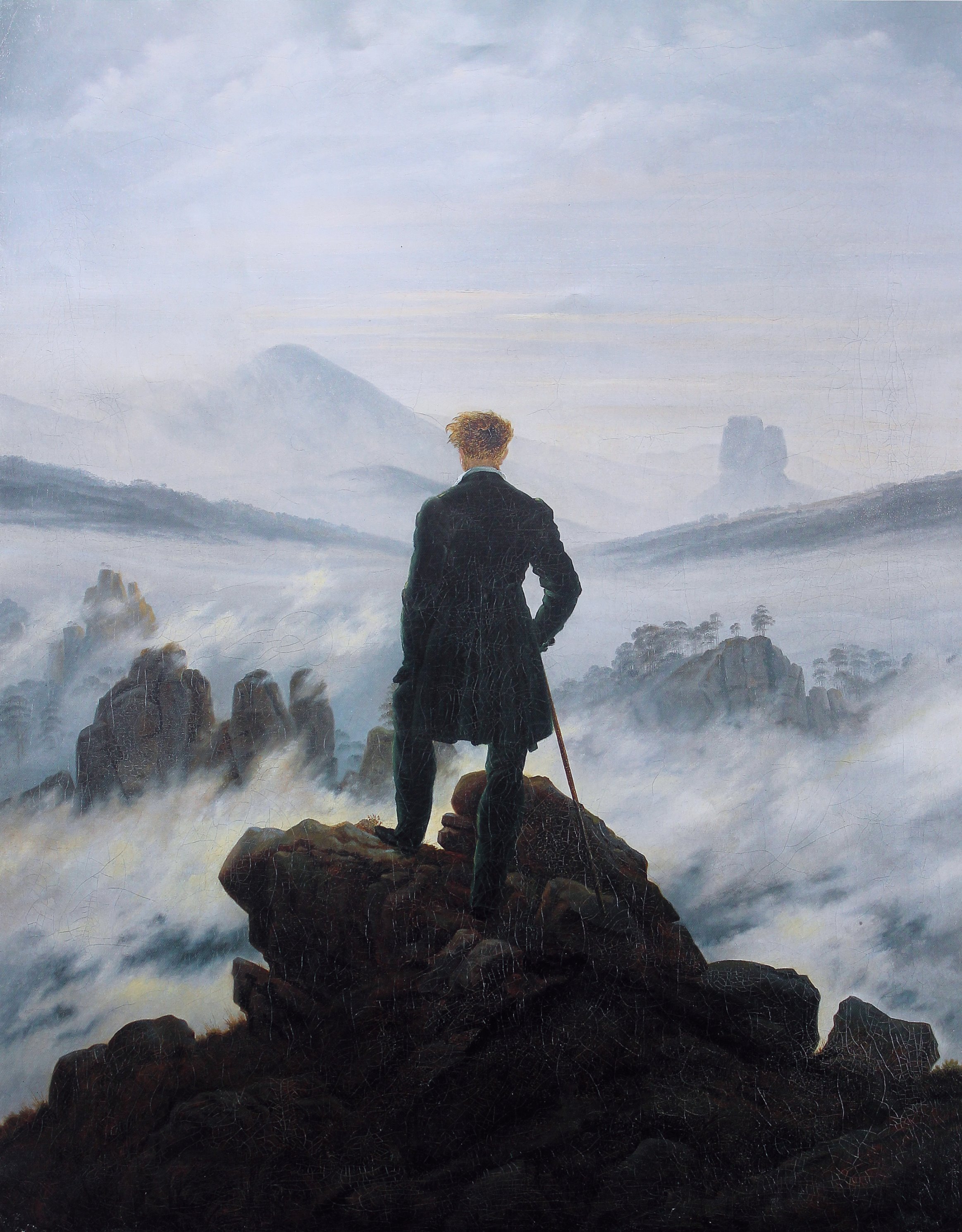
    We in Lent are like the "Wanderer above the Sea of Fog," standing before the world, its joy, its pain, watching, planning, waiting, yet unable to exercise ultimate control over that which we see.
     Precisely.  To live wisely, we must give up.  We must give up who we are now to find whom we are, in truth, destined to be.

Wednesday, March 8, 2023

     As March continues on its merry way, I take a moment to mention that today is International Women's Day!  Moreover, March is, as a drinking mug I inherited from my mother always reminds me, Women's History Month.  It's about time.  For too long, historians tended to overlook women and the role they played in moving humanity forward.  Conditioned by the social nuances of their times, and driven, perhaps, by various levels of cultural chauvinism or myopia, most historians, traditionally male, dismissed the contributions that women have made to the human adventure.

    If we are to hold that men and women are both made in the image of God and are therefore of equal worth, we err, err seriously, when we ignore, reject, or pass over the many ways that women have shaped human history for its good.  It's tragic, really:  we are in truth forgetting the meaning of the framework, physical as well as metaphysical, in which the universe functions.  It's no accident that when the writer of Proverbs 8 described wisdom, he personified it as a woman.  He knew.  He knew that male and female are woven deeply into the created order.

    And why not?  Without women, none us would be here today.  Therefore, whether you believe in God or not, believe in the worth of every human being, male and female all.  Celebrate who we are!

Tuesday, March 7, 2023

ChatGPT logo.svg

     Have you experimented with Chat GPT?  It's rather amazing, yes, but at the same time rather unnerving.  Yet those who have developed it insist that Chat GPT will enhance our lives.  Maybe so, but maybe not, too.  This raises one of the thorniest issues about the technology that daily makes increasing numbers of inroads into our lives.  Even if we can do it, that is, develop AI to the level of Chat GPT, should we?  And if we should, why should we?

    The human mind is extraordinarily supple and fecund.  It is capable of astonishing things, AI being one of them.  Yet the mind really has no master.  We humans cannot tame it.  We can only use it.

    And is utility a starting point for morality?

Thursday, March 2, 2023

Close-up Photography of Concrete Tombstones     This past Sunday marked the first Sunday of Lent.  Repentance and circumspection dominate, as those so inclined spend ever more time pondering the exigencies within their lives, the fleeting puffs of materiality in which we have life and breath.  Life looks more remarkable than ever:  a befuddling experience, yes, but the only experience, at this point, we have.


    Given the wonder of the world, it's easy to rejoice in life without also wondering why life is, why we have it, why this existence has been given to us.  To what end do we live?
 
    This is Lent's call.  Lent invites us to look at what matters most.  Who will we really be when we leave this world:  ashes or creatures of eternity?

Wednesday, March 1, 2023

    March 1:  the birthday of the composer Frederic Chopin.  One of the most dazzling musicians of the Romantic Era, Chopin in his too short life (he died at the age of 39) composed a host of memorable pieces for the piano.  His works are marked by an exuberance of life that resonates with the sounds of memory and contemplation.  We listen to them today and think about how his modest Polish origins blended with his relatively cosmopolitan lifestyle (he was well acquainted with Hungarian composer Franz Liszt and the novelist George Sand) to produce melodies that speak to many parts of our souls.

    As Lent continues apace, we find special call to remember Chopin.  We remember his creativity, we remember his vision.  We remember his angst and his brief existence.  And we realize, again, that we live in a beautiful yet tragic world, that we dance on a very narrow line between being here and not, and that we, human beings, magnificent creators though we be, find our humanness most profoundly when we submit to the mystery of who we may not really believe we are.

    But what we will one day be.

    More, in a couple of days, on my trip into the desert wilderness last week.