I am so happy that I did not vote for Donald Trump. What kind of a person is he, really? Was he worth a conservative Supreme Court justice? Was he worth the repeal of the Johnson Amendment?
Does America really want a person who posts false and inflammatory videos of Muslims as their leader?
As one who has been followed Jesus for over forty years, I am appalled at the behavior of the American president. And I am dumbfounded by the many numbers of other Christ followers who continue to insist that this president is preferrable to his opponent.
What am I missing?
Pray for the United States of America.
Thursday, November 30, 2017

Wednesday, November 29, 2017
We who live in the twentieth-first century, enamored as we are of the seeming infinitude of human achievement and possibility, largely bent on maximizing our existence, on living life to the absolute fullest, yet oftentimes rejecting any notion that a personal God could have any genuine connection to our lives, may forget that, at one point in history, one glorious moment, human possibility and divine order came very close to reconciling and coinciding, to wondrous effect.
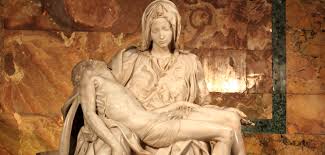 I speak of the Renaissance, the grand "rebirth" of civilization that surfaced at the close of the Middle Ages in the West. The Renaissance was marked by a powerful belief in human possibility and destiny, that humanity was a special and anointed creation of God and therefore fully capable of doing anything it wanted. Its future was limitless. Simultaneously, however, the people of the Renaissance (for the most part) never stopped believing in God and his guiding light and presence in the world. Though they firmly believed in unlimited human potential, they also believed, with equal fervor, in the fact of God, in the reality of the one who, as Nicholas of Cusa put it, "is the center of the universe, namely God, whose name is blessed . . . the infinite circumference of all things." The people of the Renaissance demonstrated that we can believe in human greatness and magnificence while acknowledging and submitting to the presence of a living and personal God and, in so doing,underscored the truth of Ecclesiastes 7:18 that, "It is good to grasp one thing and not let go of the other, for the one who trusts God will come forth with both of them." The Renaissance confirmed that if we properly manage and understand our boundaries and possibilities, we really can have it all.
God has made humanity infinitely special, and so we are: infinitely capable of astonishing and amazing things, yet infinitely bound to acknowledge from whom we have come.
Would that we always strive for both.
God has made humanity infinitely special, and so we are: infinitely capable of astonishing and amazing things, yet infinitely bound to acknowledge from whom we have come.
Would that we always strive for both.
Tuesday, November 28, 2017
Well, it seems that the Christmas season is upon us. Surveys tell us that this will be one of the biggest Christmas spending seasons ever recorded.
Should we be happy? I'm happy for the people these sales will employ. I'm happy for the people who will enjoy the gifts they receive. I'm happy for the joy many people feel in this season.
I'm most happy, however, at how the Christmas season should cause us to examine what we are doing with our money. In the end, it's all about giving, giving, that is, to others rather than ourselves.
Thinking about the congregations in Macedonia many years ago, the apostle Paul observed that, "According to their ability, and beyond their ability, they gave of their own accord, begging us with much urging for the favor of participating in the support of their brethren" (2 Corinthians 8:3-4). Consider: these people didn't wait to be asked to give; they instead begged for the opportunity to give. Moreover, they gave beyond what anyone thought they could give. They understood that, "God is able to make all grace abound to you, so that always having all sufficiency in everything, you may have an abundance for every good deed" (9:8).
If God is there--and he is--we can never give enough.
Let the retailers worry about what we should get. What do they know? Let us concern ourselves with what we can give. As you go forth to "conquer" the stores before you, realize that it's no challenge to "get." We can always do that. The far greater challenge is to give.
Life is a gift; give of it freely.
Should we be happy? I'm happy for the people these sales will employ. I'm happy for the people who will enjoy the gifts they receive. I'm happy for the joy many people feel in this season.
I'm most happy, however, at how the Christmas season should cause us to examine what we are doing with our money. In the end, it's all about giving, giving, that is, to others rather than ourselves.
Thinking about the congregations in Macedonia many years ago, the apostle Paul observed that, "According to their ability, and beyond their ability, they gave of their own accord, begging us with much urging for the favor of participating in the support of their brethren" (2 Corinthians 8:3-4). Consider: these people didn't wait to be asked to give; they instead begged for the opportunity to give. Moreover, they gave beyond what anyone thought they could give. They understood that, "God is able to make all grace abound to you, so that always having all sufficiency in everything, you may have an abundance for every good deed" (9:8).
If God is there--and he is--we can never give enough.
Let the retailers worry about what we should get. What do they know? Let us concern ourselves with what we can give. As you go forth to "conquer" the stores before you, realize that it's no challenge to "get." We can always do that. The far greater challenge is to give.
Life is a gift; give of it freely.
Monday, November 27, 2017
"You just don't even what to say to God anymore." These poignant words come from Sherri Pomeroy, wife of Frank Pomeroy, pastor of the Baptist church in Sutherland Springs, Texas, which, as you may recall, was the target of a horrific armed attack recently.
Mrs. Pomeroy is being admirably honest. Those of us who believe in God know (or should know) full well that even if we believe that God is always good, we will inevitably encounter life circumstances in which we are at a loss for words. Even for God.
In such times, it is all too easy to say that God is in the darkness before us. Of course he is. But this assertion seems unspeakably empty in the face of overwhelming tragedy. What does God's presence really do for us? We may think we sense him, we may suppose he is guiding us, we may venture to acknowledge his compassion and companionship. Yet we are still left with the vicissitudes of a fallen and broken world.
Some of my atheist friends tell me that they envy me. Why? They envy me because even in awful circumstances I find comfort, an indefinable yet purposeful comfort, in the fact of God. They do not have such comfort. And they readily acknowledge this.
So what do we do? We are left with believing in God in the midst of evil and pain, or not believing in God in the midst of evil and pain. The latter, one might argue, is the braver option: it seeks no other comfort than that of one's fellow human beings. It doesn't pretend there is anything else.
But the question remains: why, in an accidental world, do we even seek comfort at all? We may not know what to say to God, but in a random world, a world of accidental plops, we have nothing, absolutely nothing, really, to say at all.
We'll never unravel our ultimate emptiness
Mrs. Pomeroy is being admirably honest. Those of us who believe in God know (or should know) full well that even if we believe that God is always good, we will inevitably encounter life circumstances in which we are at a loss for words. Even for God.
In such times, it is all too easy to say that God is in the darkness before us. Of course he is. But this assertion seems unspeakably empty in the face of overwhelming tragedy. What does God's presence really do for us? We may think we sense him, we may suppose he is guiding us, we may venture to acknowledge his compassion and companionship. Yet we are still left with the vicissitudes of a fallen and broken world.
Some of my atheist friends tell me that they envy me. Why? They envy me because even in awful circumstances I find comfort, an indefinable yet purposeful comfort, in the fact of God. They do not have such comfort. And they readily acknowledge this.
So what do we do? We are left with believing in God in the midst of evil and pain, or not believing in God in the midst of evil and pain. The latter, one might argue, is the braver option: it seeks no other comfort than that of one's fellow human beings. It doesn't pretend there is anything else.
But the question remains: why, in an accidental world, do we even seek comfort at all? We may not know what to say to God, but in a random world, a world of accidental plops, we have nothing, absolutely nothing, really, to say at all.
We'll never unravel our ultimate emptiness
Wednesday, November 22, 2017
"God opens his hands," writes the psalmist, "and satisfies the desire of every living thing" (Psalm 104). Although we all have much for which to give thanks, perhaps the most important thing for which we can be thankful is that we can give thanks. We can rejoice that we can be aware of who we are, that we can experience the gracious bounty of the universe, that we can know, really know, that we are beings who can create life, culture, and moral sensibility. We can be grateful that we are here.
 Many a theologian has observed that all truth is God's truth. If so, we can also give thanks for that which enables us to know everything else: truth. Even more important, we can give thanks that truth is embodied in a living being and that, in the providence of God, we can find it.
Give thanks that despite the fractured state of modern spirituality, God is nonetheless able to disclose to us truth, the truth of life, the truth of death, the truth of existence, existence as it was communicated in the most wondrous existence of all, the person of God's son, Jesus Christ.
Happy Thanksgiving!
Many a theologian has observed that all truth is God's truth. If so, we can also give thanks for that which enables us to know everything else: truth. Even more important, we can give thanks that truth is embodied in a living being and that, in the providence of God, we can find it.Give thanks that despite the fractured state of modern spirituality, God is nonetheless able to disclose to us truth, the truth of life, the truth of death, the truth of existence, existence as it was communicated in the most wondrous existence of all, the person of God's son, Jesus Christ.
Happy Thanksgiving!
Tuesday, November 21, 2017
 "If the sun refuses to shine, I'd still be loving you; when mountains crumble into the sea, there would still be you and me." These beautiful words come from Led Zeppelin's song, "Thank You." As our world continues on its merry way, as we and our lives continue marching across the rims of space and time, as destiny continues to weave itself into every corner of our humanness, we look at each other, we look at those whom we love, and we marvel: how could such things be? How, when we are acutely aware of our finitude and the stark limits of our planet's ability to sustain itself, do we manage to cling to love, that magical force, fact, and feeling that courses through all parts of the cosmos?
Because we know, know in the deepest recesses of our hearts, that when all is said and done, when the sun stops shining and the mountains topple into the most distant sea, love, in all its expressions and manifestations, will be all that remains.
God is forever.
Thursday, November 16, 2017
"Why is the Religious Right so loud and vocal?" So asked a person at my atheist discussion group the other night. This person has long been troubled by the "Religious Right's" (like every broad designation for a particular viewpoint, the term Religious Right doesn't necessarily account for every nuance of opinion among those who generally identify themselves as conservative Christian Republicans) almost hostile approach, as he saw it, to those who disagree with them. Although he has no problems with religious people expressing their opinion in a public forum, he is uncomfortable with the way that some of these people insist that because their view is the view of God, it is the only one that is correct.
It's a legitimate complaint. Americans do not live in a theocracy. They live in a democracy, a highly pluralistic society, one in which all viewpoints are given equal time and respect. Although no one needs to agree with every viewpoint, everyone needs to recognize that those expressing them have the right to hold to them. Above all, we honor the fact of human dignity, marvelous beings who have been created in the image of God.
It's difficult, but we would not have it otherwise. We all want to be free. And so does God. We must tread very carefully when we insist that we know God's will, and even more so if we insist that everyone must agree with it. God doesn't insist; why should we? Because by their very nature religious viewpoints speak out of transcendence and mystery, we finite humans must step into them with tremendous caution. Who are we to say that, in every, absolutely every circumstance, we really know?
Understand the religious person's zeal, I told my atheist friend, but understand as well that God is a God who speaks, as Elijah found on Mt. Horeb (1 Kings 17-19), with more wisdom and gentleness than we can imagine.
We, we beings of reason, are only passing through.
It's a legitimate complaint. Americans do not live in a theocracy. They live in a democracy, a highly pluralistic society, one in which all viewpoints are given equal time and respect. Although no one needs to agree with every viewpoint, everyone needs to recognize that those expressing them have the right to hold to them. Above all, we honor the fact of human dignity, marvelous beings who have been created in the image of God.
It's difficult, but we would not have it otherwise. We all want to be free. And so does God. We must tread very carefully when we insist that we know God's will, and even more so if we insist that everyone must agree with it. God doesn't insist; why should we? Because by their very nature religious viewpoints speak out of transcendence and mystery, we finite humans must step into them with tremendous caution. Who are we to say that, in every, absolutely every circumstance, we really know?
Understand the religious person's zeal, I told my atheist friend, but understand as well that God is a God who speaks, as Elijah found on Mt. Horeb (1 Kings 17-19), with more wisdom and gentleness than we can imagine.
We, we beings of reason, are only passing through.
Subscribe to:
Posts (Atom)