Monday, November 30, 2020

      "The greatest poverty," wrote poet Wallace Stevens, "is not to live in a physical world."  Absolutely.  Even if there is an afterlife, how much we would still wish to live out this material life we've been given.  It is indeed amazing.  Given this, however we think--or not think--about God, it seems that unless God is capable of making himself known in our physicality, he would not be worth much to us.  Even my most die hard atheist friends acknowledge that if they could have concrete present and physical evidence about the metaphysical, they might well be inclined to believe.


Image result for first sunday of advent photos     As spiritual beings, we humans tread a tenuous path.  We love our physicality and the fruits of living in a physical world, and we should.  Yet we are also acutely aware that we are more than our physicality.  We all experience feelings of transcendence, whether we believe them to originate in immanency or something beyond it.  We daily encounter the limits of physical category.

     But we can't see them.  We only experience them.  Maybe that's the logic of the incarnation.  It gives us the moment to realize that, at one point in history and time, not only could people experience the transcendent, they could see it.  They could see transcendence in their physical reality.  This made all the difference.  Investing in transcendence alone had left them wondering what everything earthly really means.  Yet accepting only the physical forced them to construct meaning on a bed of sinking sand.
     Only in the fusion of immanent and transcendent, only in Advent's coalescing of time and eternity can we see what life can ultimately be.


Wednesday, November 25, 2020

     God opens his hands," writes the psalmist, "and satisfies the desire of every living thing" (Psalm 104).  Although we all have much for which to give thanks, perhaps the most important thing for which we can be thankful is that we can give thanks.  We can rejoice that we can be aware of who we are, that we can experience the gracious bounty of the universe, that we can know, really know, that we are beings who can create life, culture, and moral sensibility.  We can be grateful that we are here.

Image result for meadow photo


     Many a theologian has observed that all truth is God's truth.  If so, we can also give thanks for that which enables us to know everything else:  living and personal truth.  Absent this truth, nothing has point.  Give thanks therefore that despite the fractured state of modern spirituality and the numerous political issues that attend this end of November celebration, truth remains.  And that truth is knowable.
     We live in truth's materiality yet we exist in its eternality.

     Happy Thanksgiving!

Monday, November 23, 2020

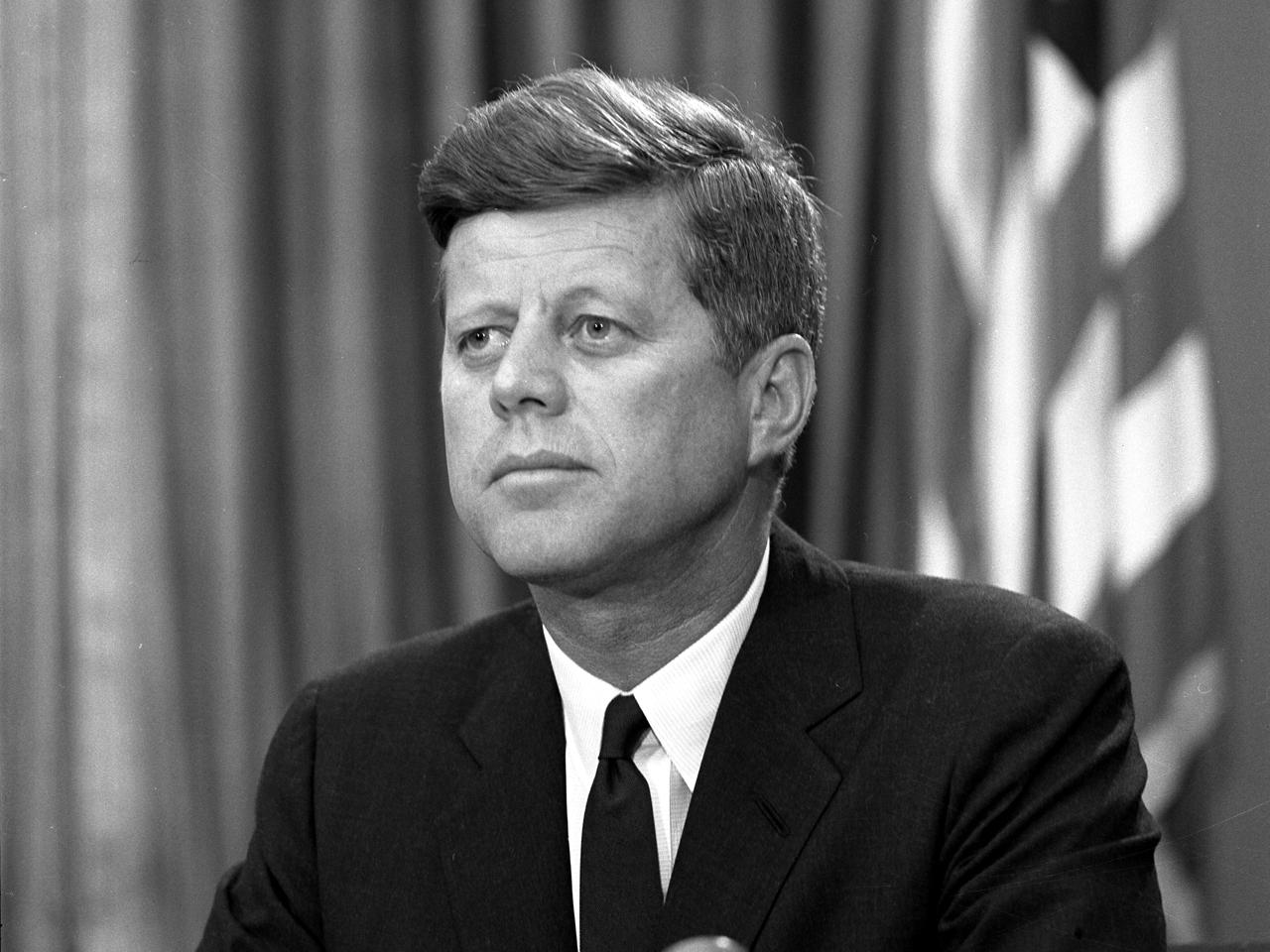
     If you're a Baby Boomer, you remember.  Fifty-seven years ago yesterday, John Fitzgerald Kennedy, the 35th president of the United States, was killed, gunned down by an assassin in Dallas, Texas.  For those of us who lived through this day, we will never forget it.  Although a number of presidents had been assassinated previously, JFK's occurred in our lifetime, in our time, in our day.  We didn't read about it in history books; we experienced it, experienced it directly and personally, in a profoundly visceral way.  Our world would never be the same.

Image result for jfk

     Setting aside the seemingly endless debates about assassination conspiracies, the relative value of JFK's presidency, or intimations that JFK might be the "AntiChrist," and looking at the bigger picture, we see one simple truth:  we live in a frighteningly capricious and unpredictable world.  Though we build our lives on concrete particulars, we construct our life meaning on universals, on hopes and dreams we cannot always see.  We are finite creatures living in a bottomless world.
     At JKF's grave in Arlington cemetery, the flame burns eternal:  only in transcendence will we see what is really true.

Friday, November 20, 2020

      Attending a service at a local Unitarian Universalist church recently, I heard a lecture by a transgender person who called themself (to use current terminology) a "nonbinary masculine leaning female."  Quite a mouthful.  Toward the beginning of their talk, they said that, "You are the judge of your gender identity."
    In a pluralistic society, this makes perfect sense: we're all expressions of our own individuations.  Outside the pluralistic West, however, people might have more trouble reconciling themselves to this.  Are there not certain standards for what constitutes gender identity?
     Maybe so.  But who sets them?  We tread on thin water when we insist that everyone should think in exactly the same way, about themselves or anyone else.  Though I do not claim to speak for God, I will say that God is a very big God and that we are very small human beings, highly rational as well as deeply emotional.  And we'll never juxtapose these precisely in ourselves or anyone else.
     Where do this leave us?  With a God whose ways are known, but a God whose ways are, equally speaking, unknown.  If we all are made in God's image, how can we bring these together to define who we are?
     It's always worth thinking about.

Thursday, November 19, 2020

     Recently I talked about the curious conflict between evangelicals (indeed, all people of faith) and materialism.  Those of faith believe that the things of this world are, in the biggest possible picture, passing and impermanent:  evanescent.  But people of faith, like every other human being, understand that they require certain "things" in order to live a reasonably comfortable existence.  Whether we believe in an afterlife, another life more glorious than this present one, or not, we all recognize that living requires that we acquire any number of possessions to do so (unless we are Diogenes in his barrel!).
     Moreover, people of faith who have discretionary income have opportunity to indulge themselves in the material offerings of this world, sometimes to an extraordinary degree.  Yet they continue to insist that, in truth, these things really mean nothing to them.
     Maybe so.  On the other hand, when, as many polls indicate they did, evangelicals, in particular, cited economic concerns as their top electoral priority, we must wonder:  what really is most important to them?  Sure, as I noted above, we all require "things" to live.  In addition, as I also noted, many of us have discretionary income, that is, we can spend our money in ways that are over and above what we really need to.  Furthermore, those with high incomes are in a position to donate very generously to charitable causes.  Their material abundance enables them to bless others.
     Where to draw the line?  I don't know, really.  Yet I suspect that some, though not all, of the reasons people of faith cite to justify their lifestyles are rationalizations developed, consciously or not, to reconcile their position in an affluent society with various biblical dictums about the transience of the material world and the billions of abjectly poor people who live in it.
     But I'm not trying to judge.  We're all individuals before God.  Our faith is our own.
     However, our faith is our own in a world that is not.  And that makes all the difference:  the creator God doesn't care how much or how little we have.  He cares about our heart.

Wednesday, November 18, 2020

     Do you like haystacks?  I say this somewhat tongue in cheek to make a larger point:   a few days ago was the birthday of French painter Claude Monet.  One of the most famous of the nineteenth century impressionists who transformed the nature of art, Monet achieved perhaps his greatest fame for his series of haystack paintings.  Visit the Art Institute of Chicago and see many of them:  Monet had a haystack for every time and season.

Image result for monet haystacks
     
     Yet Monet was more than haystacks.  He painted a number of pastoral scenes, deeply impressionistic reworkings of the French countryside, masterpieces of the subtley of light and color.  They shine with joy, a joy of happiness, a joy of the very essence of the sublime.

Claude Monet     Consider one of Monet's most well known theses:  "I wish to render what is."  In Monet's work we see an effort to take what "is" and make it as we feel it should be.  Not what we think it should be, but what we feel it should be.  We turn rationality on its head; we elevate emotion over all.
     And in so doing, we capture the heart of who, and the world, most are.  Although we are indeed rational beings, we are also, in our deepest essence, beings of passion, creatures of viscerality and pathos.  So do we embrace the world, so do we embrace its hiddenness, the powerfully ordered transcendence that ripples through it.
     We thank Monet for this insight, that amidst our dogged attempts to understand life rationally, perhaps we do better to grasp it as it most fully is:  the passionate rendering of a profoundly passionate creator. 

Monday, November 16, 2020

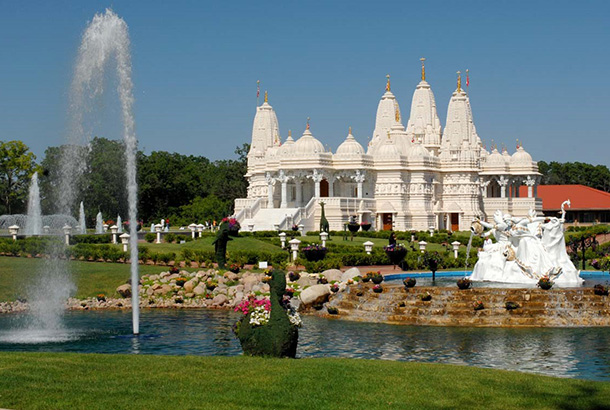
      Two days ago marked the beginning of the festival of Diwali.  It is a holiday sacred to over a billion people around the world:  a joyous occasion.  Diwali is known as the festival of lights, the lights of color, brilliance, enlightenment, and happiness:  all that which enters into the mystery and wonder of life and the gods who give it.


     It's apt.  Unless we celebrate life in the framework of higher purpose, its lights becomes little more than random occasions, capricious occurrences, chance coalescences of dust and plasma, things in which we have found (or according to German philosopher Martin Heidegger, have been "thrown") ourselves, raw and unknown, and told we must live.  And as the late evolutionary biologist William Provine acknowledged, if life is random, we are no more than plops, born only to die.  There is no meaning.  We're here, but why?
     Enjoy life, enjoy its lights.  Be happy for it.  And rejoice in the fact of purpose, the purpose of a creator.  Light doesn't shine long in a forgotten universe.