Monday, January 31, 2022

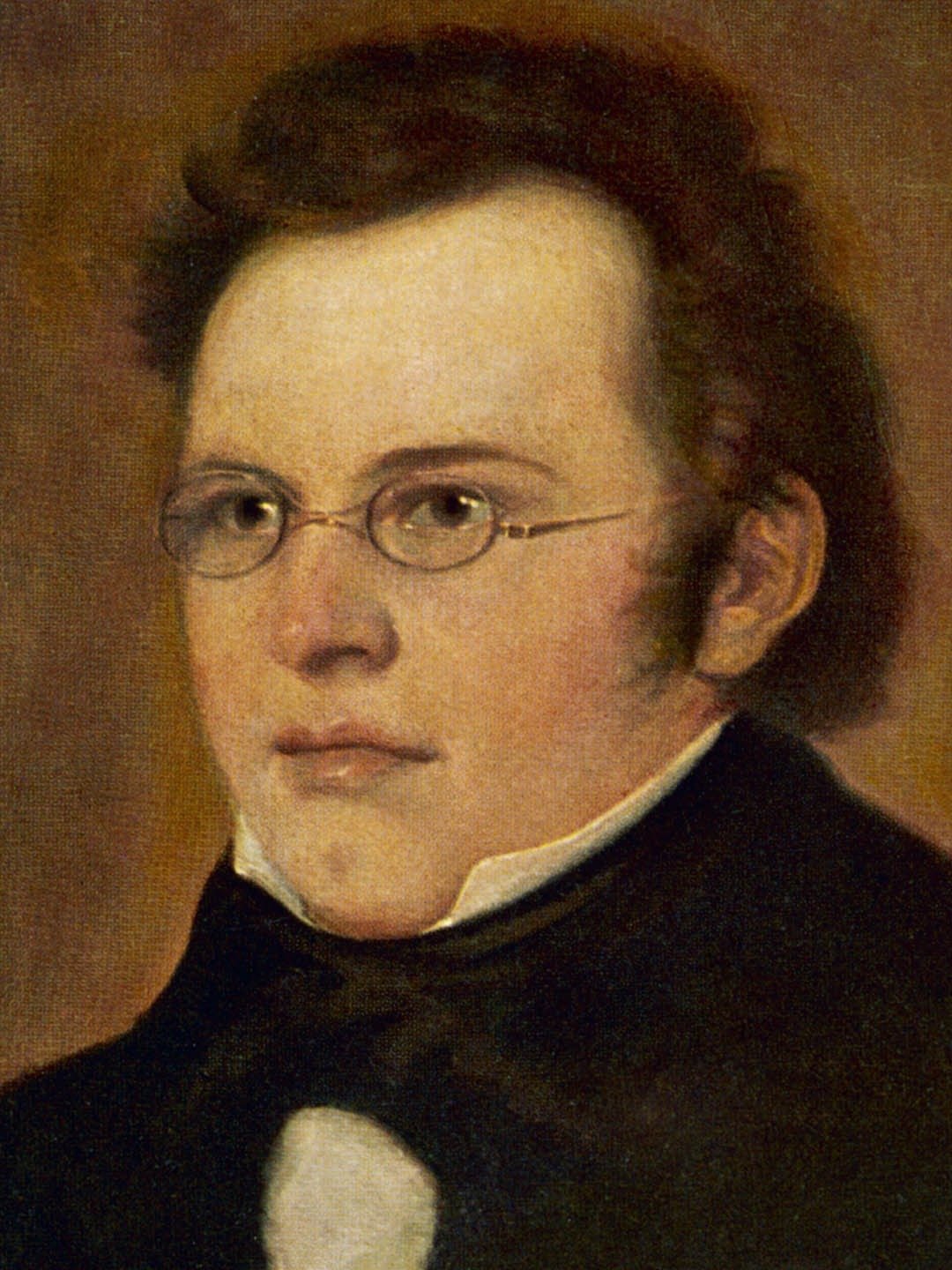
Image result for schubert"

      Not as well known as Mozart, whose birthday we remembered a few days ago, Franz Schubert was nonetheless one of the most remarkable musicians in Western history.  Immensely productive and profoundly creative, Schubert wrote some of the most ethereal and haunting melodies of all time.  We listen to his music and feel transported, lifted above what is earthly and material, moved into transcendence.  Today, January 31, is Schubert's birthday.

     Schubert's music gives us pause.  If music only told us what we already know, we probably wouldn't get as much out of it as we do.  We do not need to be reminded of what is obvious and normal.  We rather need to be encouraged to ponder what is beyond the apparent, what breaks down the seen, what splits the visible apart.  We want to know what we, at the moment, cannot.

     And this is what Schubert's music does.  Descending into the darkest recesses of his soul, Schubert talks to us about the deepest mysteries of existence, how we walk in a wisp, a gossamer veil stretched between us and the other side of time.  He romanced eternity.
     As do we all.  Every day we balance, balance between presence and absence, perched on a thin line dividing present reality and ultimate destiny.
     Thanks, Franz Schubert, for showing us that life is bigger that life itself.

Friday, January 28, 2022

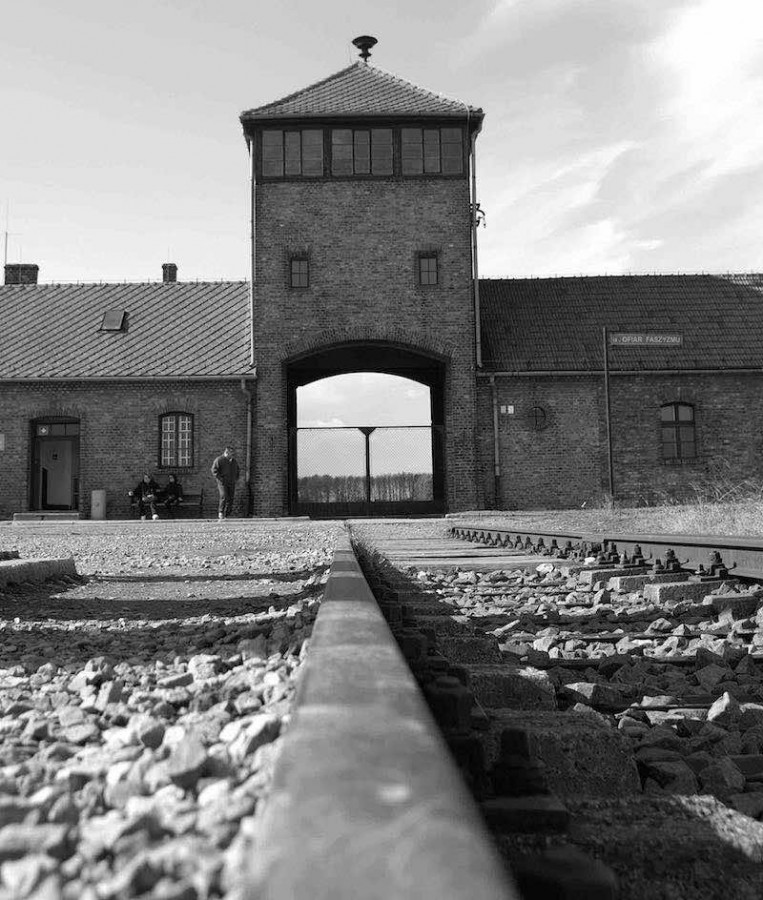
      Although for some it may have been overshadowed by Mozart's birthday, as I yesterday, January 27 is nonetheless a day of great solemnity:  International Holocaust Remembrance Day.  It is a day that should cause all of us to stop, think, and weep.  How does one begin to grasp the deliberately engineered deaths of over six million people?  How does one connect with a person who lost the sum of his lineage in a concentration camp?  How can we possibly comprehend being the object of such virulent hatred and racism?

    And how can we categorize those who fomented this horror?


Image result for auschwitz arbeit macht frei
     We can't.  And that's the point.  God aside, evil has no explanation.  It has no point, it has no plan.  It is beyond our ability to fully understand.  Yet evil is us.  We think, we make choices, we act.  Many Holocaust scholars insist, and rightly so, that the Holocaust is an event that surpasses the widest and deepest boundaries of our ken and imagination.  It's beyond intelligibility.
     Yet it happened.  Writing to me nearly three decades ago, an American then living in Jerusalem and who had made clear to me that he did not believe in God, allowed that the Holocaust caused even him to acknowledge the reality of the metaphysical.  Why, he reasoned, would anyone with a hatred other than one rooted in the tenebrosity of a twisted notion of the metaphysical--and personal God--engage in such horror?
     Weep for our Jewish brothers and sisters, and pray for those who persecute them. And believe:  at all costs, believe in the ultimacy of God.

Thursday, January 27, 2022

     It's a big day:  the birthday of Wolfgang Amadeus Mozart (it's also International Holocaust Remembrance Day, which we will consider tomorrow).  Around the world, people continue to be astonished by the immense creativity and wonder of this Austrian's music.  Fluent in all genres of classical music, Mozart, though he died, sadly, at the tender age of 34, produced an array of musical expression that most musicologists agree is unmatched.  As a contemporary said of him, "He was like an angel sent to us for a season, only to return to heaven again."  Most of us can only stand mute and marvel at Mozart's immense ability.  How could one person write works of such extraordinary beauty?


    At the same time, we can marvel at the nature of the human being, that we are creatures of such prodigious talents, that we are gifted in a nearly infinite number of ways.  How could such a thing be?

    Maybe our consciousness and sentience really do speak to the fact of a larger presence, a larger point.
    
    Maybe we really are not alone in the universe.

    Thanks, Mozart, for your music and song.  Thanks, too, for showing us, in these things, the evidence of a bigger picture.

Wednesday, January 26, 2022

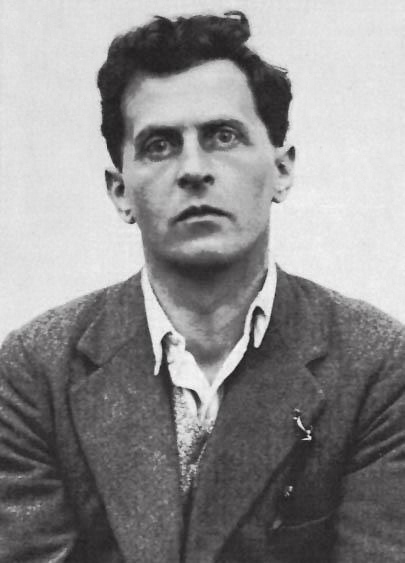
     Ludwig Wittgenstein and Kurt Godel, two of the twentieth century's most intriguing thinkers, left us much to ponder.  For Wittgenstein, among many other things he said, it was that logical propositions show logical properties but say [essentially] nothing.  

    The Austrian philosopher had a good point.  A proposition about logic certainly explains the logic it is describing.  But it doesn't tell us anything about what logic is.  We're still bereft of a larger picture.

Ludwig Wittgenstein - Wikipedia

    Godel's point was similar.  Writing in the tense years of Hitler's rise in Germany, the famous logician observed that although we revere a mathematical proposition for its simplicity and power, we cannot prove it.  That is, we admire the formula two plus two equals four.  And we love that the angles of a triangle always add up to 180 degrees.  But as to why they do, we cannot say.

Kurt Gödel - Wikipedia

    We're still left gaping at the shores of the infinite.  An infinite that we know must be there, but an infinite, short of its making itself tangibly known, we will never see.

    Maybe we really do need a personal transcendence.

Tuesday, January 25, 2022

Amazing Facts You Didn't Know About Your Brain – Cleveland Clinic

     Last week, I got some shocking news.  One of my favorite professors in graduate school, a woman who published a ground breaking book on feminist theology and later became a highly admired university administrator, announced that she had been diagnosed with Alzheimers Disease.  She's not yet seventy years old.

    It's a tragic end to a good life.  Although my mind and heart were running in many directions as I tried to process what I was hearing, one constant was a memory of a verse from the Hebrew book of Ecclesiastes.  Set at the beginning of chapter nine, it reads, "For I have taken this to my heart and explain it that the righteous and and wise and their deeds are in the hand of God.  People do not know whether it will be love or hatred; anything awaits them."

    Life can be the cruelest of bargains.  And God can be the most confounding of mysteries.  Yet we cannot have one without the other to render either one meaningful in the present moment.

    I wish my professor the best.

Monday, January 24, 2022

     Though not as well known as her husband, D. H. Lawrence, the twentieth century American path and genre breaking novelist, Frieda Lawrence nonetheless left us with some rich tales of human angst and intriguing observations about various aspects of the human condition.

Frieda Lawrence Ravagli - Paper Lion Ltd

    In her autobiography, Not I but the Wind, Lawrence writes, "Like a bottomless pit is truth."  For those who believe that truth is always fixed and unchanging, this statement may cause consternation.  Upon examining Lawrence's assertion more deeply, however, we see a profound insight.  If truth is to mean anything, that is, if it is to be a sustaining standard, of any kind, it must necessarily be something whose depths we cannot fully penetrate.  It must be something so remarkable that we humans do not always understand it completely.  Otherwise, we wouldn't need it.

    Truth is essential, yes, but as Plato and Augustine pointed out many, many centuries ago, to be effectual truth must be grounded in a presence which humans cannot ultimately make.

Friday, January 21, 2022


Virginia Woolf - Quotes, Books & Life - Biography  

    In the heat of existence, on the days when we are feeling particularly overwhelmed with the exigencies of being alive, we may feel as if we are like people who, as Virginia Woolf observed in her "Lives of the Obscure," are "advancing with lights in the growing gloom," heading toward obscurity, the obscurity of a life lived, a life enjoyed immensely but a life one day to end and be gone, never to return.

      Believing in more than life is hard in the morass of the material present.  We cannot see it, so why put our trust in it?

    Fair enough.  Yet as William Yeats reminds us, "And God stands winding his lonely horn, and time and the world are ever in flight."  Though time wears on and the years drag by, unyielding, sometimes burdensome, ever unchanging, something permanent remains.

    It's hard to see the end of a road at its beginning, yes, but if the world is to have any point, any point at all, there is always a road to follow.  A road rooted in the permanence of the necessarily personal ground of existence.