Thursday, February 23, 2017

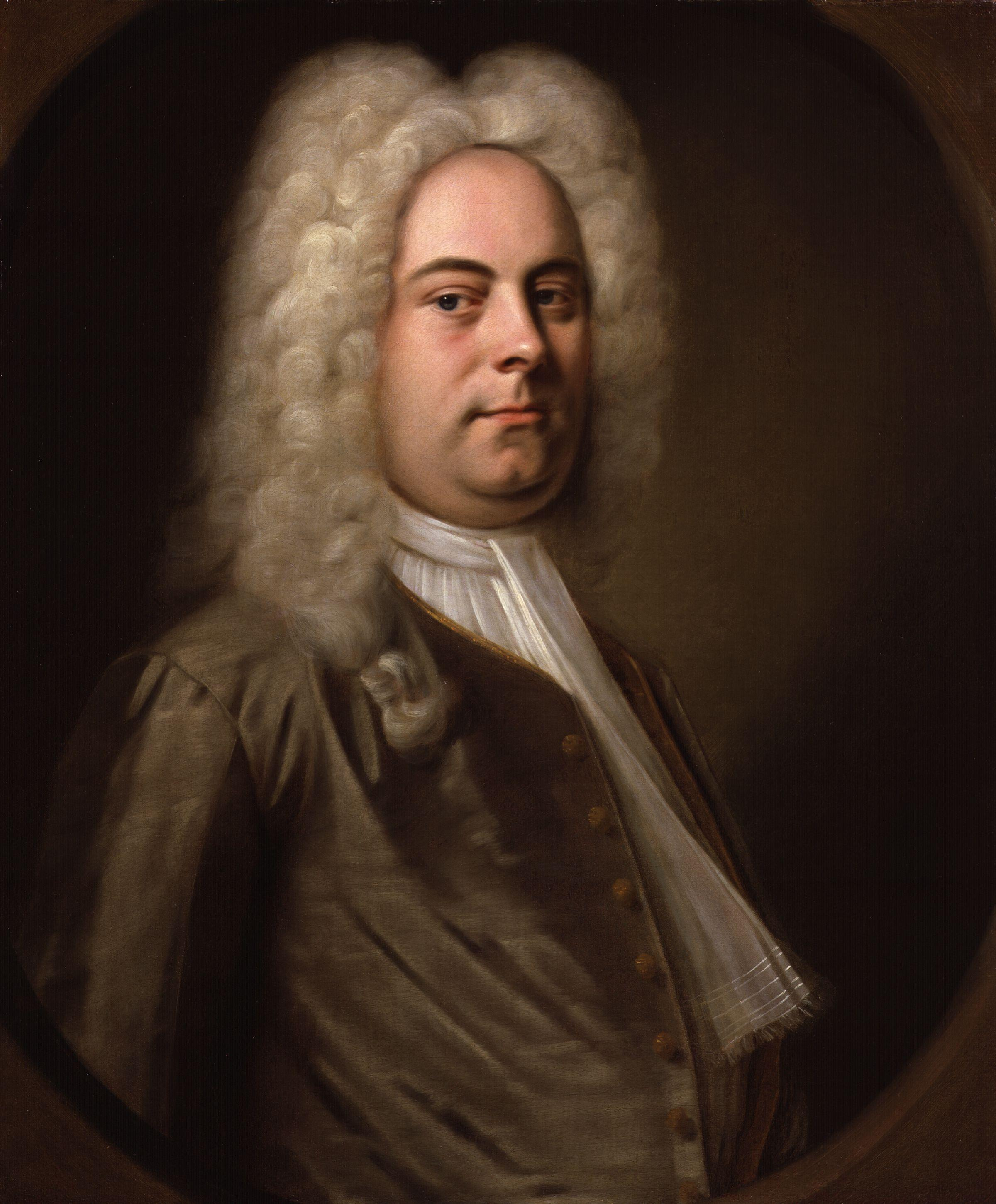
     Another day, another musician birthday.  Today is the 332th birthday of George Frideric Handel.  Born in Germany, Handel spent most of his life in London.  He is perhaps most famous for his stirring religious oratorio, Messiah, a glorious paean to the salvific love of God.  We frequently see Messiah performed around Christmas and Easter.  Another of Handel's most well known works is his Water Music, for which my wife and I have a special spot in our hearts:  it was the processional music at our wedding.
Image result     As I listened to Messiah's "Hallelujah Chorus" this morning, I reflected, again, on its power, spiritual as well as political.  As the story goes, when George II, then British king, heard its opening strains he stood up.  In an era when people sought to emulate, out of respect, what their king did, the rest of the audience stood up, too.
     Perhaps the king stood out of reverence, perhaps not.  Either way, a tradition was established.  To this day, even the most hardened unbelievers will, if they attend a performance of Messiah, stand up for the Hallelujah Chorus. Through it all, a long ago custom remains.
     This notwithstanding, however, when we review the lengthy span of biblical history which Messiah presents, we find new ways to consider the depth of God's purpose in creation.  As Handel understood very well, though God may appear to be hidden and unknown, he in fact has been working in the world since its beginning.  He's not a deistic entity.  Transcendent in essence, yes, God is nonetheless thoroughly immanent, constantly speaking into our life experience.
     Only if, however, as Handel, quoting words from the fortieth chapter of Isaiah, notes, we level the mountains and smooth the valleys of our hearts to listen.
     Enjoy the day.

Wednesday, February 22, 2017

     We live in a tension, do we not?  Each and every day we balance who we are with what we can do.  We leverage our immanence even while we wrestle with our transcendence. Where do these come together?
Image result for joseph soloveitchik     Answers abound, but Rabbi Joseph Soloveitchik's The Lonely Man of Faith offers some clues.  We are, he said, two Adams, First and Second.  Both Adams are made in the image of God, both are gifted by their creator to do marvelous and extraordinary things.  First Adam is a person who engages with the world, who steps into the world, who uses his gifts to create exceptional displays of human ingenuity. First Adam is concerned with "how": how can we use and enjoy this world in a way that maximizes its blessings for us?  Equally gifted, Second Adam, however is concerned with "why."  Why are we here? Why are we human? What are we to make our existence?
     We need both Adams to be whom we are created and destined to be.  God wants us to enjoy and enhance this world even while we wishes for us to understand why we live on it.  We must act as much as we contemplate.
    Yet ultimately, as the Rabbi points out, Second Adam is lonely.  Loneliness, he suggests, is the essence of faith.  We believe in a God whom we cannot see.
     Fair enough.  However, though the Rabbi may not agree, God has in fact made himself known, visibly, in history, space, and time.  It is in the person of Jesus that, although a person of faith will still experience physical and existential loneliness in this present existence, she understands the real truth of God:  he is here, he has come.

Tuesday, February 21, 2017

     Yesterday America remembered President's Day.  In years past, the nation remembered, on separate days, the birthdays of George Washington and Abraham Lincoln. More recently, these dates were fused into one, now an official federal holiday, President's Day.
Image result
     People of course remember these men for a variety of reasons.  The nation's first president, George Washington, a man of unerring probity, guided the fledgling democracy in its initial years, a steady hand on the national helm.  President during America's Civil War, Abraham Lincoln strove to keep the nation united and, when it appeared that it would not remain so, sought to bring it back together. And it was Abraham Lincoln who made one of the most prescient observations about the  American political scence.  in a time when people were fighting, they thought, in the name of God, he said that, Sir, my concern is not whether God is on our side; my greatest concern is to be on God's side."
     In an era of intense political polarization, often driven by various religious loyalities, around the globe, we do well to note Lincoln's words.  Better that we use our energies seeking what God wants than pursuing what we, in our fallenness, think he wants.  Not that we cannot discern God's leading, but that we recognize that divining God's precise intentions is fiendishly difficult.  Far better that we focus on listening to God rather than speaking to ourselves.  As Lincoln further adds, "For God is always right."
Image result for abraham lincoln 


Thursday, February 16, 2017

     "The mind of a person plans his way, but the Lord directs his steps."  Don't we all wonder about what, at a given point in time, we should do?  Don't we all face having to make significant decisions?
     Of course.  In the passage from the sixteenth chapter of Proverbs, we see one piece of advice for responding to the dilemma of a difficult decision.  Yet does not this seem incredibly binding?  Regardless of what we purpose to do, God ultimately decides what will happen.  Aren't we sufficiently rational to make our own decisions?
     We certainly are.  That's how God made us:  rational beings.  True rationality, however, involves more than thinking in terms of materiality alone.  A full picture of rationality means understanding that we live our material lives in the umbra of a transcendent and spiritual experience and presence.  Though we are physical beings, we all experience things exceeding physicality.  Life is an open door.
     Do we need divine guidance?  It's not so much a question about what we need as it is an acknowledgement that we cannot live in full awareness of reality without it.
     Happy decision making.

Wednesday, February 15, 2017


     Buddhism?  Oddly enough, last night, at the monthly meeting of the atheist discussion group I attend, we heard a presentation on Buddhism.  Though having studied Buddhism at length in graduate school, I enjoyed hearing from a practitioner who, she told us, has been pursuing its ways for over thirty years.


Image result for buddhaAImage result for buddha     Assessing Buddhism's appeal is not difficult.  Buddhism offers a way to find personal wholeness, even holiness without requiring adherence or loyalty to a particular doctrinal perspective, much less God.  For this reason, many Westerners find it tremendously inviting.  Moreover, meditation, the core of what it means to be Buddhist, has been found, through reams of research and study, to indeed reduce tension, mitigate stress, and lower blood pressure. From a physiological standpoint, it really does work.  Even a militant atheist like Sam Harris, author of numerous books castigating Christianity and religion, meditates.  
     So what's the problem?  Without stepping on anyone's toes, I suggest that for all of its benefits--and from a mechanical standpoint they are many--Buddhism may miss a crucial point:  we're not alone in this universe.  Although we can insist there is no God, we must then agree that the cosmos is meaningless:  why is it really here?  Why are we really here.
That said, I will add that, yes, meditation is wonderful, but if we want to think that we, and the world, have meaning in and of itself, we must also acknowledge that there is a God.
     And everything changes.

Tuesday, February 14, 2017

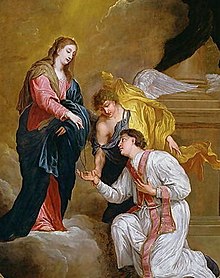
     If you've been in a store lately, you probably know that today is Valentine's Day. Although in many ways it has become (or, I might say, degenerated into) a Hallmark holiday, it actually has a measure of legitimate historical origin.  Its name comes from St. Valentine, a Christian who was martyred during the onerous reign of Claudius, a Roman emperor in the third century A.D.  Over the years, as Rome and its splendor faded into history and the Middle Ages began, it morphed into a day associated with love and romance.  
Image result for st valentine     Commercialism aside, Valentine's Day is still a good day.  What harm can come from thinking about love?
     Valentine's Day is a good day for us to think, again, about how and why we love.  So many of us struggle to be loved, so many of us look for love, as the saying goes, in all the wrong places, and so many wonder, as perhaps singer Linda Ronstadt did decades ago, when we will be loved.  Not one of us does not appreciate, in some way, the love of another human being.
     Tom Vincent was a hermit who lived on the side of California’s San Gabriel Mountains’s 9,000 foot Mt. Baden-Powell for over 50 years.  A recluse, he made every effort to keep people away, sometimes firing his rifle at anyone who dared approach his habitation.  One day, however, Tom became very sick, so much so that he could no longer live on his own.  As it turned out, he was dying.
     Fortunately for Tom, the local postmaster, the only person with whom he ever talked, learned of his illness and took him down the mountain to a hospital.  After a few weeks, Tom died, the postmaster still at his side.  He didn’t die alone.  For some brief moments, Tom knew love.
     As you remember Valentine's Day, think about Tom.  Think about love.  And think about from where, in a world of impersonal chemical and material origin, love could possibly come.
     Think about the essential and transcending love of God.

Monday, February 13, 2017

     Interregnum?  It's a term used mostly in scholarly circles, a word drawn from the Latin for king, "rex."  It means "between kings."  In a recently published book of the same name, author Carlo Bordoni makes the point that although the West has largely abandoned the notion of a grand narrative for understanding itself, it nonetheless is on the verge of adopting this notion all over again.
     What exactly does this mean?  Simply, even though we in the West have decided we no longer need a "master" ("meta," from the Greek word, "mega," meaning "large") narrative, that is, some sort of broad and encompassing narrative to explain our existence, we in fact cannot do without one.
     Decades ago, this master narrative was religion, principally Christianity.  That is no longer true:  Christianity is not the dominant narrative of the West.  So the West stumbled into postmodernity, which is basically a worldview that rejects the notion of a grand narrative.
     However, as Bordoni points out (and many others have, too), the people of the West (indeed, all peoples) cannot live this way indefinitely.  They need a bigger picture to make sense of their finitude.  They need a larger framework to understand themselves. And what does this say about us, we human beings who find ourselves on this remarkable and bewildering planet?
     Just this:  we cannot be who we are without believing in something bigger than ourselves.  This could be a philosophy, set of beliefs, worldview, or something else.  It could even be, gasp, God.  Whatever it is, we should admit that we cannot live without it.
     Maybe that's why God is always calling us.  He knows us better than we know ourselves.