Although she has been gone for nearly eight years, I could not help but think of my mother on Friday of last week. It's her birthday. I recently heard John Lennon's "Mother." For those who have not heard the song, Lennon sings of the mother and father whom he always wanted but, as he puts it in the song, were never there for him. They didn't "have" him.
Would we all wish for parents who are there for us, who "have" us, who love us as we wish them to love us. In contrast to Lennon, I experienced this love in full, and more, in the love of my parents, my mother and father. I really needed nothing more from them, for in their love they gave me everything I could possibly want and need. I left home believing that the world was a good place, that people were decent beings, that love reigned in the universe.
I hope that you find this kind of love, too. Whether it's from your parents or others, I hope that, through it, you come to see the fullness and presence of love in the cosmos, and enjoy and appreciate its every expression on our behalf. That you see love as something that always wants you.
Like the love of God. Thank goodness for a loving God.
Monday, March 12, 2018

Thursday, March 8, 2018

Politics and culture aside, however, I believe we do well to consider why the human race is composed of men and women. The reason is far more than mere procreation. The most profound reason for two human genders is that, bottom line, men and women need each other, need each other in more ways than they can individually or corporately imagine. Humanity cannot be fully human unless male and female are flourishing, unless both genders are able to be all that they can, before God, be. As Genesis makes clear, humanness is male and female, and we are duty bound to achieve its fullness.
Do we have a long way to go? Sure. But we are mere dollops of masculinity and femininity tossed into an accidental cosmos, nor are we male and female, complementary in gender, without reason. We are as we are because of God.
And God wants nothing more than our human completeness.
Wednesday, March 7, 2018
Mortality strikes us all, doesn't it? For many of us, however, it takes some time for this knowledge to sink in. Examples of this are legion, but I think here of the ancient Epic of Gilgamesh, a nearly 4,000 year old document that tells a curious tale of adventure, kingship, and the end of life.
 The story turns upon two characters, Enkidu and Gilgamesh. Enkidu is a wild man, a man of untamed desire and virlity. Gilgamesh is a man of royalty. Nonetheless, they bond and set out to pursue adventure together. They encounter many things, regaling each other with their prowess. Unfortunately, they also end up offending the gods. As punishment, Enkidu dies.
Distraught and confused--he had never seen death before--Gilgamesh proceeds to wander across the earth seeking the secret to eternal life. He never finds it. "You," the gods continually tell Gilgamesh, "will never live forever." It is not, they add, "yours to know."
We are no different. But we chafe before it. Mortality is the greatest puzzle and vexation we face.
That's the bad news. We are human. It's also, however, the good news. If there is a human being, there is a God.
The story turns upon two characters, Enkidu and Gilgamesh. Enkidu is a wild man, a man of untamed desire and virlity. Gilgamesh is a man of royalty. Nonetheless, they bond and set out to pursue adventure together. They encounter many things, regaling each other with their prowess. Unfortunately, they also end up offending the gods. As punishment, Enkidu dies.Distraught and confused--he had never seen death before--Gilgamesh proceeds to wander across the earth seeking the secret to eternal life. He never finds it. "You," the gods continually tell Gilgamesh, "will never live forever." It is not, they add, "yours to know."
We are no different. But we chafe before it. Mortality is the greatest puzzle and vexation we face.
That's the bad news. We are human. It's also, however, the good news. If there is a human being, there is a God.
Tuesday, March 6, 2018
In a broken world, a world in which things do not always go as we wish them to, a world marked by tremendous joy as well as profound tragedy, we humans seem to cultivate an innate longing for control. Why can we not control the affairs of our lives? Why can we not ensure that we are not surprised by darkness?
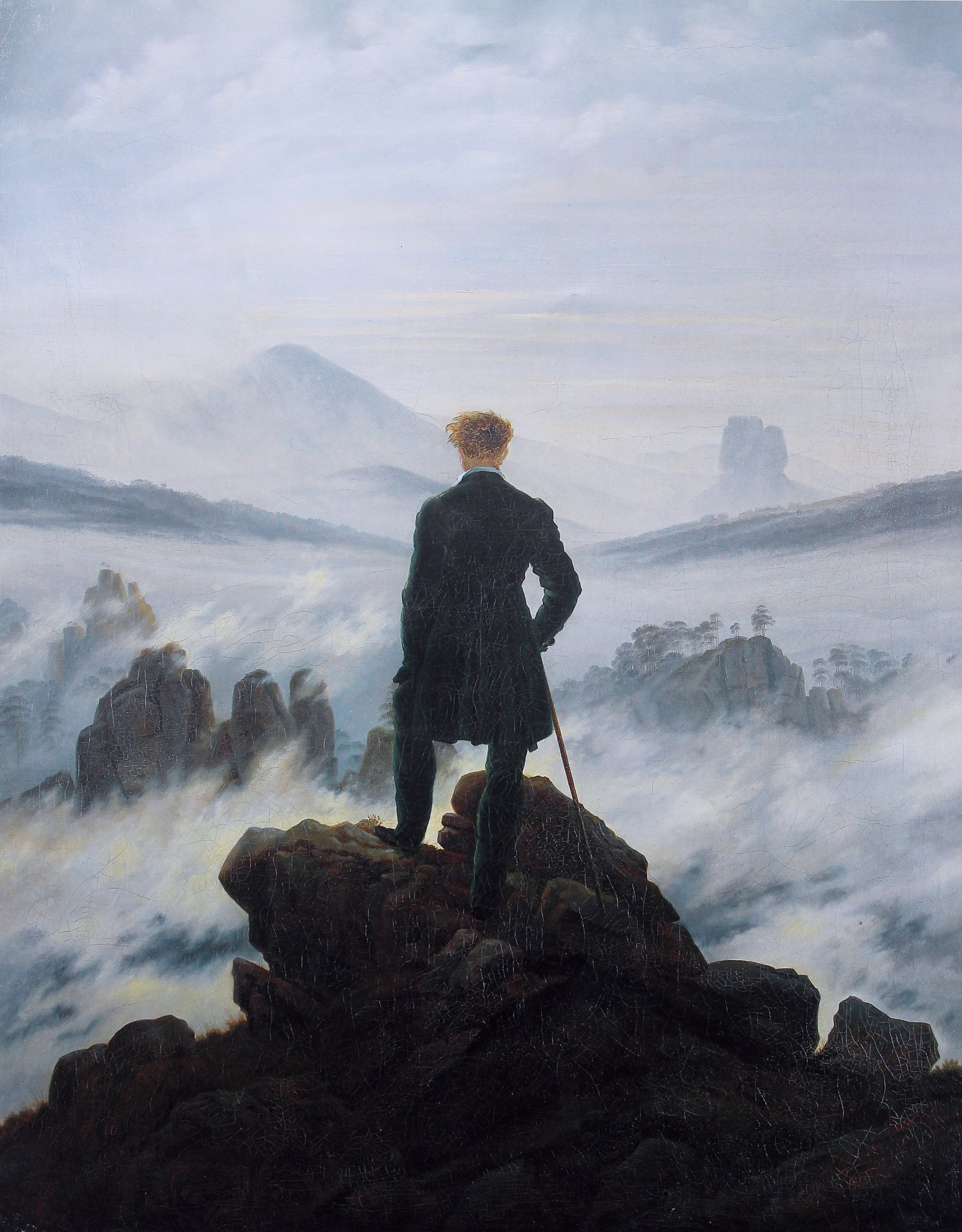 In this week, the week of the second Sunday of Lent, we have opportunity to rethink our longing for control. Lent is all about giving up. We give up our time, we give up our pursuits, we give up our lives, we give up control. We recognize that we live in a world beyond our control. We acknowledge that if we try to control everything, we will inevitably end up creating a world of us and us alone, a world without any real point except poor little us. We reduce ourselves to a collection of atoms spinning madly in a nexus of space and time, avoiding everything but ourselves.
Lent is one of God's way of telling us that though we are remarkable creatures, entirely capable of directing the course of our lives, we will never understand and control it all. Lent reminds us that we are finite, that we have limits, that our marvelous attributes can only take us so far. Sooner or later, we encounter a bump: we realize that we are not so remarkable that we in ourselves can decide what we are existence mean. How could we? We are only us.
We in Lent are like the "Wanderer above the Sea of Fog," standing before the world, watching, planning, waiting, bereft, however, of ultimate control over that which we see.
And that's precisely God's point: in order to gain control, we must give it up. We must give up who we are now to find who we are destined to be.
Monday, March 5, 2018
I'm happy for them, happy that they found their vocational niche, and happy for them that they've been able to make a good, indeed a very good living from it.
This notwithstanding, what I find interesting, even intriguing about the adulation some people heap upon these "celebrities" is the extent to which it represents, to me, a longing for heroes, for people to look up to, for people who have risen above the fray and who seemed to have found a happiness others do not have.
But happiness, as so many of us know, is not something we find. Happiness is what happens to us. Happiness is what we experience when we have resolved not our vocational angst or material paucity but our innermost longings, our deep seated longings for meaning. Our greatest heroes need not be those who are materially successful, but rather those who have been successful in matters of the heart, those who have found what the Hebrew Bible calls shalom and what Jesus calls "perfect," a completeness of body, spirit, and soul. Happiness is grounded in the present necessity of God.
Friday, March 2, 2018
This past Sunday marked the first Sunday of Lent. Repentance and circumspection now dominate the religious imagination, as those so inclined spend ever more time pondering the exigencies within their lives, the fleeting puffs of materiality in which we have life and breath. Life looks more remarkable than ever: a befuddling experience, yes, but the only experience, at this point, we have.
Given the wonder of the world, it's easy to rejoice in life without also wondering why life is, why we have it, why this existence has been given to us. To what end do we live?
In its call to slow down, to meditate and consider, to let go of the immediate, Lent carves multiple inroads into this question, dissembling the perfunctory and expected and normal. It calls us to not blast life apart without knowing what we are blasting it into, to stop striving for what will not last, and to relax, as the Psalmist says, in the reality of God (Psalm 46:10). Lent invites us to look at what matters most. Who will we really be when we leave this world: ashes or creatures of eternity?
Need we acknowledge larger realities in our earthly existence? Only you can decide that. One truth, however, will remain. We will never escape the fact of our mortality. Lent reminds us of our contingency. It also reminds us that if the world is contingency only, the universe would never have had a reason to be. And neither would we.
Enjoy the journey.
Given the wonder of the world, it's easy to rejoice in life without also wondering why life is, why we have it, why this existence has been given to us. To what end do we live?

In its call to slow down, to meditate and consider, to let go of the immediate, Lent carves multiple inroads into this question, dissembling the perfunctory and expected and normal. It calls us to not blast life apart without knowing what we are blasting it into, to stop striving for what will not last, and to relax, as the Psalmist says, in the reality of God (Psalm 46:10). Lent invites us to look at what matters most. Who will we really be when we leave this world: ashes or creatures of eternity?
Need we acknowledge larger realities in our earthly existence? Only you can decide that. One truth, however, will remain. We will never escape the fact of our mortality. Lent reminds us of our contingency. It also reminds us that if the world is contingency only, the universe would never have had a reason to be. And neither would we.
Enjoy the journey.
Thursday, March 1, 2018
 March 1: the birthday of Frederic Chopin. One of the most dazzling musicians of the Romantic Era, Chopin in his too short life (he died at the age of 39) composed a host of memorable pieces for the piano. His works are full of life yet resonate with the sound of memory and contemplation. We listen to them today and think about how his Polish origins blended with his relatively cosmopolitan lifestyle (he was well acquainted with Hungarian composer Franz Liszt and the novelist George Sand) to produce melodies that dig into our soul.
And in this time of Lent, a time in which we take time to meditate on our fragility and mortality, a time in which we find space to ponder the meaning of our curious conglomeration of physicality and spirit, we remember Chopin. We remember his creativity, we remember his vision. We remember his angst. And we realize, again, that we live in a beautiful yet tragic world, that we dance on a very narrow line between being here and not, and that we, human beings, we magnificent creators, find our humanness most profoundly when we submit to the mystery of doubt, pain, and the realization that we may not know whom we really are.
Subscribe to:
Posts (Atom)