As we ate lunch the other day, my dining companion, Alan, who has been an atheist for decades, asked me (we had been discussing the relationship of human action to climate change), "Why do modern human beings make such poor decisions about the future of the world?"
Although the short answer, put simply (and perhaps simplistically), is the effects of sin, the more thoughtful answer is that, as I suggested to him, when humanity abandoned its belief in the possibility or even the presence of the metaphysical, it unwittingly jettisoned any notion that there was anything beyond what it could, on its own, be. We became the problem, but we also came to believe that we are the solution.
While this seems logical, it also seems circular. Letting go of the metaphysical is more than a rejection of God, although it is that. It is rather a decision that there is no greater thought, imagination, or intelligence than what we currently possess: we are it.
Yet this leaves us, as the existentialist Paul Sartre pointed out long ago, as little more than "useless passions" lost in a lonely and meaningless universe. And if this is true, how can we ever say who we really are?
Friday, May 31, 2019

Thursday, May 30, 2019
 "I'm king of the world," said movie director James Cameron upon learning that he had won the Oscar for best director of a film (Titanic) in 1997. In the same way that we understand former Beatle John Lennon's 1966 remark that the Beatles were more popular than Jesus to be more social commentary than anything else, so we can understand Cameron's assertion as the same. At that particular point in cinematic history, he was, perhaps, the "king." Titanic broke box office records all over the world.
Yet how do we picture a king? How do we envision a ruler? The ones we admire most are those who have used their positions to not merely enrich themselves, but rather the lives of those whom they rule. They elevate a society; they do not seek to make it subservient to their whims. The best rulers are servants.
On the one hand, this is highly ironic: a ruler serving those whom she rules. On the other hand, it is entirely logical: of what good is the power to rule if it does not recognize the enormous weight of humility it requires?
After all, there is only one God.
Wednesday, May 29, 2019
"Facts," he said, "all I'm interested in is facts!" It's the opening line of Charles Dickens's Hard Times, the British author's look at some of the downsides of his country's entry into the Industrial Age.
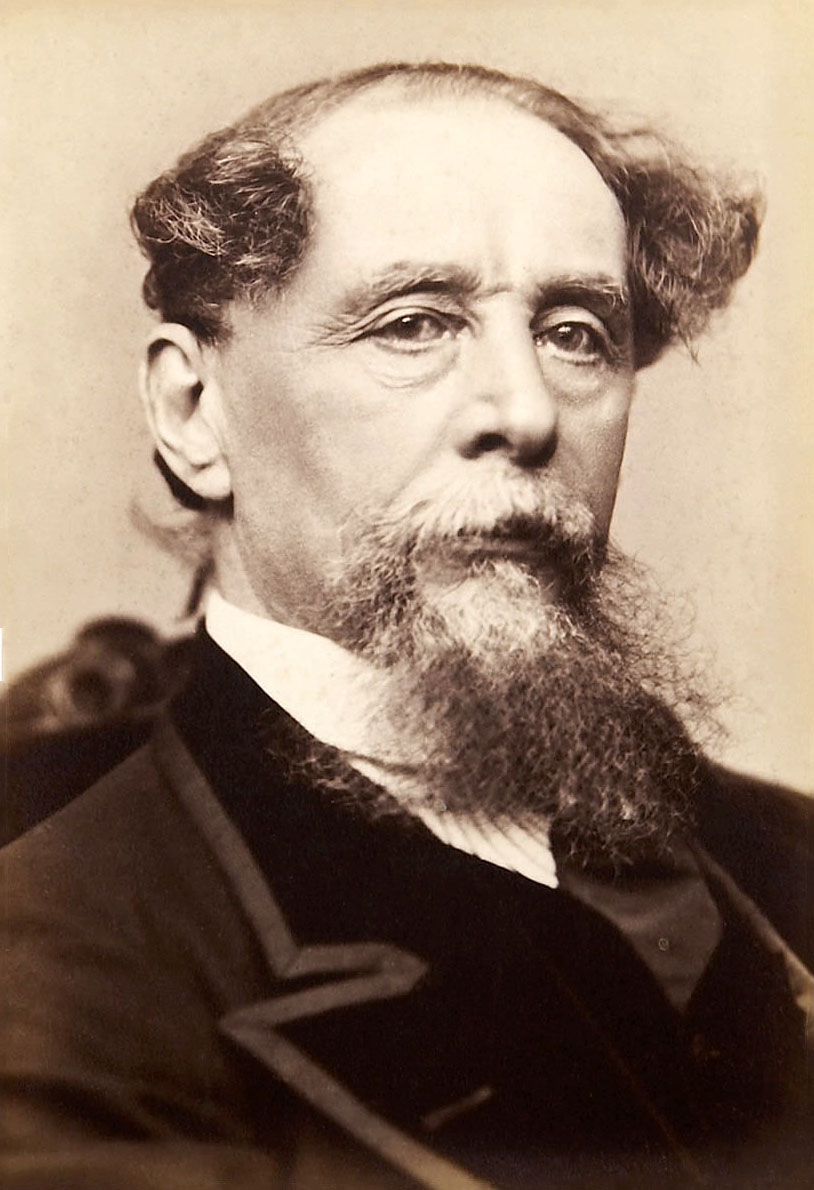 Facts are essential, facts are necessary. What, however, are they? That is the far greater question. We balance our thinking between what we believe to be true on the basis of our senses (facts) and that which we believe to be true based on our imaginations (fantasy). Both are important to meaningful existence. As we cannot live without concrete and attestable information about our world, so we cannot live apart from being able to go beyond these things. To rework an old adage, all facts and no imagination makes us very dull beings.
Which none of us wishes to be. Only with our imaginations can we test facts, and only with facts can we ground the imagination.
And only with transcendence can we measure both.
Facts are essential, facts are necessary. What, however, are they? That is the far greater question. We balance our thinking between what we believe to be true on the basis of our senses (facts) and that which we believe to be true based on our imaginations (fantasy). Both are important to meaningful existence. As we cannot live without concrete and attestable information about our world, so we cannot live apart from being able to go beyond these things. To rework an old adage, all facts and no imagination makes us very dull beings.Which none of us wishes to be. Only with our imaginations can we test facts, and only with facts can we ground the imagination.
And only with transcendence can we measure both.
Tuesday, May 28, 2019

Memory can be wonderful and grand, but enormously painful, too. As those of us in the West remember people we knew (and those we never knew) who have fallen in war, we can also remember that even if it does not bring anyone back, remembering nurtures hope. It enables us to look beyond ourselves, to see and experience the enduring grace of existence, to realize anew that life is something bigger than we can ever make it to be. Life has a life of its own, a purpose, a future. It's a drama, a drama of space and time infused with the transcendent meaning of a creator God.
On this day, the day after Memorial Day, we pray for the fallen, we pray for those who gone. And we pray for the life to come.
Thursday, May 23, 2019

It reminds me of the immense possibility of the universe. We will never tap everything the cosmos has for us. We will never exhaust its potential and what it can offer us. Throughout our lives, the universe will, to borrow some words from a very old song by Neil Young, give us more than we can take.
In a good way. Why, however, this inexhaustibility? Why this seemingly infinite presentation of possibility? And why do we see it this way?
Maybe, as much as the squirrel scampers to its leafy drey, thinking about the present as well as the future, we are made to live and imagine what is before as well as what is beyond us. We cannot do otherwise: we walk in the metaphysical, the metaphysical in our minds, hearts and, most importantly, the presence of God.
Wednesday, May 15, 2019
Again: objective morality? As we did last month, in my atheist discussion group we talked, this month, about objective morality. We agreed that, all things considered, we cannot suppose that we can "do" morality in an entirely subjective way. We all have our starting points. We differ, it seems, on what those starting points are.
In the course of our discussion, someone brought up Sam Harris's book, Moral Landscape. I read this book some years ago and remember being struck by his central thesis, namely, that the ideal objective measure of what is morally correct is wellbeing.
What's wellbeing? Harris says that it is a decision that life is better than death, that health is better than sickness, and that happiness is better than despair. Fair enough. Nonetheless, although it's difficult to disagree that these more positive conditions are to be preferred, we still end up sustaining our morality with a sense of how we feel.
Is this enough? It is if we wish to reduce ourselves to Paul Sartre's characterization of the human beings as a "useless passion." However, it is not if we instead wish to think about ourselves as complex beings, complicated nexuses of thought, spirit, and emotion. And we would be hard pressed to deny that we are the latter.
The answer, it seems, is to suggest that if we insist that we are moral beings, we must also recognize that being moral cannot evade acceding to the presence of mind and spirit. And for those to be fully experienced and known, we must acknowledge the fact of transcendence.
By the way, I'll be traveling for the next several days and will not be posting. I'll look forward to resuming in about a week. Thanks for reading.
In the course of our discussion, someone brought up Sam Harris's book, Moral Landscape. I read this book some years ago and remember being struck by his central thesis, namely, that the ideal objective measure of what is morally correct is wellbeing.
What's wellbeing? Harris says that it is a decision that life is better than death, that health is better than sickness, and that happiness is better than despair. Fair enough. Nonetheless, although it's difficult to disagree that these more positive conditions are to be preferred, we still end up sustaining our morality with a sense of how we feel.
Is this enough? It is if we wish to reduce ourselves to Paul Sartre's characterization of the human beings as a "useless passion." However, it is not if we instead wish to think about ourselves as complex beings, complicated nexuses of thought, spirit, and emotion. And we would be hard pressed to deny that we are the latter.
The answer, it seems, is to suggest that if we insist that we are moral beings, we must also recognize that being moral cannot evade acceding to the presence of mind and spirit. And for those to be fully experienced and known, we must acknowledge the fact of transcendence.
By the way, I'll be traveling for the next several days and will not be posting. I'll look forward to resuming in about a week. Thanks for reading.
Monday, May 13, 2019
It's a good day. Whether we have good or bad memories of our mothers (or perhaps a mix), we must admit that without our mothers, we would not be here, would not have found life, would not have tasted the marvels of existence. If our mother genuinely loved us, so much the better, for we would have learned early on that the world is indeed a good place, and that life is indeed an adventure worth pursuing. For those for whom the opposite was true, I'm sorry, deeply sorry. Life was likely not as pretty. In fact, it may have been inordinately cruel. And I hope and trust that as you have spun out your life, you have found healing and remedy, that you have found that even if your mother did not seem to love you, other people do. And I hope that you have learned that God loves you, too.

The sacrifices a mother makes for her children mirror the sacrifices that God makes for us every day, the endless effort he makes to ensure that despite the brokenness of the world, we, humanity, endure. Good or evil, sinner or saint, God loves us all, blessing us with everything we need to flourish on this remarkable planet. Like a mother, God never forgets those whom he made.
I'm so thankful God gave her to me, and me to her. And my memories of her love makes me realize, over and over, every day, the enduring reality of God.
Thanks, God, for my mother.
Subscribe to:
Posts (Atom)