Monday, July 13, 2020

     It was toward the end of the American Civil War, a particularly tragic moment in the history of the country, that President Abraham Lincoln signed, in 1864, legislation that ordered Yosemite Valley, that Valhalla of towering walls of granite overlooking stunning vistas of lakes, river, and meadow, be set aside and preserved for the enjoyment of prosperity.  It was America's initial foray into the idea of a national park.
     Today, as many people know, today, Yosemite is one of the most visited national parks on the planet.  Its campgrounds are always full, its granite faces always covered with climbers, its backcountry always filled with trekkers:  Yosemite is a prized destination.

Yosemite National Park, Mariposa County, California - Tunnel View


#yosemitenationalpark
#tunnelview #nationalpark #mountains #waterfall #takeahike    

     How odd, even ironic, then that Yosemite Park's genesis occurred during such a divisive time in America's history.  It is comforting to know that even in the midst of some very trying times legislators were able to look outside of themselves and strike a blow for the greater good.
     As filmmaker Ken Burns observed, the concept of a national park is "America's best idea."  Indeed.  As Henry David Thoreau wrote over a century ago, "In wildness is the preservation of the world."  Although we do not need any more human wildness--debauchery, treachery, and more--today, we can certainly use much more natural wildness:  we need to be challenged by forces outside of ourselves.
     We are little people in a vast, vast universe.

Friday, July 10, 2020

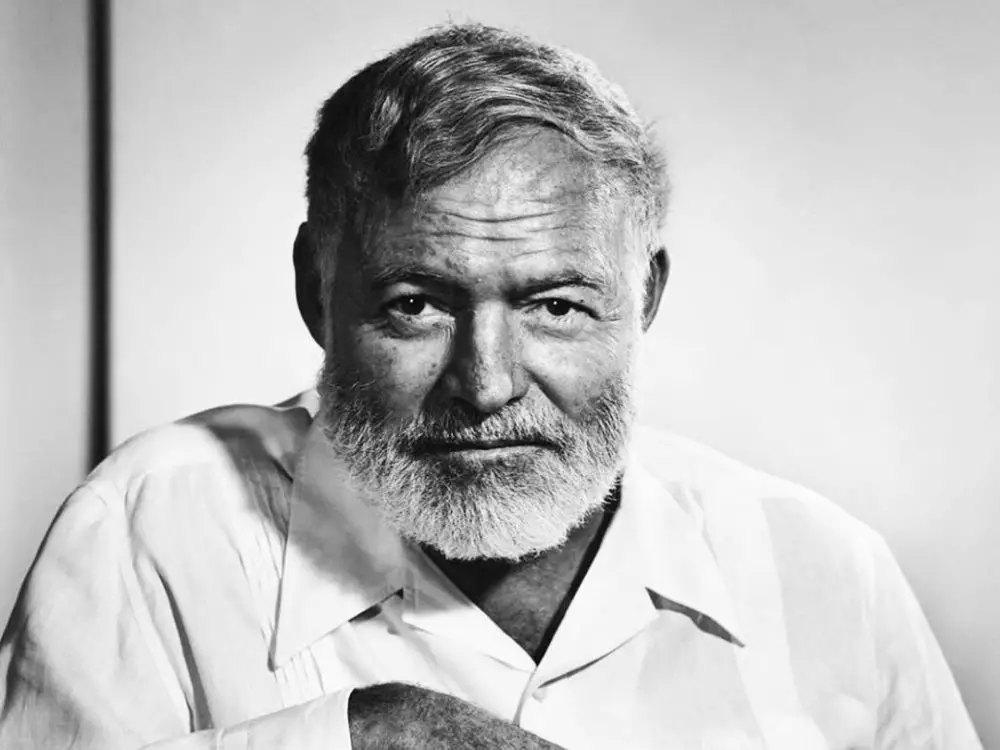
Five Highlights From the Marvelously Messy Life of Ernest Hemingway      Isn't truth a funny word?  Most of us appreciate it, most of us desire it. Very few of us, however, can define it.  Philosophers tell us there are essentially two ways of looking at truth.  The correspondence theory suggests that truth is simply that which corresponds to reality.  While this seems logical enough, it raises other questions:  how do we know what is real and how do we therefore know what corresponds to it?  Taking a slightly different tack, the coherence theory holds that truth is the sum total of what seems apparent, logical, and right.  Truth is not fixed but is rather what appears to be most correct based on the prevailing evidence.  Yet how do we decide what is most correct and right?
     Though I see virtue in both perspectives, I mention them to make a larger point:  the necessity of truth.  We need truth to be truth.  Otherwise, we became like the protagonist of Ernest Hemingway's Farewell to Arms, who, in the final scene of the novel, after seeing his wife die giving birth to his child, then seeing the child die, too, "put on his hat and walked into the rain."
     Unless we let truth be truth, we will be ever walking, too. 

Thursday, July 9, 2020


10 Sephirot     I do not dispute that these things are true.  But such laudation is nothing more than a being congratulating herself on being herself!  It has no real basis in external fact.  It's praise given through the lens of the one praising.  This is in large part why various scientists and philosophers have concluded that, on balance, human beings are little more than the accidental products of a lengthy evolutionary process. Outside of themselves, they have no meaning.

     Most of us like to think that human beings are special, even holy or sacred.  If we're asked why, however, many of us will likely reply that, well, isn't it obvious?  Are not human beings capable of amazing things?  Are not human beings extraordinary in ways that the other animals are not?  And so on.
     Unfortunately, they're absolutely right.  Unless there is something bigger than the human being.  The Zohar, part of the legendary, and largely misunderstood, Jewish Kabbalah, makes the point that the human being is a creature, yes, but it is a creature that it is an event.  The human being is an event in a drama in a world made by an eventful God.
     Indeed, if the world is an accident, it's not even a play.

Monday, July 6, 2020


It is no wonder that Lover's Lane was LM Montgomery's favourite haunt 👒

#lmmontgomery #lucymaudmontgomery #loverslane #writersofinsta #writersofinstagram #bookish #anneofgreengables #annewithane #kindredspirits #cavendish #avonlea #montgomeryinspired #explorepei #peinationalpark #greengables #greengablesheritageplace    


     A few weeks ago, inspired by a Netflix series which my wife and I watched earlier this year, I decided to read Anne of Green Gables.  For the uninitiated, it's a story of a girl named, naturally, Anne (a girl who always emphasizes that it is "Ann with an e") who, after being orphaned when she was only a few months old, comes to live with a brother and sister at their farm, Green Gables, in the town of Avonlea.
     A bright and vivacious red head, Anne, though she initially commits a number of social faux pas(s), ends up endearing herself to the entire community.  As the story ends, Anne has finished her first year of teacher training (she wants to be a teacher) and has won a scholarship for four additional years of study at an area college.  However, Matthew, the brother, has just died of a heart attack.  Anne then decides to stay in Avonlea and teach there so as to help Marilla (the sister) keep the Green Gables farm going.  She will catch up with college later.
     Over twenty years ago, my wife and I had opportunity to see the house on Prince Edward Island where Lucy Montgomery wrote Anne of Green Gables (and many sequels).  As I reflect on our brief tour, I realize afresh that the idea of Anne flowed out of a world rich in natural wonder.  It's a lovely house on a lovely island.  So when I read the final lines of the novel, as Anne says, "God's in His heaven, all's right with the world," I see the wisdom of an observation of Romantic poet Samuel Taylor Coleridge.  "Read the first chapter of Genesis without prejudice," he said, "and you will be convinced at once [of the presence of God]."
     As Anne well knew, life goes up and life goes down, but as long as there is transcendent presence, life remains.

Friday, July 3, 2020

     A couple of days ago, July 1, Canada celebrated its Independence Day.  On this day in 1867, Canada officially became independent of the British crown (though still a member of the British Commonwealth), free to pursue its own destiny.  It's cause for much rejoicing.
     Tomorrow, July 4, America celebrates its Independence Day.  It is the day in 1776 that the gathered colonists announced that the thirteen colonies would henceforth be free of the British crown.  Although the pandemic will subdue the celebrations, many Americans will commemorate the day.
     American writer Mark Twain once observed, "Patriotism is supporting your country all the time, and your government when it deserves it."  As we read of mainland China's new restrictions on the residents of Hong Kong, the recent "election" of Russian Vladimir Putin for a term lasting until 2036, and the continuing crackdowns on individual rights in too many other parts of the world, we have new reason to consider the wisdom of Twain's assertion.
     Theologies of God and rulers notwithstanding, in these days of celebrations of "freedom," we do well to realize that although there is not a nation standing apart from the eternal agency of God, it is nonetheless up to us to construct the governments that rule them.
     Freedom is not to reject all commitment and responsibility--that's fatuous--but rather to dedicate ourselves to the greater good of all.

Thursday, July 2, 2020

     Ein Sof?  In German, this means "the infinite."  We humans have great difficulty in grasping the essence of the infinite.  Indeed, in order to do so, we would need to spend an infinite amount of time to do so!  We'd never quite get there.  It's a bit like the Greek Stoic philosopher Zeno's paradox of the tortoise and the rabbit.  Although the rabbit can outrun the tortoise, given the infinite number of divisions between a beginning and end, it will never, technically, really outrun it!
     Our Jewish brethren often use Ein Sof to describe God.  God is so big and so incomprehensible that, they tell us, we're better off calling him simply "the infinite."  Regardless of how you might feel about God, you must admit the wisdom of this insight.  If God exists, and if he is worthy of our attention, then he must indeed be a presence whose magnitude immeasurably exceeds our own.
     Otherwise, he wouldn't be much of a God, would he?

Wednesday, July 1, 2020


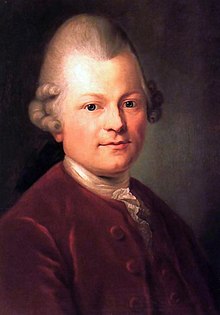
Gotthold Lessing, one of the leading lights of the Western European eighteenth century Enlightenment, once said that,


"If God were to hold all Truth concealed in his right hand, and in his left only the steady and diligent drive for Truth, albeit with the proviso that I would always and forever err in the process, and to offer me the choice, I would with all humility take the left hand, and say, ‘Father, I will take this one—the pure Truth is but for You alone’!”


What are we to make of Lessing's words?  If you've seen the movie "Matrix," you may recall a scene, early on in the movie, in which "Neo" meets "Morpheus."  After inviting Neo to sit down, Morpheus holds out his hand.  In it he has two pills.  One is red, the other is blue.  If you, Neo, take the blue pill, Morpheus says, your life will remain exactly the same.  But if you take the red, he says, you will enter into a journey in which you will see no end.  


As anyone who has seen this movie knows, Neo takes the red.  And his adventure begins.  Think about Lessing's "left hand" as the red pill, and "Truth" as the blue.  Though Lessing respects God's truth, the blue pill, he would rather have the red pill:  the journey.


We walk a delicate line between searching for truth and knowing that it is already there.  But we cannot do otherwise:  we're human beings.