Wednesday, November 18, 2020

     Do you like haystacks?  I say this somewhat tongue in cheek to make a larger point:   a few days ago was the birthday of French painter Claude Monet.  One of the most famous of the nineteenth century impressionists who transformed the nature of art, Monet achieved perhaps his greatest fame for his series of haystack paintings.  Visit the Art Institute of Chicago and see many of them:  Monet had a haystack for every time and season.

Image result for monet haystacks
     
     Yet Monet was more than haystacks.  He painted a number of pastoral scenes, deeply impressionistic reworkings of the French countryside, masterpieces of the subtley of light and color.  They shine with joy, a joy of happiness, a joy of the very essence of the sublime.

Claude Monet     Consider one of Monet's most well known theses:  "I wish to render what is."  In Monet's work we see an effort to take what "is" and make it as we feel it should be.  Not what we think it should be, but what we feel it should be.  We turn rationality on its head; we elevate emotion over all.
     And in so doing, we capture the heart of who, and the world, most are.  Although we are indeed rational beings, we are also, in our deepest essence, beings of passion, creatures of viscerality and pathos.  So do we embrace the world, so do we embrace its hiddenness, the powerfully ordered transcendence that ripples through it.
     We thank Monet for this insight, that amidst our dogged attempts to understand life rationally, perhaps we do better to grasp it as it most fully is:  the passionate rendering of a profoundly passionate creator. 

Monday, November 16, 2020

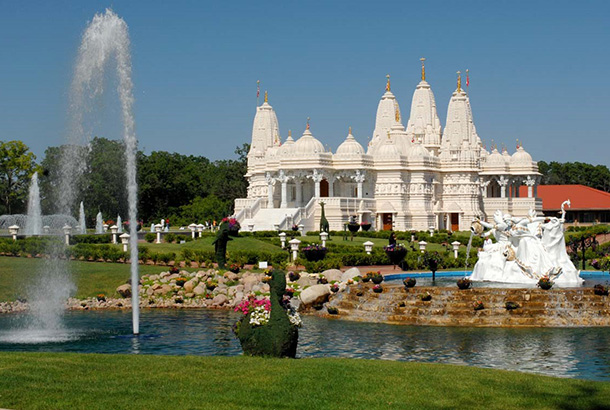
      Two days ago marked the beginning of the festival of Diwali.  It is a holiday sacred to over a billion people around the world:  a joyous occasion.  Diwali is known as the festival of lights, the lights of color, brilliance, enlightenment, and happiness:  all that which enters into the mystery and wonder of life and the gods who give it.


     It's apt.  Unless we celebrate life in the framework of higher purpose, its lights becomes little more than random occasions, capricious occurrences, chance coalescences of dust and plasma, things in which we have found (or according to German philosopher Martin Heidegger, have been "thrown") ourselves, raw and unknown, and told we must live.  And as the late evolutionary biologist William Provine acknowledged, if life is random, we are no more than plops, born only to die.  There is no meaning.  We're here, but why?
     Enjoy life, enjoy its lights.  Be happy for it.  And rejoice in the fact of purpose, the purpose of a creator.  Light doesn't shine long in a forgotten universe.

Friday, November 13, 2020

      "God has spoken to mankind in many languages" wrote Rabbi Jonathan Sacks, who passed away earlier this week.  Rabbi Sacks's observation is rather prescient.  Although for some this sort of remark conjures thoughts of universalism, I believe it is in fact saying something quite different.  If God is there, and if he is a communicative presence, it only stands to reason that he will speak to people in a way that they can understand.  Why else would he even bother to try?

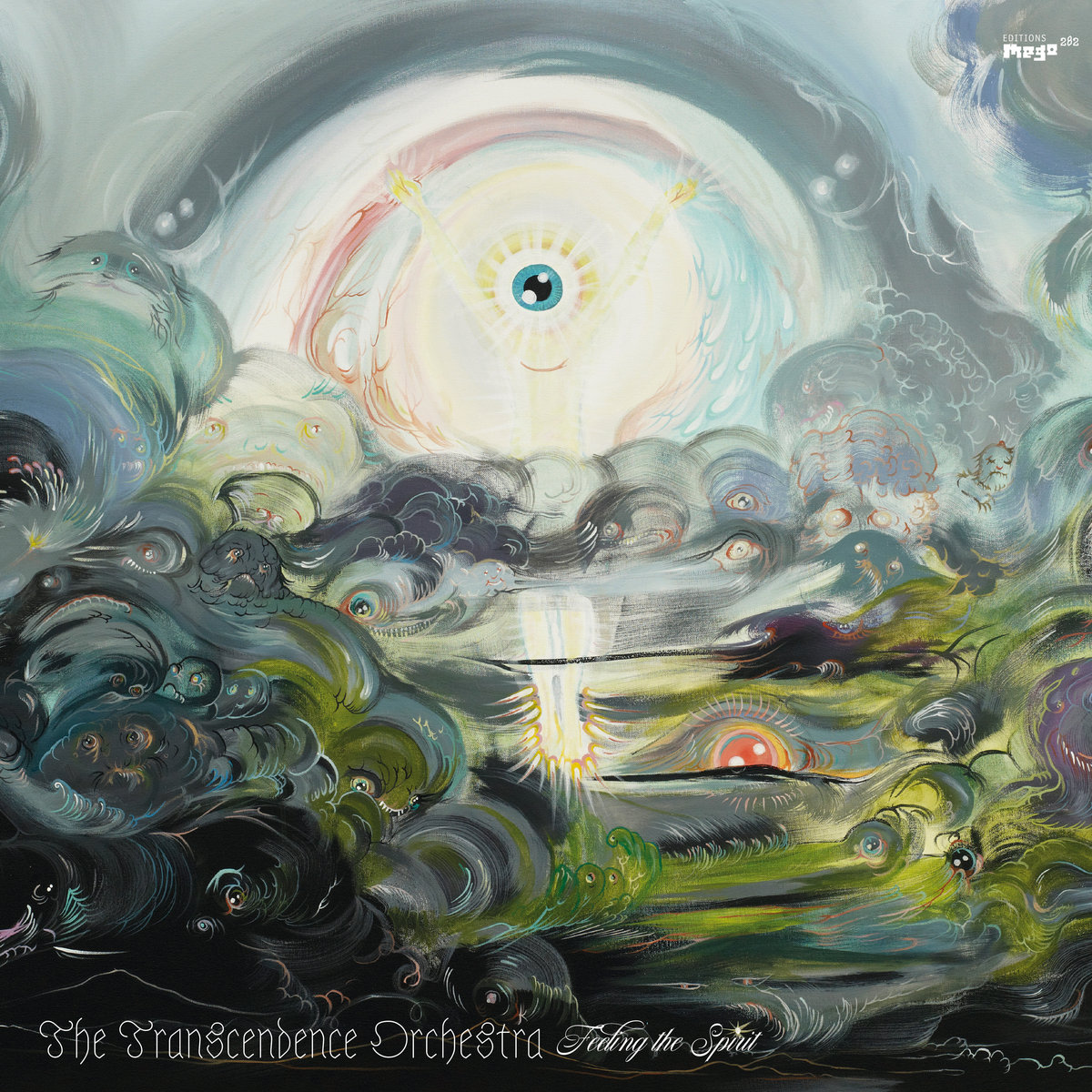
Feeling The Spirit | The Transcendence Orchestra     We wander through the world endlessly, daily confronting its prisms of space, time, and causality, constantly wrestling to reconcile the joy of existence with the inevitability of its end.  We may wonder about God, we may not.  Either way, we face the inexorable fact of our life and being in the face of its mortality.  And we all step into our contingencies differently.  All of us.
     Hence, it is no surprise that God speaks to us differently.  Even if we insist we can't hear him.  For that is the point:  whether or not we believe it, this world could not be as it is--personal, purposeful, communicative--without a language of transcendence pervading it.

Thursday, November 12, 2020

      Earlier this week, I presented at my atheist discussion group on evangelicalism and the recent American election.  In addition to citing the oft mentioned statistic that, according to most polls, roughly eighty percent of white evangelicals voted for the incumbent, I noted that other polls indicated that, contrary to what many people think, the number one issue for most evangelicals was not abortion (although abortion remains a very significant point of concern for evangelicals).  It was the economy.
     This raises a number of intriguing thoughts.  In the end, are Christian evangelicals so much different than everyone else in what matters most to them? Maybe not.  How do we square this, relatively speaking, "materialistic" desire with other, call them, for lack of a better word, "spiritual" desires?  Are these desires compatible?
     I'll save this discussion for another day.  In my presentation, I made a point about pragmatism.  Before the 2016 election, numerous Christian leaders suggested that although they were not entirely happy with the behavior of the then candidate Donald Trump, they would vote for him (as one put it, he would "hold" his nose when he went into the booth).  Why?  Because they saw him as the vehicle through which they could accomplish their larger goals.
     So do the means justify the ends?  And what ends are most worthwhile?  These are hard questions, hard questions that every evangelical should ask him or herself. How much am I willing to overlook character flaws to achieve what I consider to be a larger, more significant objective?  Yes, politics is an inherently pragmatic enterprise.  We all understand this.  But where do we draw the line?
     Once more, we confront what Native American writer and Christian Kaitlin Curtice calls the "Mystery."  The Mystery that is God.  We err if we suppose that we always understand the Mystery.  Or, worse, proclaim that we do.
     In matters of transcendent morality, we must always tread carefully.  Humility is essential.  We are little people in a very big universe.  And an even bigger God.

Wednesday, November 11, 2020

      "Without revelation, the people perish."  Translated as the first part of Proverbs 29:18 in the King James version of the Bible, these few words say volumes about the state of reality.  They tell us that without revelation, that is, communication from some point outside of ourselves, we miss the point.


     Without this type of communication, we live in a closed world, a terminal system.  We cannot see beyond ourselves.  We miss the greater meaning without which we cannot make sense of who we are.  Absent revelation, we wallow in the speculations of our finitude, even while we remain fully aware of our tendency to look beyond it.

Oceans Are Warming Faster Than Predicted - Scientific American    

    To a larger point, whether it is of this world or another one that speaks into our present moment, we can agree, I suggest, that we cannot easily live without acknowledging such a vision's necessity in our lives.

     So whose revelation is right?  All of them?  None of them?  If we reject transcendence as a source of vision, we are left with a revelation of ourselves and our ideals, ideals which we and ourselves, and only we and ourselves, assess and judge.  And how do we ultimately know?  It seems that revelation and greater vision are most meaningful if they reflect the vision of a reality out of which this present one comes.


     And as the world continues to endure all manner of existential and political crises, we do well to realize that we are not alone.

Monday, November 9, 2020

     As probably most people around the world know, America has a new president.  Many are delighted; many are not.  Either way, the outcome is the same.  We all must accept it and move on.

     In times like these, many who believe in God, the God of Christianity in particular, like to quote a passage from the book of Daniel.  After praying to God for wisdom in interpreting Babylonian King Nebuchadnezzar's dream, Daniel says, "It is he [God] who changes the times and epochs, he removes kings and he establishes kings; he gives wisdom to wise men and knowledge to men of understanding."

     What is so appealing about this?  Simply, that regardless of what has happened, over and above it all, God remains, threading his presence through all of reality.   Yet this can be problematic   does God establish evil and unjust as well as good and just rulers, too?

     It's enormously difficult to say.  We therefore ought to be tremendously circumspect in making any claim that we know exactly why a particular ruler has been elected.  Do we know the full counsel of God?  Can we see into the future?

     What I do know is that we live in a broken world inhabited by broken people.  We see God's purpose but dimly.  But we know it's there.

     Unfortunately, in this life, I may never fully see it.  Wrestle we will with faith, yet equally much will we wrestle without it.  The bigger question is thus this:  who are we in what all of us insist is a world, an entirely material world, in which purpose can be found?

Friday, November 6, 2020

     Earlier this week, I celebrated my birthday.  Big deal:  we all do!  Nonetheless, birthdays are the stuff of existence.  In them, we began.  Birthdays announce, they herald; they divide and demarcate; they ground the shapes and patterns of our lives.  They represent rhythm and consistency, yet they also remind us of the helplessness we all inhabit:  we cannot predict how many birthdays we will know before we know them no more.


Image result for road into the desert
     The year I turned twenty-two, I was in Saskatoon, Saskatchewan.  I had just emerged from four months of backpacking in the Canadian Rockies and was now traveling east,  taking a long way back to the States.  Given all that was happening in the world and the majesty of the mountains in which I had been, my birthday seemed a very little mark in a very large canvas.
     
     It still is.  All I could know is that life was a promise and expectation, an inkling and anticipation, a river and ocean coming constantly together in a creation I did not really make, a creation that, regardless of how I might have seen it, could only be meaningful if it spoke of transcendence.  Otherwise, though we are poems indeed, poems with a point, poems with a destiny, poems with a conclusion, we miss the bigger point.
     
     Birthday or not, life cannot define itself.