Monday, December 20, 2021

      As we remember the fourth and final Sunday of Advent and look towards its culminating event, Christmas and formal remembrance of the incarnation, God's appearance in human flesh, I think frequently about its origins.  As the gospel accounts make clear, Jesus was born in Bethlehem (literally, "house of bread"), a town that we might today call a hole in the wall, a little village largely forgotten by the rest of the world.  Few people cared what happened in Bethlehem.
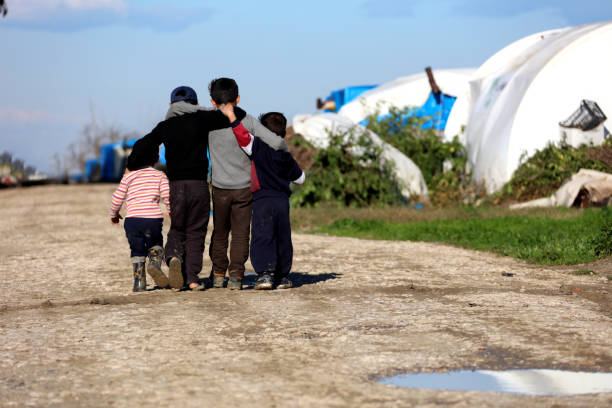
40,301 Refugee Stock Photos, Pictures & Royalty-Free Images - iStock

     Nor did few people care when, after God told Joseph to take Mary and Jesus and flee the country to avoid King Herod's deadly predations, Jesus lived for a time in Egypt.  Mary and Joseph were likely viewed as just one more set of refugees, one more group of aliens moving through the flotsam of the Empire, their lives a mirror of countless migrations before:  no big deal.

     But this is precisely the point.  Though Jesus was an alien and refugee, born in obscurity and forgotten and overlooked by the rest of the world, he was the one in whom God chose to make himself known to all humanity.  Jesus was the one whom God would use to manifest and reconcile himself to his human creation, the one whom God would use to draw all people to himself.  In Jesus, the poor and forgotten refugee, resided the greatest hope of all time.  It's the ultimate irony, the greatest surprise.  It's God's way of demonstrating to us that just when we think we have everything figured out, be it our views about immigration, aliens, refugees, or anything else, we really do not.
     But isn't that what God is all about?

Friday, December 17, 2021

      "The greatest poverty," wrote poet Wallace Stevens, "is not to live in a physical world."  Fair enough.  On the other hand, physicality without a larger framework renders it incomprehensible.  Moreover, it seems that unless we can grasp that larger framework, we would still know very little about who we are.


The Transcendence and Immanence of God – Reformed Perspective
     
    As spiritual beings, we humans tread a tenuous path.  We love our physicality and the fruits of living in a physical world, and we should.  Yet we are also acutely aware that we are more than our physicality.  We all experience feelings of transcendence, whether we believe them to originate in immanency or something beyond it.  We daily encounter the limits of physical category.

    Maybe that's the logic of the incarnation.  As we continue walking through the Advent season, we have time yet again to ponder that investing in only materiality leaves us wondering what everything earthly really means, a life spent looking for what it can never know.  Yet denying materiality in favor of transcendence, and only transcendence, forces us to construct meaning on a bed of sinking sand, drowning us in what we cannot see.
    
    Only when immanence and transcendence are fused can we see what meaning, and God, really mean.  Only in Advent's coalescing of time and eternity can we see what life can ultimately be.

Thursday, December 16, 2021

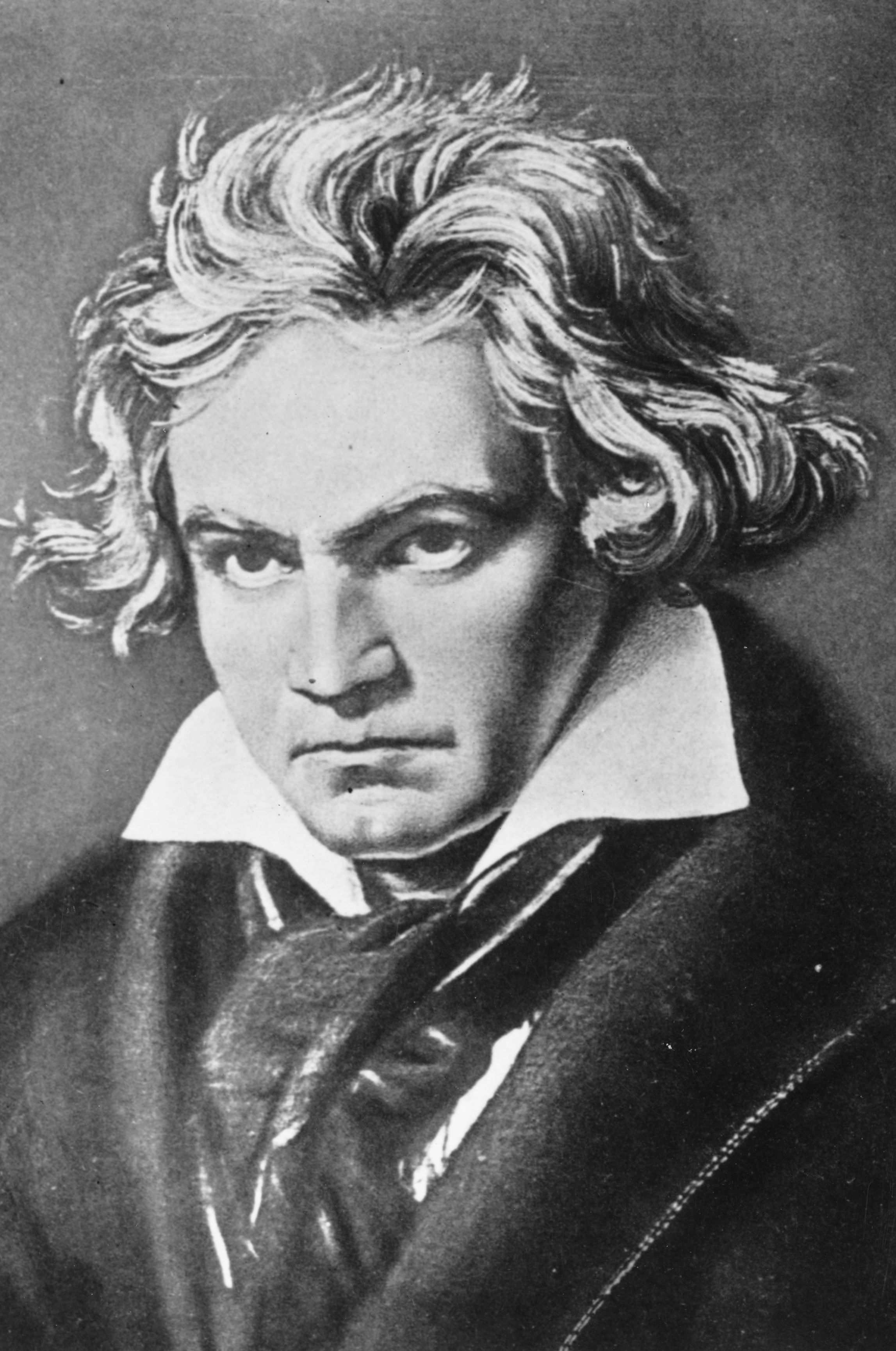
      Today is      Beethoven's birthday:  his 251st.  What can we say about Ludwig von Beethoven?  This famous portrait of him captures how many of us see him:  a brooding, brilliant composer.  Beethoven's music overwhelms us with its passion.  It comes to us as a force of nature, barreling and twisting its way into our hearts, breaking our souls apart, forcing us to grapple with and contemplate the deeper forces that drive human existence.  We swoon over the viscerally of Beethoven's melodies, we wonder about the power of the humanness and universe which his songs describe.  A Romantic in the purest sense, Beethoven reminds us of other worlds and other things, of the presence and possibilities of transcendence.

    I thank God for Beethoven.  I thank him for giving him to us, for giving him to show us as we are, beings of mind as much as creatures of heart, living, personal, dynamic entities made to step bravely and meaningfully into the weighty potential and contingencies of life, to take hold of everything that is before us.  Given the many stories and legends that surround his life, we may never know exactly what Beethoven thought about God.  Regardless, he makes us think of him.  Beethoven drives us to wonder about the mystery of life and the mind of its creator.

     I thank God for using Beethoven to open and unfold for us glimpses of what we, life, and God, can be.

Wednesday, December 15, 2021

     Have you seen Edward Munch's The Scream?  A piece that has puzzled and cajoled people for decades, The Scream seems to exemplify the alienation that so often characterizes the inhabitants of the West.  Overwhelmed by a world that offers them everything but meaning, countless people in the developing world cry out for help, some help in making sense of what seems to be a pointless reality.

     Affluence reigns, yes, but without any foundation other than the assumption that life is worth it, and this only because those who decide this have nowhere else to go.  If the world is a closed system and we are therefore born only to die, then life, however wonderful it may be, ends before it begins.  So we scream:  why must this be?

     As we consider Munch's birthday, which fell earlier this week, as we look toward Christmas and the New Year, as we continue to do what we can to live a good life, we realize that the world is not closed, that it is in fact entirely transparent and open, open and streaming into a web of reality vastly larger than we can imagine.  Life is meaningful because it is grounded in a transcendence that has spoken, a transcendence that has made itself known.  Life is more than itself.  And we are more than who we are.  Love is present, ascendant and true.

     Hence, in contrast to Munch's bleak perspective, we scream not why must this be, but rather how can such wonder be?

Tuesday, December 14, 2021

 wind river range | North Western Images - photos by Andy ...

     "For the people who walk in darkness," wrote the prophet Isaiah, "will see a great light (Isaiah 9:1)."  Isaiah speaks of Messiah, the one who would come to illuminate an Israel darkened by disappointment, abandonment, and sin.  He speaks of the one who would open the eyes of all those who longed for a bigger picture of reality, who sought to see a greater light,  Who believed in more.
     On the third Sunday of Advent, we remember this fact of Messiah's light.  We remember how, like the sun exploding over a frigid mountain ridge, Messiah--Jesus--has brought us light, the light of enlightenment, the light of hope and meaning that shines through the cold of an often disparate existence.  It is a light that, if we embrace its rising, embrace it fervently and without reservation, will change our lives forever.
     Though we may struggle with the idea of eternality, though we may question the presence of God, we all long for light. We all long for hope and meaning.  We all long for a window into a richer existence.
     In an accidental universe, however, richness is impossible, for value and morality cannot be measured or even be.  Only in a personal cosmos, a cosmos in which an enlightening transcendence is possible, can hope and purpose be, infused with meaningful light.
     The light of the world.

Friday, December 3, 2021

 Image result for dust photos

    So many times did I read over Thanksgiving weekend one of the closing verses in Ecclesiastes, "Then the dust will return to the earth as it was, and the spirit will return to God who gave it.  'Vanity of vanity,' says the Preacher, 'all is vanity'!"  It doesn't seem appropriate for a day of giving thanks, does it?
    It was on Thanksgiving a few years ago that I received word that my ninety-one year old aunt, the last living member of my parents' generation, had been admitted to a hospital with pneumonia.  Her prognosis was not good.  In fact, I learned the next day, Aunt Patty was dying.
    Sunday morning, Patty did die, passing out of this world, this life, forever.  I'll never see her, in this life, again.  It's very final.  And yes, despite the best efforts of the morticians, not too many months will pass before she is, well, dust.
    In a book, He Held Radical Light, which he published a few years ago, poet Christian Wiman writes of our deep desire to "reconcile a deep intuition of otherness with the adamantine materialism that both science and our clock-logic lives seem to confirm."  We instinctively know life is more than what it is, yet we just as strongly want to believe it is not.
    Put another way, the fact of otherness demands that truth and belief becomes one and the same.
    It also enables us to know life as it is most meant to be.
    By the way, next week I'll be traveling in the American West.  I'll catch up with you in a couple of weeks.  Thanks for reading!

Thursday, December 2, 2021

      Well, it seems that the Christmas season is upon us.  By all counts, spending should set a new record:  Americans will spend, surveys tell us, nearly two billion dollars on Christmas gifts this year.

     Should we be happy?  I'm happy for the people these sales will employ.  I'm happy for the people who will enjoy the gifts they receive.  I'm happy for the joy many people feel in this season.

     I'm most happy, however, at how the Christmas season should cause us to examine what we are doing with our money.  In the end, it's all about giving, giving, that is, to others rather than ourselves.

How Much Do You Spend on Christmas Presents for Your Kids? | Mom.com
     
    Thinking about the congregations in Macedonia many years ago, the apostle Paul observed that, "According to their ability, and beyond their ability, they gave of their own accord, begging us with much urging for the favor of participating in the support of their brethren" (2 Corinthians 8:3-4).  Consider:  these people didn't wait to be asked to give; they instead begged for the opportunity to give. Moreover, they gave beyond what anyone thought they could give.  They understood that, "God is able to make all grace abound to you, so that always having all sufficiency in everything, you may have an abundance for every good deed" (9:8).

     If God is there--and he is--we can never give enough.

     Let the retailers worry about what we should get.  What do they know?  Let us concern ourselves with what we can give.  As you go forth to "conquer" the stores before you, realize that it's no challenge to "get."  We can always do that.  The far greater challenge is to give.

     Life is a gift; give of it freely.