Thursday, March 10, 2022

Vagabonds and vanishing acts | Financial Times

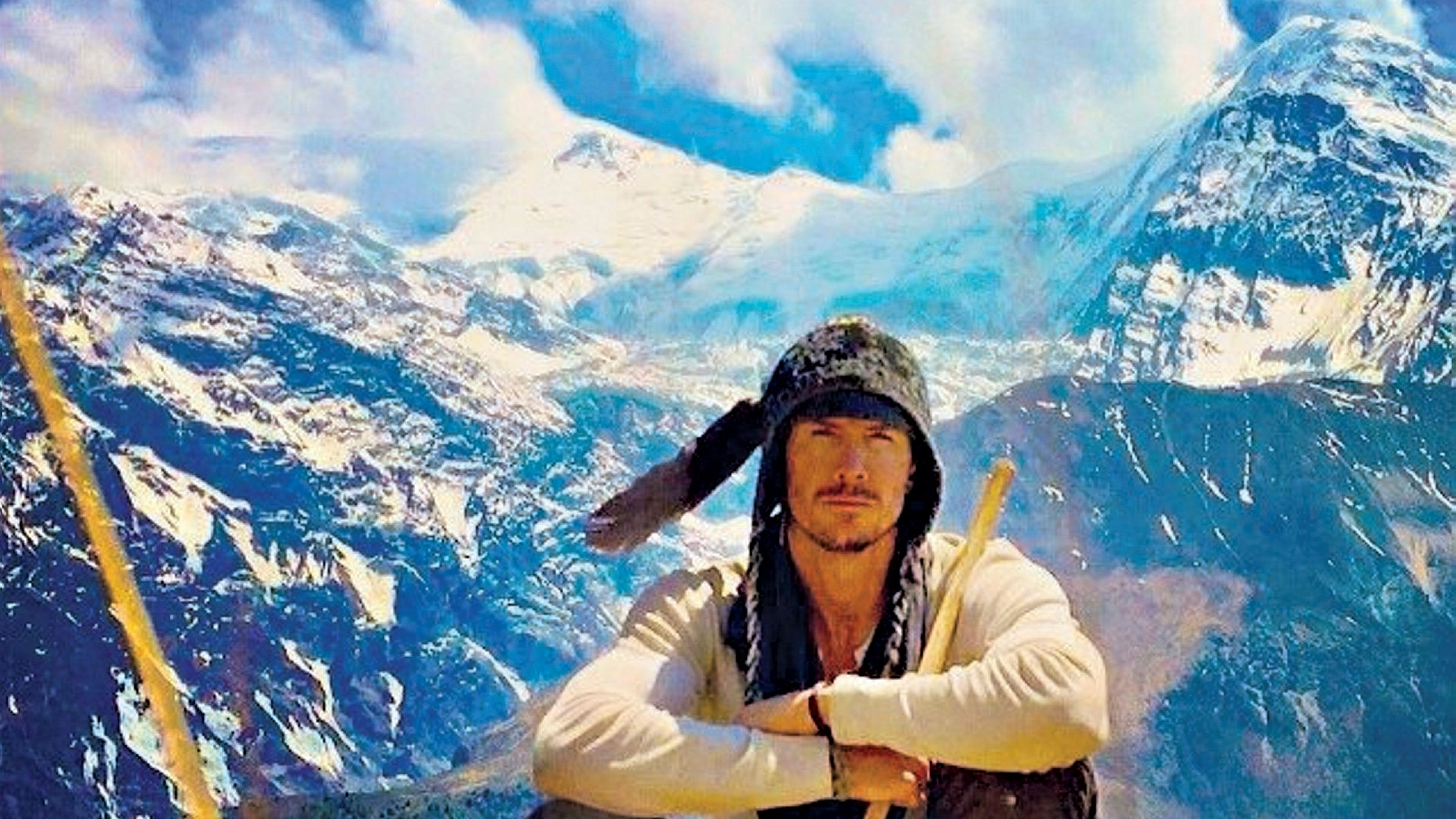
         I recently finished reading Harley Rustad's Lost in the Valley of Death.  It tells the story, a true story, of an American named Justin Alexander Shetler who devoted his too short life to finding who he was and how he fit into the world.  Some of you may have seen his posts on Facebook or Instagram under the name "Justin Alexander."

    Although Justin's quest is one common to all of us, the fervor with which he pursued it, traveling across the globe and trekking through some of the most remote regions on the planet, is one not many of us share.  For Justin, identifying his purpose was his life's mission.  And he was willing to endure all manner of hardship and set everything aside to find it.

    As I read Rustad's account, I often thought of a trek, a backpack, I made many decades ago through the remote Brooks Range in the far arctic wilds of Alaska.  Like Justin, I was intent on finding my place and meaning in this life, and was willing to go to the most isolated portions of the world to find it.  As I hiked through the Brooks, I was hundreds and hundreds of miles from any other human being.  It was just me, the grizzly bears (along with caribou and Dall sheep), and hundreds of square miles of mountains and tundra.

    Happily, I survived.  I could easily have not.  But I didn't find what I was looking for in those vast stretches of arctic wilderness.  Nor did I find it anywhere else.  That's why I find Justin's story at once fascinating and tragic.  Fascinating for its adventures, tragic for its end.

    Transcendence, Justin understood--and which I finally came to understand as well--is key to meaning.  But it must be a personal transcendence, a direct and visceral encounter with the metaphysical enveloping us all.  Otherwise, we're only looking at ourselves.

    Rest well, Justin.

Wednesday, March 9, 2022

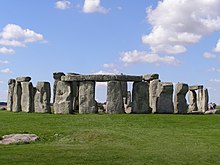
Stonehenge2007 07 30.jpg

     Who's heard of Stonehenge?  The world famous enigmatic stone structure in northern England has steadfastly withstood all attempts to decipher its precise meaning.  Generations of anthropologists, historians, and astronomers have sought to unpack its secrets, but to no lasting avail.  Regardless, Stonehenge today remains a major draw for a wide range of people, most of whom come from thousands of miles away to step into its mystery.

    And ponder what it means.  To ponder what a structure built in the third millennium BCE means for us today.  Perhaps the most that we can say about Stonehenge is that it testifies to the remarkable resilience of the human quest for meaning.  While we may never know exactly what the creators of Stonehenge had in mind when they designed and built it, we can certainly come away in awe of what it says about the human being.

    We love puzzles, we love mysteries.  We love to poke into things we do not understand.  And what greater thing to poke into than who we, frail and mighty human beings, really are?

    Is this cold and impersonal universe really all that is?

Tuesday, March 8, 2022

    As March continues on its merry way, I take a moment today to mention that today is International Women's Day!  Moreover, March is, as a drinking mug I inherited from my mother always reminds me, Women's History Month.  It's about time.  For too long, historians tended to overlook women and the role they played in moving humanity forward.  Conditioned by the social nuances of their times, and driven, perhaps, by various levels of cultural chauvinism or myopia, most historians, traditionally male, dismissed the contributions that women have made to the human adventure.

    If we are to hold that men and women are both made in the image of God and are therefore of equal worth, we err, err seriously, when we ignore, reject, or pass over the many ways that women have shaped human history for its good.  It's tragic, really:  we are in truth forgetting the meaning of the framework, physical as well as metaphysical, in which the universe functions.  It's no accident that when the writer of Proverbs 8 described wisdom, he personified it as a woman.  He knew.  He knew that male and female are woven deeply into the created order.

Bartow - Treasures of the Deep "Narrow is the gate and difficult the way which leads to life.

    And why not?  Without women, none us would be here today.  Therefore, whether you believe in God or not, believe in the worth of every human being, male and female all.  Celebrate who we are!

Monday, March 7, 2022

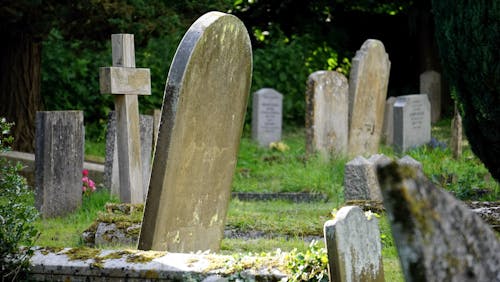
Close-up Photography of Concrete Tombstones     This past Sunday marked the first Sunday of Lent.  Repentance and circumspection dominate, as those so inclined spend ever more time pondering the exigencies within their lives, the fleeting puffs of materiality in which we have life and breath.  Life looks more remarkable than ever:  a befuddling experience, yes, but the only experience, at this point, we have.


    Given the wonder of the world, it's easy to rejoice in life without also wondering why life is, why we have it, why this existence has been given to us.  To what end do we live?
 
    In its call to slow down, to meditate and consider, to let go of the immediate, Lent carves multiple inroads into this question, dissembling the perfunctory and expected and normal.  It calls us not to live without knowing why we are alive, to not seek a life of zest without understanding what life means, to recognize the enormity of our human contingency, the unerring fact of our evanescence.
    
    Lent invites us to look at what matters most.  Who will we really be when we leave this world:  ashes or creatures of eternity?

Friday, March 4, 2022

Reincarnation - Wikipedia

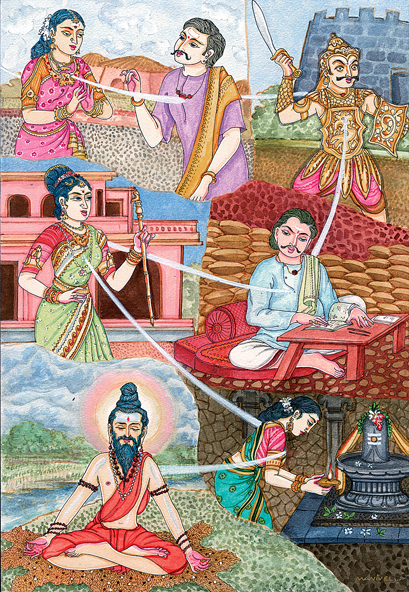
     Believe it or not, the topic of my most recent atheist discussion group was reincarnation.  Huh?  The person who presented came to the group with copious evidence of people who appeared to have come into this life with precise and detailed memories of a person in a life that preceded it.  In study after study, researchers identified people, mostly young, who seemed to know, often intimately and extensively, everything about a person who had already passed from this life.  In some instances, the connection was singularly striking:  the characteristics of a deceased person were displayed exactly in a person now alive.  And the living person had no apparent connection with the person who had died.

    Predictably, many people in the discussion were skeptical.  Perhaps, they said, this is the result of small children making things up:  they're imagining, they're dreaming.  Others rebutted by saying that there's another side to the picture, that they had found companion research results that asserted these tests to be fraudulent.  Still another, insisting that he was a "materialist," could not see how a supernatural explanation for such things was possible.  On the other hand, many lauded this "evidenced based" research and noted that the cumulative weight of the research was difficult to dismiss.

    What puzzled me about these responses, besides the ones that found the evidence to be convincing, was that these folks appeared to be unwilling to step outside their worldview to consider that, well, maybe there is another way to look at this evidence.  So set in their perspective on the world that they could not see outside of it.  At first glance, I do not know what to do with this voluminous evidence:  it's very persuasive.  Perhaps this is because I am open to the factuality of the supernatural.  Nonetheless, the well documented evidence for these "rebirth" memories of the past ought to be enough to motivate even the most hardened materialist to at least consider that there is another way to see reality.

    Even if they do not readily understand it.  For that is the central point:  we must get used to confronting things we may never fully understand in order to live in a way that enables us to deal intelligently with our existence.  That's just being a finite human being.

    Maybe someone else really is knocking at the door.

Wednesday, March 2, 2022

    Today is Ash Wednesday, the first day of Lent.  Ash Wednesday reminds us that, whether we believe in an afterlife or not, we are ultimately no more than dust.  When we die and pass out of this life, what remains of us will soon be no more, too, subsumed in the earth from which it has come.  A number of years ago, when my wife and I were in the Sawtooth Mountains of Idaho, I took an afternoon to hike to a meadow where, one year before, one of my dearest cousin's ashes had been scattered.  Tragically, she had died of mesothelioma at the age of 58.  Long did I stand before the meadow, catching the wind, soaking in the vista, thinking about her.  All Liz's years, all her love, all her joy, all her meaning, all her hopes and dreams now strewn among the flowers and rivers she loved so dearly.  Joyful, but deeply sobering.

Sawtooth Mountain Vacation

    Even more sobering is that one day, every one of us will be exactly the same.  We are so fragile, so frightfully fragile.  What meaning have we?  What is our point?  As we contemplate our mortality, we see ever more clearly how thin the line is between life and death, sentience and dust, fire and ashes.  We are so contingent, so tenuous:  how can we ever hope to be?

     Yet Ash Wednesday also reminds us that we are not dust and ashes only, that life is not total absurdity.  It tells us that we are physical creatures, yes, but physical creatures who had been intentionally created.  We are meaningful, we are significant.  We are loved.

    Death is not the end.

Tuesday, March 1, 2022

Image result for chopin     
     March 1:  the birthday of the composer Frederic Chopin.  One of the most dazzling musicians of the Romantic Era, Chopin in his too short life (he died at the age of 39) composed a host of memorable pieces for the piano.  His works are marked by an exuberance of life that resonates with the sounds of memory and contemplation.  We listen to them today and think about how his modest Polish origins blended with his relatively cosmopolitan lifestyle (he was well acquainted with Hungarian composer Franz Liszt and the novelist George Sand) to produce melodies that speak to many parts of our souls.
     As Lent approaches, we find special call to remember Chopin.  We remember his creativity, we remember his vision.  We remember his angst and his brief existence.  And we realize, again, that we live in a beautiful yet tragic world, that we dance on a very narrow line between being here and not, and that we, human beings, magnificent creators though we be, find our humanness most profoundly when we submit to the mystery of who we may not really believe we are.