Friday, September 23, 2022

     In this era of the so-called Robber Barons of the technology industry, one might think of F. Scott Fitzgerald's Great Gatsby.  It's a story of hubris, massive and myopic social hubris driven by an equally blind financial hubris, two currents of a mistaken pride that overturned a life to a point beyond redemption.

     Some of you may work in the technology industry, some of you may hold stock in the technology industry.  All of us benefit from knowing and using it.  Even as I write this blog, I am acutely aware that I would not be able to do so without the help of Google and its parent company Alphabet.  And I wager that many of you order items from Amazon with some degree of regularity, and appreciate its seemingly efficient service.
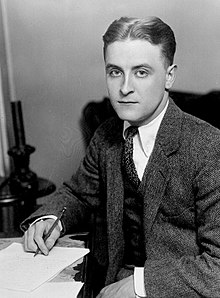
Fitzgerald in 1921

    Few of us take time to look beneath the surface of the industry.  Neither did Gatsby take time to consider the implications of his financial and social success.  He just lived in them, repercussions and consequences aside.  As do, to a point, many of us.  We do not often take stock of how thoroughly dependent we are on industries that, although they proclaim to be making our lives better, rarely do they allow us to stop and deliberate about what "making our lives better" really means.  As they define it?

    Fitzgerald's enduring masterpiece reminds us that yes, we all appreciate social connections and technological ease, but it also reminds us how little we know where they will, in the long run, lead to.  How are we to measure the fruits of worldly "success"?

    Surely not by the success itself.  Because Gatsby valued his world by the values of that world, he fell, badly.  As will, unless we look up from our busy lives, we.

    Ease of living is not the point.  Meaningfulness is bigger than next day delivery.

Thursday, September 22, 2022

     "Now is the wind-time, the scattering clattering song-on-the-lawn time early eves and gray days clouds shrouding the traveled ways trees spare and cracked bare slim fingers in the air dry grass in the wind-lash waving waving as the birds pass the sky turns, the wind gusts winter sweeps in it must it must."  (Debra Reinstra, "Autumn")

    It's here:  the autumnal equinox.  It's a good day, a fun time.  Turning leaves and brilliant colors; cool, crisp nights and rich blue skies; the rising of Orion, his three star belt shining resplendently; and light and dark woven with liminality and change:  life displays its glory once more.

    In the ancient near east, the land of Egypt, Assyria, Sumer, and Babylon, the autumn was a significant moment.  It marks the time of harvest, of thanksgiving, a season of expectation--the life giving autumnal rains were imminent--and days of ingathering and celebration.

    So it can be for us.  Amidst our technology and worldly disenchantment, we can learn from our long ago brethren, our many ancestors who placed such faith in the certainty of the seasons, ordained, as they saw it, by the gods.  It's good to reach ends, and it's equally good to meditate on beginnings; it's good to remember the ceaselessness of unceasing rhythms that ripple through the cosmos.  It's good to think about the certitude still embedded in a mercurial and capricious world.

    In autumn's transforming predictability, we also catch a deeper glimpse of the creator God.  In a finite and fractured, change, some good, some bad, is inevitable. Certainty, however, remains.  Amidst our many seasons of life, these days of malleability and shifting sands, God's love, guidance, and presence reign firm.  Take heart in autumn's changes, and realize, once more, the face and necessity of an eternal God.

Friday, September 9, 2022

      It's a very happy piece.  I speak of Johann Pachabel's famous "Canon in D."  Perhaps you've heard it at a wedding.  Or somewhere else.  The seventeenth century composer's deft blending of melody and rhythm has captivated humanity repeatedly.  It's hard to listen to it without feeling at least a lilt of joy.

Johann Pachelbel - Canon In D - Best of Pachelbel - YouTube

    The Center for Faith and Culture at Yale University has devoted decades to understanding the nature of joy and human flourishing.  Although its researchers recognize that theirs is a work that will always be one in progress, they have come to agree on a few things, which they have encapsulated in the Center's goal:  "We seek a world in which every person can wrestle with life's most important questions and take hold of a life worthy of our humanity."

    Put another way, to be able to contemplate existence and to find a meaningful life is central to being a human being.  In this, the Center suggests, is true joy:  to understand and flourish as we are intended to be.

    But why?  Because, the Center insists, we are made in the image of God.  In this, perhaps we all should take a moment to step back and consider that, absent the presence of divine image in this world, we probably do not know what our joy fully is.

    By the way, I'll be traveling next week.  Talk to you when I return.  Thanks for reading!

Thursday, September 8, 2022

Coin issued during the reign of the Roman emperor Maximian

    It's no secret that among the major Western nations the U.S. is one of the few that makes virtually no federal provision to make higher education more affordable. Whereas in many European countries the state subsidizes the cost of higher education, enabling most citizens to attend college for relatively free, the U.S., in large part, does not.  Hence, people who wish to attend college must, in most cases, find the money to do it.  Many therefore take out loans.

   Over the last few decades, the total amount of these student loans has reached nearly unimaginable proportions:  over a trillion dollars.  Some people can pay their debts quickly; others, not so much.  Some find well paying positions after finishing school, but others do not.  They're therefore saddled with their college debt for decades after finishing school.

    Well, it's their choice, isn't it?  It is, but it isn't:  only students from affluent families can avoid taking out loans.  Millions of others must.  Should the U.S. government "forgive" part of these loans?  It's complicated.  The larger issue, however, is the type of country the U.S. wishes to be:  how much does everyone really want to look out for each other?

    Don't forget the common good.

Wednesday, September 7, 2022

     Perhaps you've heard about American basketball player Le Bron James' new contract:  $98 million for two years of play.  Surely somewhat of a record for professional basketball.  Is Le Bron worth it?  I guess it's in the eye of the beholder. The Lakers clearly believed it was, that even though James may be past his prime, he still has the ability to draw in crowds and sell tickets.  After all, that's the bottom line:  revenue.  Other teams probably think it is, too, as they might have done the same for their stars.  For the same reason.

LeBron James - 51959723161 (cropped).jpg

    Le Bron does many good things with his money.  Among other things, he has established a foundation that assists struggling students in his home town of Cleveland.  But that's not the point, really, is it?  The larger issue is that James's contract simply serves to underscore the inevitable end of the capitalistic enterprise:  the market will pay people for what it thinks they are worth.  You or I may disagree with the amounts, but that's the logic of the free market system.  It's an amoral system:  there's no right, there's no wrong.  It's all about what the market deems a worker is worth.

    And I suppose that's fine.  To a point.  But assessing salaries based on individual acumen in fact reduces people to what Karl Marx decided about them over a century ago:  machines that produce and nothing more.

    That's the ultimate irony, isn't it?

Tuesday, September 6, 2022

God on Trial FilmPoster.jpeg

    Is God on trial?  Is God on trial for the ills of the world?  A movie, God on Trial, seeks to answer this question.  It depicts a conversation that a group of inmates at Auschwitz, the infamous Nazi concentration camp, had about, in light of the suffering and pain they were experiencing, the goodness of God.  It is of course an ageless dilemma:  if God is good and all powerful (omnipotent), why do people suffer?  As anyone who has studied this issue in some depth knows, there are no easy answers.

    At the trial, most of the inmates are critical of God for ignoring human suffering.  Though some speak up for God, their voices are drowned out by the dissenters.  At the close of the trial, however, one of the chief critics, who served as judge at the trial, offered a measured, and conclusive, response.  It is faith, he argues, it is the Jew's faith in God that is all on which they can draw in the face of suffering.  Nobody else, he says, has this resource.  Everyone else suffers, and even though the Jews do, too, they, he says, have faith in God, a faith that, despite everything else, provides, in some way, 
explanation.

    We may disagree with the judge's point, but we cannot deny the validity of his position:  in the end, regardless of what is going with us or the world, we can either believe in God or we cannot believe in God.  To do the former means we believe that, somehow, some way, the world has purpose, and that somehow, some way, whatever happens does, too. precisely because God is there--and nothing more.  The latter means that, whatever we think life may be, it, and we, have none.
     
    Which do you prefer?

Monday, September 5, 2022

 Hall of Honor Induction: U.S. Department of Labor Women's Bureau - The Rosies - Women Riveters, Welders & World War II Industry Workers-2020 Honorees  

      Today, America (and Canada) celebrates Labor Day.  It's a good day.  It's a day to take time to think about and honor those who, like most of us, work, those who, day after day after day, engage in some type of vocational occupation.

     Most of us accept work as an inevitable fact of existence.  In many respects, it is. However, not all of us enjoy getting up for work each day. Nonetheless, to work is to be human, and to be human is to work.  Working enables us to discover our humanness most fully.  Ideally, work challenges us, involves us, equips us, fills us.  Working gives us a more complete grasp of who we are in our world.

    When we work, however enthusiastically, imperfectly, or apathetically we do so, we affirm our meaningfulness.  Whether we know it or not, when we work, we arecommunicating the presence of a meaningful world.  We are underscoring that life has a meaning greater than merely living day to day.  We are stating that although, yes, we must in most instances work to survive, we affirm that we are made with purpose.
      Absent an intentional beginning, shorn of a God, the cosmos has no reason to be.  And we have no reason to work.  Beyond the authenticating boost it might give us, a boost which never lasts, why would it matter?  We live, work, and die.
     Is this really what life is?