Tuesday, October 4, 2022

Yom Kippur 2022: How To Celebrate - Farmers' Almanac
     

 If we are honest with ourselves, we will admit that we do not always do the right thing.  No one among us eludes our own fallenness.  We all, as many religions put it, sin.  We all do not always do what pleases or sustains the divine fabric of the universe.


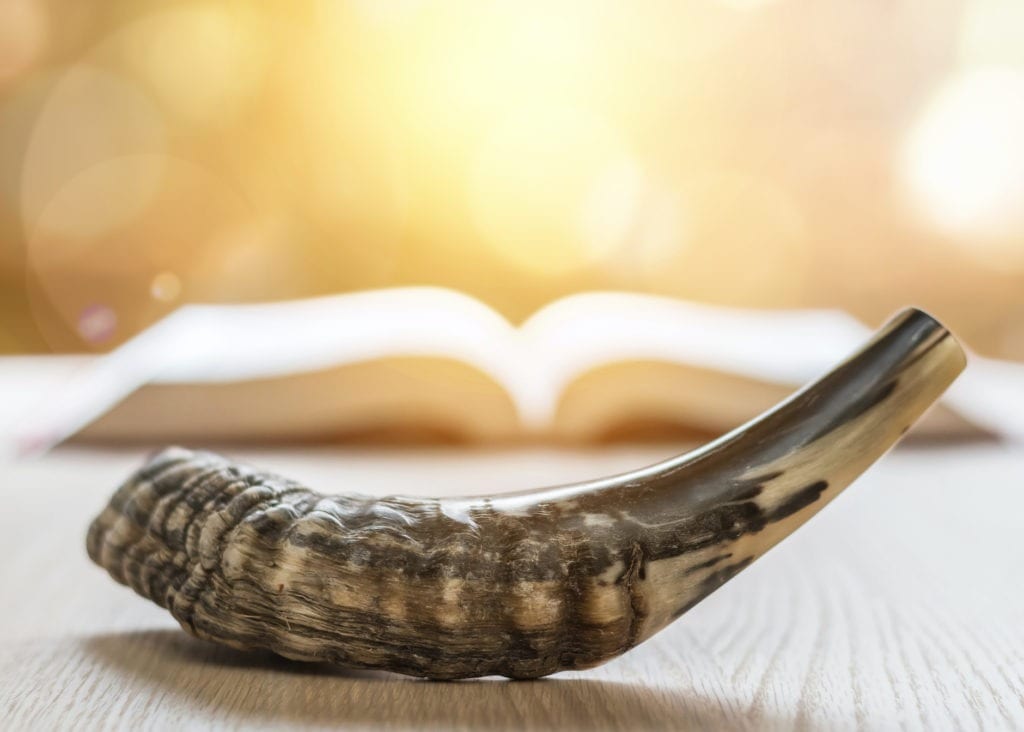
Few religious groups understand this as well as the Jews.  Beginning tonight, Jews around the world celebrate Yom Kippur, the "Day of Atonement."  On this night, Jews acknowledge their sinfulness before God.  They admit their wrongdoing, own up to their prevarications. And they repent.  They tell God they are sorry for disobeying and violating his commandments and laws.  Then they announce their intention to begin anew to live lives that please their creator.


     So the Jews have done for many centuries, and so they will do for many centuries more.  Their faith remains.


     Although we may not agree with the specifics of the Jewish approach, and though we may not see wrongdoing in quite the same way, we must all admit that, to repeat, we do not always do the right thing.  Every one of us is (or ought to be) aware that, at times, he or she upsets the delicate balance of freedom and order that governs the cosmos.

     If this balance is to be more than subjective and relative, we must acknowledge the fact of God.  The Jews recognize this clearly.  So do Christians, and so do Muslims.  And so do adherents of countless other religions.  Absolute and therefore genuinely meaningful morality is impossible without God.  Otherwise, repentance is no more than shouting in a situational darkness, the darkness of an accidental, and therefore, as scientist Steven Weinberg observes, pointless universe.


Monday, October 3, 2022

Yosemite El Capitan.jpg
El Capitan
Tunnel View | Yosemite | Hikespeak.com
Yosemite Valley

     Have you been to America's Yosemite National Park?  If you're ever in the States, it's well worth the trip.  As someone who grew up in California, I've had occasion to visit Yosemite dozens of times, and in all seasons:  spring, summer, autumn, even winter.  I've hiked miles and miles on its backcountry trails and climbed many of its mountains.  I'll never get tired of it.

    Some of you may know Yosemite through the exploits of the many rock climbers who have graced its soaring granite cliffs.  Most recently, it was Alex Honnold, the most famous free solo rock climber in the world, who became the first--and so far the only--person to climb El Capitan, a sheer granite wall that rises 3,000 feet above the valley floor without any protection.  It was a remarkable feat.

    I mention Yosemite because October 1, a few days ago, marked the anniversary of its founding.  How thankful I am that in 1890 the U.S President and Congress had the foresight to set this magnificent valley aside, preserved as wilderness for perpetuity.

    As it should be: the wonders of Yosemite are gifts, gifts of an overwhelmingly creative God.  Gifts for you, gifts for me, for the world.

    Enjoy.

Friday, September 30, 2022

Hilaree Nelson in 2004. Raised in the Seattle area, she told a podcast in 2020: “Ironically, it took me leaving Seattle to find my way as a mountaineer and really discover what that even was, and a ski mountaineer at that.” (Corey Rich / The North Face)

     "Vanity of vanities," says the Preacher, "all is vanity!"  Many of us might find these words familiar:  they're taken from the book of Ecclesiastes (a book made famous in the Sixties when the Byrds took the words of its third chapter to write their "Turn, Turn, Turn").  Yet to some, these words seem very depressing:  is everything we do, everything we are, really vanity.  Is life totally futile?

    It is and it isn't.  None of us planned to be here, to be here to live on this planet and, unless we believe that this world was intentionally created, we realize we have no reason to be here.  We just happened.  Nonetheless, we strive to make the best of it.  Then we die.  But we lived, too.

    And now we're dust.  If on the other hand, we believe that this world was intentionally created, we know that this magnificent experience we call life is not an accident:  it was meant to be.  Though we still live and die, we know that we do so in a world infused with purpose.  There was a point to our existence other than what we assign to it.

    Yesterday, the tiny world of ski mountaineering heard that Hilaree Nelson, one of the top ski mountaineers on the planet, died at the age of 49, felled by an avalanche while skiing down Manaslu, the eight highest mountain in the world.  She left behind two teenage boys, a lover, and a host of admirers.  Ms. Nelson will never ski in this world again.  Tragic?  Absolutely.  Yet her passing would be even more tragic if this world had no definitive point, if her being here was an accident, a journey from dust to dust with no reason for it.

    Rest well, Hilaree.

Thursday, September 29, 2022

    "They killed my baby, they killed my baby," she said, moaning over the loss of her treasured child.  Unfortunately, this situation is all too common in the nation of Myanmar today.  Unwilling to relinquish its power to the people, the military junta, who seized control of the nation in a coup last year, is summarily suppressing all dissent, usually with brute force and inordinate cruelty.  They suppose they have been born to master the nation.

    Hardly.  Is anyone born to oppress human beings?  Pray for the people of Myanmar.  They are suffering terribly.  They've lost their freedom, one of the most precious gifts of being human.  And preoccupied with other wars and international tensions, the world is doing little to intervene, if it even can. 

WikiProject Myanmar peacock.svg

    Indeed.  Can anyone stop the junta?  Those of us who are free are called to use our freedom to serve others,  simply bask in our good fortune.  But how?

    That is between you and God. 


Wednesday, September 28, 2022

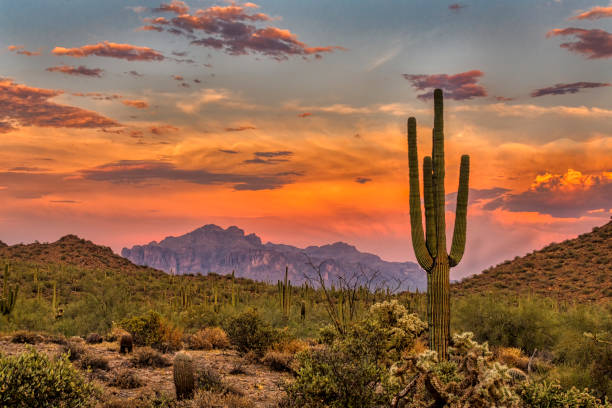
135,080 Arizona Desert Stock Photos, Pictures & Royalty-Free ...

    "The desert will still be there in the spring.  And then comes another thought.  When I return will it be the same?  Will I be the same?"  These lines are from Edward Abbey's Desert Solitaire, his meditation on the two summers he spent as a seasonal ranger at Arches National Monument (now a national park) in Utah.  Though I read Solitaire decades ago, I had a chance to re-read it during my most recent camping trip in the West.  Once more, I was struck by Abbey's descriptions of the desert landscape, its barrenness, remoteness, and above all, its solitude, its vast and unyielding solitude.

    It's no accident the the early Christian church fathers spent time in the desert.  Stark and devoid of normality, the desert offers the seeking soul ample opportunity to find the space to divest oneself of all vestiges of everyday existence and open one's heart, mind, and soul to the greater presence, the greater beyond, the transcendent:  God.  As Abbey suggests, one cannot step into the desert and emerge unchanged.  To expect to be the same.  The desert will not allow it.

    Indeed.  So busy do we make ourselves tending to the immediate and mundane that we forget that we do so in the umbra of a far larger, and singularly more profound, point of meaning.  The desert reminds us that solitude and aloneness in its emptiness, ironically, exposes us to the fullness of what can be.

    We can't see unless we let go.

Tuesday, September 27, 2022

       Have you read The Epic of Gilgamesh?  One of humanity's oldest written stories, Gilgamesh first appeared in the writings of ancient Sumer, shortly before the close of the third millennium B.C.  While whether it deserves to be called history's first narrative tale remains a matter of scholarly debate, Gilgamesh certainly presents one of humanity's earliest attempts to come to grips with the fact of death.

     Briefly, Gilgamesh tells the story of Gilgamesh, the mighty king of Uruk who knew no rival.  Along the way, Gilgamesh encounters Enkidu, a wild man, unruly and untamed who, the king quickly realizes, is his equal.  Subsequently, for a season Gilgamesh and Enkidu roam the deserts and mountains of Mesopotamia, conquering all who dare stand up to them.

British Museum Flood Tablet.jpg

     One day, however, Enkidu develops a fever and, after some days of agony, dies. As Gilgamesh mourns his fallen friend, he says,“When I die, shall I not be like Enkidu [gone forever]?  Woe has entered my belly.  Fearing death, I roam over the steppe.” 

     Gilgamesh has encountered the limits of his mortality, and finds he can do nothing about it.  So it is that later in the story, the "ale-wife" says to him, “Gilgamesh, where do you roam?  The life you pursue you shall not find.  When the gods created mankind, death for mankind they set aside, life in their own hands retaining."

     However powerful you are, Gilgamesh, you will never undo or overcome death.

     Nor can we.  Well, some might respond, that's just how life is.  True enough.  Yet this still doesn't explain why, if we are nothing more than a collection of molecules, we tremble before the prospect of the imminent and total loss of existence.

     Maybe we really are more than a cosmic afterthought.  And maybe there really is, as the "ale-wife" suggested, a life, a uniquely uncaused life, out of which our life comes.

Monday, September 26, 2022

      Think about our Jewish brothers and sisters today.  At sundown last night, Jews around the world entered into the most sacred time of their year:  the high holy days, the Days of Awe.  Beginning with Rosh Hashanah (the New Year), continuing with Yom Kippur (Day of Atonement), and culminating in Sukkot (Festival of Booths) these days give every Jew opportunity to reflect on the past and prepare for the future.  They're marked by repentance and reflection, singing and gathering, and reading and mediation.  These are days of intense inwardness--always in community--regarding one's relationship with his/her fellow human beings and God.

     All of us can learn from the Days of Awe.  All of us can profit from taking time to think, to really think about what and how we are doing with our life, about where we have been, spiritually, vocationally, and personally, and where we want to go, come tomorrow.  In this fractured, media driven age, we all can benefit from setting ourselves apart to ponder deeper things, to contemplating the greater meaning and realities in which we move.

     In doing this, we affirm that we are born for transcendence, that we are made to look beyond the immediate and present.  In these Days of Awe, our Jewish brethren remind us that we are more than material concoctions, more than nexuses of chemical exchange.  They tell us that we are creatures of this earth, yes, but simultaneously, creatures of something far greater than we can imagine.

     Enjoy your pondering.