Tuesday, October 11, 2022

Józef Piłsudski (-1930).jpg

     "To be defeated -- and not to give up -- is victory!"  Revered Polish nationalist Jozef Pilsudski uttered these words to encourage his often beleaguered people to press on, even in the face of insurmountable obstacles and setbacks.  To, above all, as one of my beloved aunts wrote in a good-bye note to her twelve children, "keep trying."

    Pilsudski's words remind me of the battle of Masada, where a group of Jewish people held off a much larger Roman army until, one by one, they died, steadfastly refusing to surrender.  Or how a group of Native Americans, pinned on a tiny outpost of rock overlooking the Illinois River by a band of marauding whites, resisted leaping off the edge into the river, choosing instead to fight until they were either killed or starved to death.  In every instance, these people faced certain defeat--and likely death--yet refused to surrender.

    Those of us in the largely free West often fail to see that however much we treasure our ability to do and go as we choose, the greater freedom is knowing that even if one cannot do these things, she can still be free.  She's never really defeated, for she knows that freedom is not necessarily "being" or even "feeling" free but rather comes from understanding that we live in a world made, with meaning, by God.

    And from this, all else follows.

Monday, October 10, 2022

Portrait of a Man, Said to be Christopher Columbus.jpg

     1492.  It's one of the most pivotal years in human history.  Humans of two hemispheres, neither of whom had been aware of the other, suddenly were, almost overnight, finding themselves confronting worlds that literally blew their collective minds.  No one would ever be the same.

    Sadly, however, although 1492 may have been a momentous and lucrative year for many Europeans, it was a terrible one for the natives of the Americas.  1492 marked the beginning of a lengthy pattern of European oppression and exploitation of the peoples of the Americas, a run of centuries of difficulty and pain, pain which, in some cases, continues to this day.

    The worse of it is that in too many instances this exploitation was justified in the name of the Christian God.  It was an awful stain on the love of God.

    Historian Erna Paris once observed that, "Attaching God to history is the most powerful nationalism of all."  Whenever we try to juxtapose God and the history we are trying to create, we blur a line we cannot possibly cross:  the boundary between what is here and what is not, the difference between the visible speculations of finitude and the hidden certitudes of infinity.  We're thoroughly arrogant.

    Happily, God is bigger than our human ambitions.  He doesn't need us to give the planet's history purpose or meaning.  He does not want us to try to bend history to our will, but strive to step into a history we can all share.

    Love Columbus or hate him; either way, use this Columbus Day (or Indigenous Peoples Day) to remind yourself of your so very limited view of what is real and true.

Friday, October 7, 2022

    Do you listen to opera?  Not everybody does, and not everyone enjoys it.  Some operas, however, are worth listening to.  I say this because this month we remember the birthday of Guiseppe Verdi, the famous Italian composer of the late Romantic Era. You may have heard of some of Verdi's most famous works, such as the "Rigoletto," "Il trovatore," and "La Traviata."

    Interestingly, Verdi's innovative operas struck a chord in the European musical imagination.  They opened up all manner of new choral possibility.  As I ponder this and listen to a few of Verdi's most famous overtures, I often return to contemplating the remarkable way in which humanity has become itself.  Creativity bequeaths creativity, newness births more newness, and what has been, as Ecclesiastes observes, is always becoming what is.  Like Arthur Lovejoy's Great Chain of Being, as life opens more and more in history and time, music opens too, ever speaking to us of future and possibility, steadfastly reminding us of the near inexhaustible character of humanity and the cosmos.

    Music makes us see that reason alone will not give us meaning.  We need the emotion, the emotional moral force of music in our lives to tell us that life has hope and that life is more than mind.  For reason alone, as philosopher (and atheist) Kai Neilsen points out, will not lead us to what is moral.  We need the transcendent, a realm to which Verdi's delightfully soaring arias point us, to know what is most valuable and true.


Thursday, October 6, 2022

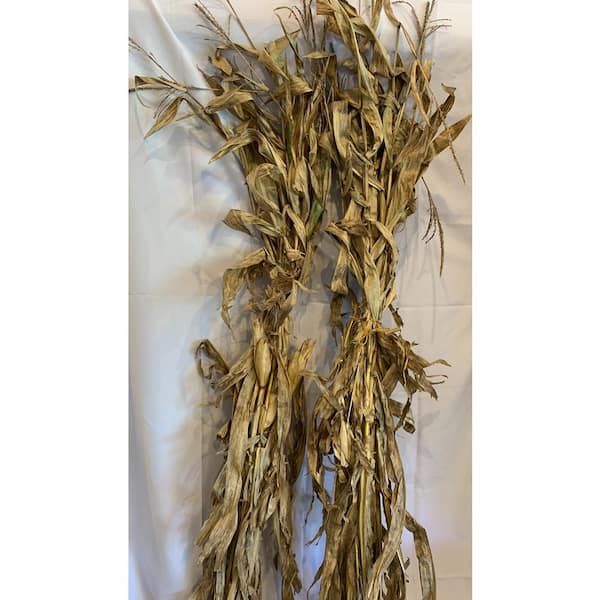
Corn Stalk Bundle (Set of 2) 687051875469 - The Home Depot

     Last week, as part of our autumnal acknowledgements and observances, my wife and I bought a corn stalk.  We posted it in the entryway of our home, reminding us, and all who enter our home, that change is afoot, that the earth is turning, that life is shifting.  That the world is framed in a nearly eternal rhythm of light, life, darkness, and death.

    That's the point.  With its diminishing daylight and crisper nights, autumn is about light as much as it is about dark, telling us that we need both to make a meaningful world.  That although life is wonderful and amazing, it will always end, for that, too, is the essential pattern of existence.  And that's fine:  our destiny is ultimately transcendent.

    Early one morning last week, I saw Orion, striding across the southeastern sky.  It's a glorious sight.  Orion's massive frame looms over the other constellations, dominating the autumn and winter skies.  It speaks of strength, marvel, majesty.  More significantly, it tells a story, a story of how life is perfectly undone:  we live in a magnificent shadow of what is to come.

    The corn stalk is only the beginning.

Wednesday, October 5, 2022

    “I went to the woods because I wished to live deliberately, to front only the essential facts of life, and see if I could not learn what it had to teach, and not, when I came to die, discover that I had not lived. I did not wish to live what was not life, living is so dear; nor did I wish to practice resignation, unless it was quite necessary. I wanted to live deep and suck out all the marrow of life, to live so sturdily and Spartan-like as to put to rout all that was not life, to cut a broad swath and shave close, to drive life into a corner, and reduce it to its lowest terms.”

    So said American author and transcendentalist Henry David Thoreau in 1845. Thoreau was poised to commence living, alone and apart, on Walden Pond in eastern Massachusetts.  Out of his solitary ruminations came one of the classics of American literature, On Walden Pond.  

Henry David Thoreau
    I read Walden for the first time over fifty years ago.  I recently had occasion to reread it.  This time I noticed, among other things, that although Thoreau did not have much interest in conventional religion, he captured, in his writings, much of its essential posture towards earthly existence.  Religion reminds us to reduce life to its most fundamental parameters, its most seminal components.  It tells us to set aside worldly distraction and focus on the deeper meanings of life, the most profound sensibilities that inhabit our present existence.

    We therefore strive to separate ourselves from the temporary and, theologically speaking, profane.  We aim to view life through a larger lens.  We look to the greater possibility.  For the greater possibility is what, for us as well as Thoreau, makes life worth living.  It is what gives existence its point.  Although Thoreau identified this possibility as Nature, I'll go him one step higher and call it that which created nature: God.

    Imagine that.

    By the way, if you can, read On Walden Pond.  It's a classic.

Tuesday, October 4, 2022

Yom Kippur 2022: How To Celebrate - Farmers' Almanac
     

 If we are honest with ourselves, we will admit that we do not always do the right thing.  No one among us eludes our own fallenness.  We all, as many religions put it, sin.  We all do not always do what pleases or sustains the divine fabric of the universe.


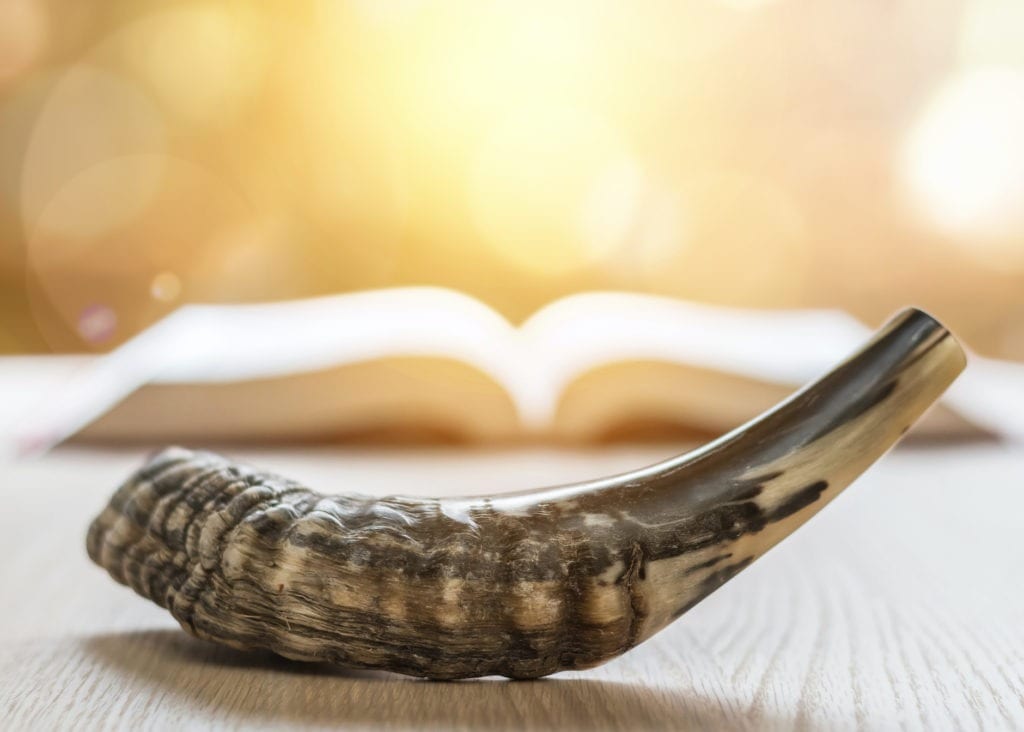
Few religious groups understand this as well as the Jews.  Beginning tonight, Jews around the world celebrate Yom Kippur, the "Day of Atonement."  On this night, Jews acknowledge their sinfulness before God.  They admit their wrongdoing, own up to their prevarications. And they repent.  They tell God they are sorry for disobeying and violating his commandments and laws.  Then they announce their intention to begin anew to live lives that please their creator.


     So the Jews have done for many centuries, and so they will do for many centuries more.  Their faith remains.


     Although we may not agree with the specifics of the Jewish approach, and though we may not see wrongdoing in quite the same way, we must all admit that, to repeat, we do not always do the right thing.  Every one of us is (or ought to be) aware that, at times, he or she upsets the delicate balance of freedom and order that governs the cosmos.

     If this balance is to be more than subjective and relative, we must acknowledge the fact of God.  The Jews recognize this clearly.  So do Christians, and so do Muslims.  And so do adherents of countless other religions.  Absolute and therefore genuinely meaningful morality is impossible without God.  Otherwise, repentance is no more than shouting in a situational darkness, the darkness of an accidental, and therefore, as scientist Steven Weinberg observes, pointless universe.


Monday, October 3, 2022

Yosemite El Capitan.jpg
El Capitan
Tunnel View | Yosemite | Hikespeak.com
Yosemite Valley

     Have you been to America's Yosemite National Park?  If you're ever in the States, it's well worth the trip.  As someone who grew up in California, I've had occasion to visit Yosemite dozens of times, and in all seasons:  spring, summer, autumn, even winter.  I've hiked miles and miles on its backcountry trails and climbed many of its mountains.  I'll never get tired of it.

    Some of you may know Yosemite through the exploits of the many rock climbers who have graced its soaring granite cliffs.  Most recently, it was Alex Honnold, the most famous free solo rock climber in the world, who became the first--and so far the only--person to climb El Capitan, a sheer granite wall that rises 3,000 feet above the valley floor without any protection.  It was a remarkable feat.

    I mention Yosemite because October 1, a few days ago, marked the anniversary of its founding.  How thankful I am that in 1890 the U.S President and Congress had the foresight to set this magnificent valley aside, preserved as wilderness for perpetuity.

    As it should be: the wonders of Yosemite are gifts, gifts of an overwhelmingly creative God.  Gifts for you, gifts for me, for the world.

    Enjoy.