"For the people who walk in darkness," wrote the prophet Isaiah, "will see a great light (Isaiah 9:1)." Isaiah speaks of Messiah, the one who would come to illuminate an Israel darkened by disappointment, abandonment, and sin. He speaks of the one who would open the eyes of all those who longed for a bigger picture of reality, who sought to see a greater light. Those who believed in more.
Monday, December 12, 2022
Friday, December 9, 2022
![]()
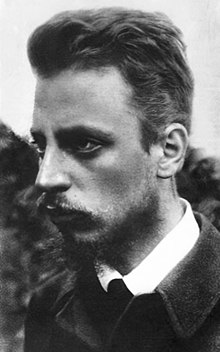
Is God incomprehensible? It's an age old question, one that has occupied many, many books. The German poet Rainer Maria Rilke, long known for his deeply measured thoughts about God, asked this question constantly. Buried at the heart of his inquiring was his notion that life itself was incomprehensible. If we can't comprehend God, how can we expect to understand the life he has bequeathed us? So, he asked, how do we live?
Rilke's answer was to embrace, in living our lives, all that is beyond our control, particularly death. To fully understand life, he suggested, we must wrap it in the specter of death. To ignore death is to ignore the fullness of life.We may agree that God is incomprehensible, but if we believe that life is incomprehensible, too, we have missed the point. If we reject the idea of God, we are still faced with the grim reality that life is incomprehensible. And what will we then do?
Thursday, December 8, 2022
I heard the other day the poet and songwriter Leonard Cohen’s “Hallelujah.” It reminded me of Canadian (and now American) singer Neil Young’s song, “When God Made Me.” In it, Young questions God, asking him why he made people a certain way, why he made people when he knew they wouldn’t believe, and more. Both pieces ask a very good question: how can I believe in a God if I do not understand him? Why must I wander in the darkness when I’m standing in the light?
Wednesday, December 7, 2022
"It is a day that will live in infamy," said Franklin Roosevelt after the attack on Pearl Harbor. For those who were alive when it happened, the attack on the naval base at Pearl Harbor, whose 82nd anniversary is today, changed their world forever. Never before had America been attacked, never before had such devastation been visited upon its shores. Life was turned upside down.
Yet we go on. We grieve for those who lost their lives in this attack. And we grieve for the thousand and thousands of additional lives that were lost redressing what happened. The pain and carnage defy all form and sensibility.
And we continue to believe in meaning. As we should. No one should die unremembered, no one should die alone. No one should leave this life lost and abandoned, a forgotten and abandoned image of God, an entity without a point.
Tuesday, December 6, 2022

Since the days of Auguste Rodin, sculpture has often occupied a special place in the artistic imagination: what is it really trying to say? Consider the works of American sculptor Charles Ray and his unique ability to speak through his creations. Even though it is clear that, in his "Archangel," this sculpture has little to do with communications from the divine, it nonetheless seems to reflect, or so the critics say, transformation. Or what theologians call an apotheosis: a transformation into God.
Yet on the other hand, most of us wish, in some way, to be different than we are today. We may wish for better people skills, increased insight into what life means, greater compassion for our fellow humans, deeper love for our spouses or significant other, and so forth. Bottom line, we want to find our greater point. Even if it is a point that only we define.
And we will do so whether we believe in God or not. When I consider Ray's "Archangel," I therefore ponder how much it expresses who we are. Be it people in passage, people in stasis, or some blending of the two, we long to see who and what else we can be.
After all, we're purposeful creatures in an intentionally purposeful universe. Otherwise, we would have no claim to aspire to anything.
Monday, December 5, 2022
Thursday, December 1, 2022

If you enjoy rock and roll music, particularly that of the Seventies, you may have heard the news: Christian McVie, a longstanding member of the British band Fleetwood Mac and one of its most prolific songwriters, passed away yesterday. She was 79.
But her music will live on. One of her most famous songs, enshrined in the excitement of Bill Clinton's 1992 election to the presidency of the United States, is "Don't Stop Thinking About Tomorrow." It's a song of optimism, a song of hope: never cease imagining that there will be another day.
And there will be. Yet therein is the glory, and tragedy, of humanness. Highly gifted, made in God's image, yet a captive of her finitude, Ms. McVie demonstrates to us that, in the big picture, though we are wonderfully designed and created, we are enormously fragile.
Ironically, we are also made to dream of another day. Futile though finitude may be, it can't be completely contained in a meaningful and intentionally created world.
Rest well, Christian McVie.