Thursday, January 26, 2023

       Although for some it may be overshadowed by Amadeus Wolfgang Mozart's birthday, January 27 is an important day for another, perhaps more compelling reason:  it is International Holocaust Remembrance Day.  This is a day that should cause all of us to stop, think, and weep.  How does one begin to grasp the deliberately engineered deaths of over six million people?  How does one connect with a person who lost the sum of his lineage in a concentration camp?  How can we possibly comprehend being the object of such virulent hatred and racism?

    And how can we categorize those who fomented this horror?
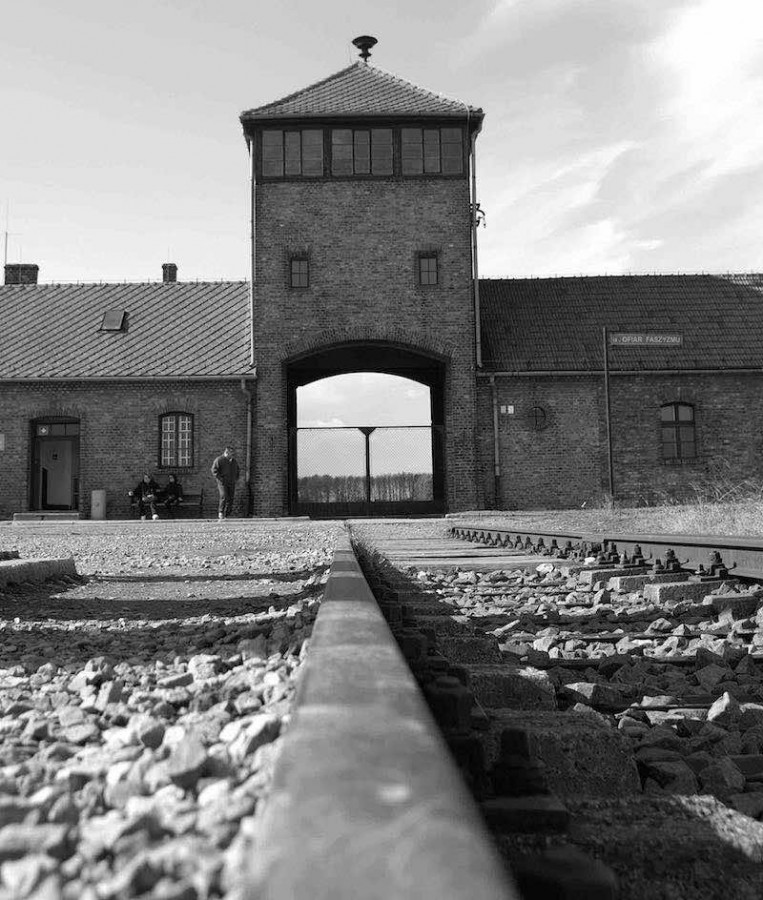

Image result for auschwitz arbeit macht frei
     We can't.  And that's the point.  God aside, evil has no explanation.  It has no point, it has no plan.  It is beyond our ability to fully understand.  Many Holocaust scholars insist, and rightly so, that the Holocaust is an event that surpasses the widest and deepest boundaries of our ken and imagination.  It's beyond intelligibility.
     
    Yet it happened.  Writing to me nearly three decades ago, an American then living in Jerusalem and who had made clear to me that he did not believe in God, allowed that the Holocaust caused even him to acknowledge the reality of the metaphysical.  Why, he reasoned, would anyone with a hatred other than one rooted in the tenebrosity of a twisted notion of the metaphysical--and personal God--engage in such horror?

     Weep for our Jewish brothers and sisters, and pray for those who persecute them. And believe. At all costs, believe in the ultimacy of God.

Tuesday, January 24, 2023


    In the heat of existence, on the days when we are feeling particularly overwhelmed with the exigencies of being alive, we may feel as if we are like people who, as Virginia Woolf observed in her "Lives of the Obscure," are "advancing with lights in the growing gloom," heading toward obscurity, the obscurity of a life lived, a life enjoyed immensely but a life one day to end and be gone, never to return.

      Believing in more than life is hard in the morass of the material present.  We cannot see it, so why put our trust in it?

    Fair enough.  Yet as William Yeats reminds us, "And God stands winding his lonely horn, and time and the world are ever in flight."  Though time wears on and the years drag by, unyielding, sometimes burdensome, ever unchanging, something permanent remains.

    It's hard to see the end of a road at its beginning, yes, but if the world is to have any point, any point at all, there is always a road to follow.  And there is always an end.  An end rooted in the permanence of the necessarily personal ground of existence.

Monday, January 23, 2023

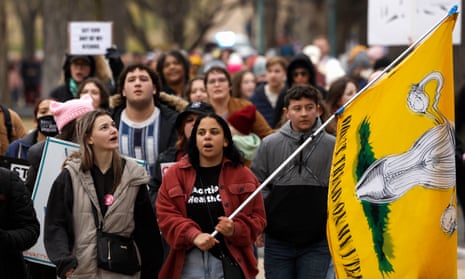
      Today, many Americans will take time to remember Roe v Wade, the 1973 United States Supreme Court that legalized abortion in the U.S.  Since the current Supreme Court recently overturned that decision, however, such remembrances have been taking on different hues.  For those opposed to abortion, it was to vow to carry on so as to make abortion illegal in every state.  For those who support a women's right to choose to have an abortion, it was to continue, state by state, the quest to keep the option open.

People march to the supreme court during the Women’s March on Sunday.

    I'd be hard pressed to find anyone who likes the idea of abortion.  I certainly don't.  Few of us are necessarily delighted to have an abortion.  On the other hand, I say to the anti-abortionists that if you wish to abolish abortion altogether, walk the talk.  Work just as hard and just as fervently to ensure that states and interested charitable organizations have the funds, and the desire, to provide pre--and post--natal care to those who need it.  If you claim to be "pro-life" (whatever this means), then seek to convince states, relevant organizations, and the federal government to work together to ensure that women who, for whatever reason, find themselves pregnant, receive proper care.  In addition, work to ensure that they and their child receives proper care AFTER birth.  Do not reject public programs that attempt to help women who find themselves in this situation, do not oppose efforts to cut off funding for the many public programs that offer aid.  Churches cannot do it all.

    Nor can individuals.

    Love the mother, love the child.  Abortion is an immensely complex issue, and we do ourselves no favor when we distill it to empty shibboleths and simplistic sloganeering.

    God is still there.  Let's listen to his love.

Monday, January 16, 2023

       As many of you may know, today the U.S. remembers the birthday of civil rights activist Martin Luther King, Jr.  Central to this commemoration is King's belief, a belief he shared with millions of others, that freedom, the ability to do what one chooses, when one chooses to do it, is one of humanity's greatest privileges and blessings.  We all deserve to be free.

Martin Luther King Jr.

     For this is what God wants.  He made us to be free, to free to choose, to be free to do.  To be free to live as we like.

     Freedom is wonderful, and freedom is intoxicating.  But freedom can be frightening.  We often do not know what to do with it.  We frequently do not know what its fullness really means.  We frequently miss the point.  We abuse it terribly.
     
    Maybe that's why, as John records it in chapter eight of his gospel, Jesus told his audience that, "You shall know the truth, and the truth shall make you free."  True freedom is to know the truth:  the truth of the fact of God.  King knew this well, and steadfastly centered his call for freedom in the presence of God.  He knew that freedom is only meaningful if it is grounded in something bigger than itself.
     
    He knew that freedom is more than a release from physical bondage, a slip of one material experience to another. 
    
    As we remember King's birthday, we also remember that the freedom he preached is ultimately, as Mahatma Gandhi observed in his explication of satyagraha, self-discovery in truth.  We are not free in an accidental universe, a cosmos without definition; we are free in a universe made real by truth itself.

Friday, January 13, 2023

JackLondoncallwild.jpg    

       Perhaps you can identify with a longing for outdoor adventure, a longing to step out of the regular and normal, a deep seated desire to break away from the staid rhythms of quotidian existence.  If so, you are decidedly not alone.

     But you might wish to be.  You might wish to be tromping through an uncharted wilderness area hundreds of miles from anyone or anything else.  You may seek the deepest unknown there is.
     
    American novelist Jack London wrote profoundly on this spirit of adventure, this thirst to explore, to topple boundaries, to abandon everything in quest of inner fulfillment.  His Call of the Wild captures this urge perfectly:  the lonely yet determined human pitted against the forces of the distant and remote wilderness, the former seeking meaning, the latter inundating him with it.

     There are many wilds, there are many unknowns.  Although London focused on the wilds of the material world, it's not difficult to see that in seeking the wilds of this world, we cannot help but find the wilds of another.  Finite creatures wandering in a nearly infinite cosmos, we humans need the wilds of transcendent mystery to really see who we are.

Wednesday, January 11, 2023

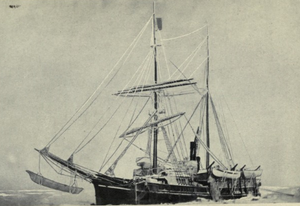
     About a year before the Great War, a team of twenty-five men set sail on the HMCS Karluk to explore the islands of the Canadian Arctic, the vast stretch of ice and ocean between the MacKenzie River and the North Pole.  It was a harrowing voyage.  Midway through the trip, as winter's onset occurred far too quickly, the Karluk became trapped in the ice, eventually sinking to the bottom of the sea.  Happily, the crew was able to retrieve quite a bit of equipment, food, and supplies, sufficient to support them for the winter they realized they would now be forced to spend on the ice.

    Almost immediately, however, things began to go wrong.  Unstable ice, several lost search parties, an arduous and exhausting journey to Wrangel Island, the nearest land, and even more trouble getting from Wrangel Island to the shore of Siberia and, eventually, Alaska, proved devastating.  By the time, Captain Robert Bartlett was able to arrange rescue the next spring, half the crew had died.  The expedition returned a semblance of its original self.

Two-masted sail-and-steam ship, with pennant flying from topmast, sails furled, lying stationary in a frozen sea

    Throughout, however, the men aboard the ship never lost hope in their mission--and themselves.  Their perseverance is potent testament to the resilience of the human spirit in some highly abject circumstances.  Reading the account reminded me of the travels and travails of Ernest Shackleton at the opposite end of the world (see the story of the Endurance).

    Morally, we humans can be incredibly broken beings.  Physically and emotionally, however, though we are far from perfect, we have an astonishing capacity to sustain ourselves.

    Maybe the world really has a point.  Maybe it really has meaning.  Otherwise, why would anyone bother?

Tuesday, January 10, 2023

    "Not all who wander," observed Lord of the Rings author J. R. R. Tolkien, "are lost."  How true this is.  To wander is to contemplate and meditate, expand and explore, to travel without a clear destination.  It is to be open to what comes our way.  And to grow and learn from it.  When we wander, we let go.  We let go of our plans and intentions, set aside our immediate ambitions.  We step away from the past, cast aside the future.  We don't plan, we don't frame.  We don't set a time.

    When we are lost, however, we are looking for something specific, a place or destination where we had hoped we would be.  We're missing something.  And we do not always know what it is. 


Where is the last place you'd want to get lost?
    But the nuances of being lost are complex.  Some twenty years ago, James was a prisoner on death row in the state of Texas.  In an interview he gave a week before he was to be executed for his crime, James acknowledged that all his life he had been lost.  He had never thought about what his life meant, never thought about where it began or where it was going.  He only did what was immediately before him.

    At some point in his imprisonment, however, James embraced Christianity.  He gave his heart to Jesus.  Everything changed.  He no longer felt lost.  In fact, he felt "found."  As a result, as he put it in the interview, "All my life, I never had a home.  Now [after he was executed] I'm going to have one."

    Wandering is essential.  Ironically, so is being lost.  For sometimes it is when we are the most lost that we are the most found.