Thursday, February 9, 2023

     Perhaps you're familiar with the ancient Japanese art of Kintsugi.  It is an art form that begins with the premise that brokenness is not something to be regretted, but as something out of which can come something even better.  In contrast to most Western thought which holds that brokenness is something to be covered up, Kintsugi says that what is broken is not to be rejected and "fixed" back to its original form, but rather to become into something that is new, originally and dynamically new.

    Key is the idea that what was broken doesn't go away; it is remade into something that has never been before.  It is remade using even better materials than those with which it was originally constructed.  What was, however, remains.  But it is completely new.

    As many of us are feeling overwhelmed with the state of the world and wondering how much longer humanity will survive on the planet, we do well to take another look at the idea of Kintsugi.  Any new world we create will necessarily reflect the one we leave behind.  It cannot do otherwise.  Yet isn't it better to take what is not working now and, using fresh ideas and vision, remake it into something new, than to completely destroy the present for a future unknown?

Wednesday, February 8, 2023

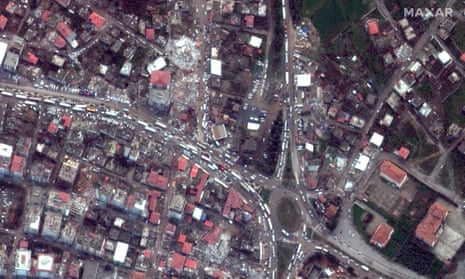
Satellite images show the aftermath of the deadly earthquake in Turkey and Syria.

     Pray for the nation of Turkey.  Outside of understanding the nature of the geological processes that ripple constantly through the netherworlds of the planet (and we know quite a bit about such things) and how some regions of the world are, unfortunately, prone to seismic activity, I have no answer to the horror of the earthquake that devastated the nation earlier this week.

    Yes, this is a good world, and yes, this is a purposeful world.  And yes, this is a world grounded in a transcendent wisdom.  But this is a difficult wisdom.  It fractures as much as it heals, breaks as much as it repairs and renews.  It's there, but like everything on this earth, it is caught between the unassailable integrity of its origins and the shifting and mercurial impact of its present moments.  And incredibly heartbreaking things happen.

    And God seems gone.  Pray for relief, pray for solace, pray for strength.  Pray for international aid for this beleaguered part of the world.  Believe in the ultimacy of a wisdom that not only bends under the weight of the challenges of finitude, but which also creates beginnings beyond it.

Tuesday, February 7, 2023

     Job.  For those who are even remotely familiar with the Hebrew Scriptures, otherwise known as the Old Testament, the book of Job has a special place in their imagination.  Job revisits the perennial question:  if there is a God, and if this God is omnipotent and good, then why do people suffer?  How can a good and all-powerful God justify a world of pain?

    Particularly when this pain, as it is presented in Job, afflicts a person who seemingly does not deserve it.  Why does God allow Satan to visit a series of unmitigated disasters on him, his health, his wealth, and his family?  Nothing about this makes any sense.

    Therein is the puzzle of the book.  Why should we believe in God when his actions do not make sense?  Although many will respond that, well, we finite humans cannot understand the thoughts and actions of an infinite God, that is, such knowledge is not ours to know, this is little comfort when we are wallowing in emotional grief or physical pain.  Or to respond that, no matter what, God is with us, well, that's great but our grief and pain remain.

    That's why faith is so difficult.  Believing in the impossible in the face of the possible is exceedingly challenging.  Or, some might add, delusional.

    Maybe so.  Yet just as we conclude that we can live without God, we will soon realize that we cannot live without him.  Do we really want a totally hopeless universe?

Monday, February 6, 2023

        In the U.S., February is Black History Month.  In truth, one finds it rather odd that we must set aside a month to celebrate a history of a people whose lineage is considerably longer than that of the more dominant race in the world today, that is, white people.  In fact, as Nell Irvin Painter points out in her 2011 The History of White People, it is the white skin color that, from a genetic standpoint, is the more "aberrant" of human skin colors.  Moreover, whether we believe that humanity began in southern Iraq vis a vis the Garden of Eden, the savannah and gorges of central and southern Africa, or some combination of the two (which, given geological shifts many eons ago, seems likely), we must admit that our earliest ancestors were anything but lily white.

Image result for black history

     Due to racist behavior perpetrated by other races and ethnicities in the course of human history, the virtues of Black culture have often been ignored, suppressed or, worse, abused and destroyed.  This has been at our peril.  We can only enjoy and appreciate humanity when we can explore and experience all of its manifestations.  That we realize that, over and above us all, is a God who has created us to be, in the world he has made, together.

     This month, and every month, celebrate the marvel of our amazingly manifold humanness.

Thursday, February 2, 2023

     Today, Groundhog Day, is a day buried deep in ancient European belief and lore, a day of reckoning, a day that marks the approximate midway point (otherwise known as Beltane or, from a Celtic standpoint, Imbolc) between Winter Solstice and Spring Equinox.  It is, as those who live through cold and snowy winters, the point at which, maybe, just maybe, things are on the upswing, and that, going forward, the earth is closer to spring than winter.


Image result for groundhog day images     Today, we know much more about the weather than our ancestors.  We can predict its trends far more effectively.  Most of the time, this is good.  On the other hand, with each new statistic and predictive instrument we devise and use, we put one more layer between us and our world.  We're perhaps safer and better prepared, yes, but we are not necessarily better off.  We forget what the world is like.  We overlook the beauty of the rhythms with which our planet breathes.

     And maybe we forget that we live in a reality whose meaning does not cconsist in our ability to tame and conquer it, but rather in our willingness to acknowledge its mysteries.  We learn that, finite that we be, we will never fully outwit that which we did not make.

Tuesday, January 31, 2023

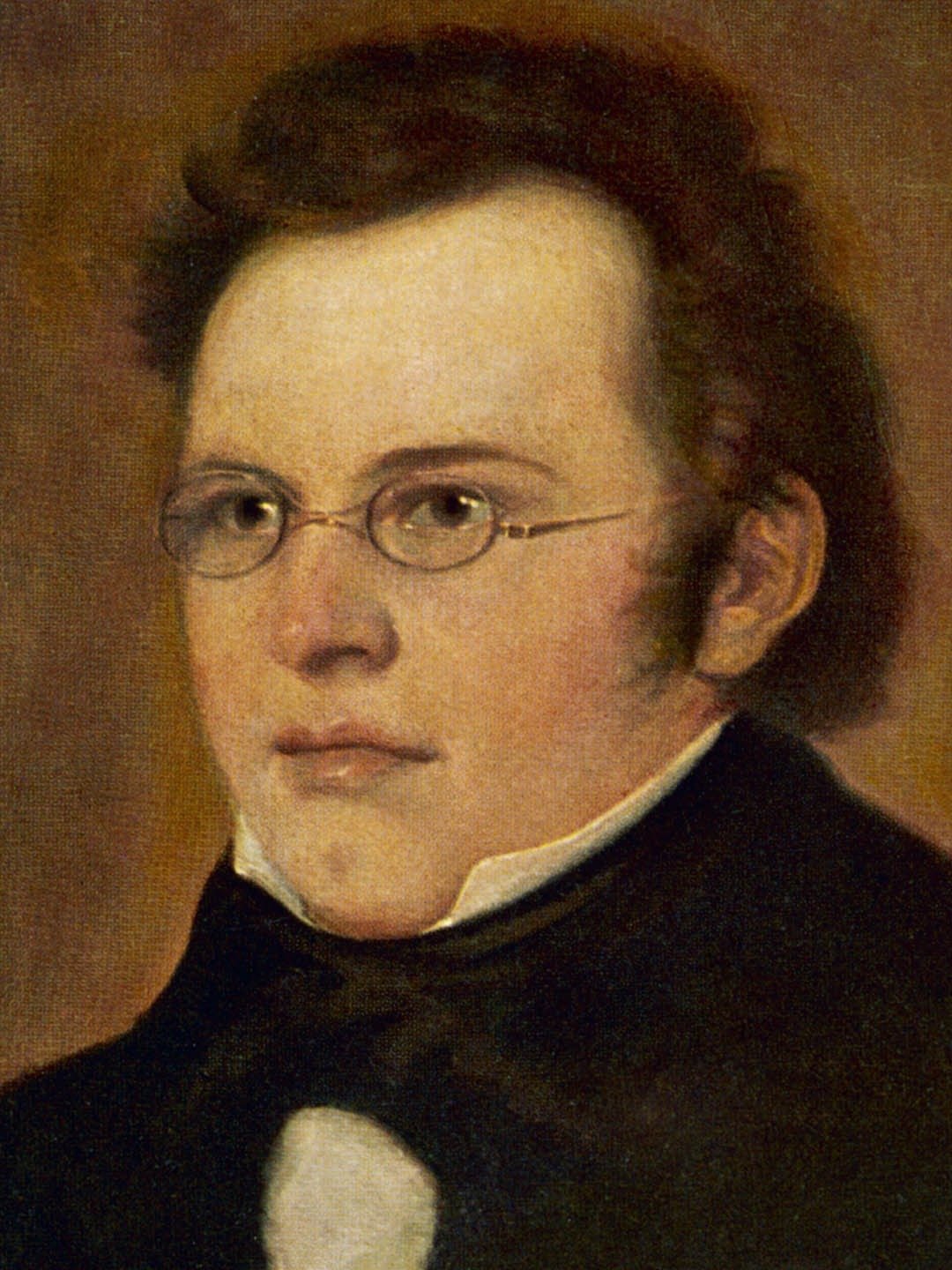
 Image result for schubert"

      Not as well known as Mozart, whose birthday we remembered a few days ago, Franz Schubert was nonetheless one of the most remarkable musicians in Western history.  Immensely productive and profoundly creative, Schubert wrote some of the most ethereal and haunting melodies of all time.  We listen to his music and feel transported, lifted above what is earthly and material, moved into transcendence.  Today, January 31, is Schubert's birthday.

     Schubert's music gives us pause.  If music only told us what we already know, we probably wouldn't get as much out of it as we do.  We do not need to be reminded of what is obvious and normal.  We rather need to be encouraged to ponder what is beyond the apparent, what breaks down the seen, what splits the visible apart.  We want to know what we, at the moment, cannot.

     And this is what Schubert's music does.  Descending into the darkest recesses of his soul, Schubert talks to us about the deepest mysteries of existence, how we walk in a wisp, a gossamer veil stretched between us and the other side of time.  He romanced eternity.
     
    As do we all.  Every day we balance, balance between presence and absence, perched on a thin line dividing present reality and ultimate destiny.
    
    Thanks, Franz Schubert, for showing us that life is bigger that life itself.

Friday, January 27, 2023

      It's a big day:  the birthday of Wolfgang Amadeus Mozart.  Around the world, people continue to be astonished by the immense creativity and wonder of this Austrian's music.  Although Mozart died, sadly, at the tender age of 35, he produced an array of musical expression that most musicologists agree is unmatched.  As a contemporary said of him, "He was like an angel sent to us for a season, only to return to heaven again."

    Confronted with Mozart's prodigious talents, we marvel.  We marvel at the nature of the human being, we marvel that we are creatures of such remarkable abilities, that we are gifted in a nearly infinite number of ways.  How could such a thing be?

    Such is something for which materialistic evolution has yet to give us a convincing answer.  Their inability reminds us that, consciousness and sentience aside, we, and life, are far more complex than an inexplicably fortunate blend of chemicals.  
    
    Maybe we really are not alone in the universe.

    Thanks, Mozart, for your music and song.  Thanks, too, for showing us that, in these all things, there is far more to reality than meets the visible eye.