Friday, August 4, 2023

     If you follow the popular music scene, perhaps you heard, last week, about the passing of Randy Meisner, one of the founding members of the Seventies band the Eagles.  He was 77 years old.  Cause of death?  Chronic obstructive pulmonary disease.

    Though I enjoyed some of the Eagles' music, I was never a die hard fan.  Nonetheless, after a friend sent me a video of Meisner singing his signature song, "Take it to the Limit," I found reason to be sad.  In it, he sings of dreams, of destiny, of time:  a paean to the wonder and fleetingness of human existence.  It's a testament to the profound longing for meaning in an otherwise unfathomable life.

Meisner in 1978

    We who live in the affluent West, particularly those who, like the members of the Eagles, enjoy tremendous wealth, have not really found what makes life significant.  So we wrestle, we struggle; we seek and search.  We are always looking for a way through this bewildering existence in which we find ourselves.  Although it is indeed a glorious existence, its glory ironically rests in the tantalizing frustration that makes us uniquely human: a longing for meaning.

    Rest well, Randy Meisner.

    By the way, I'll be traveling next week.  Talk to you in a couple of weeks.  Thanks for reading!

Thursday, August 3, 2023

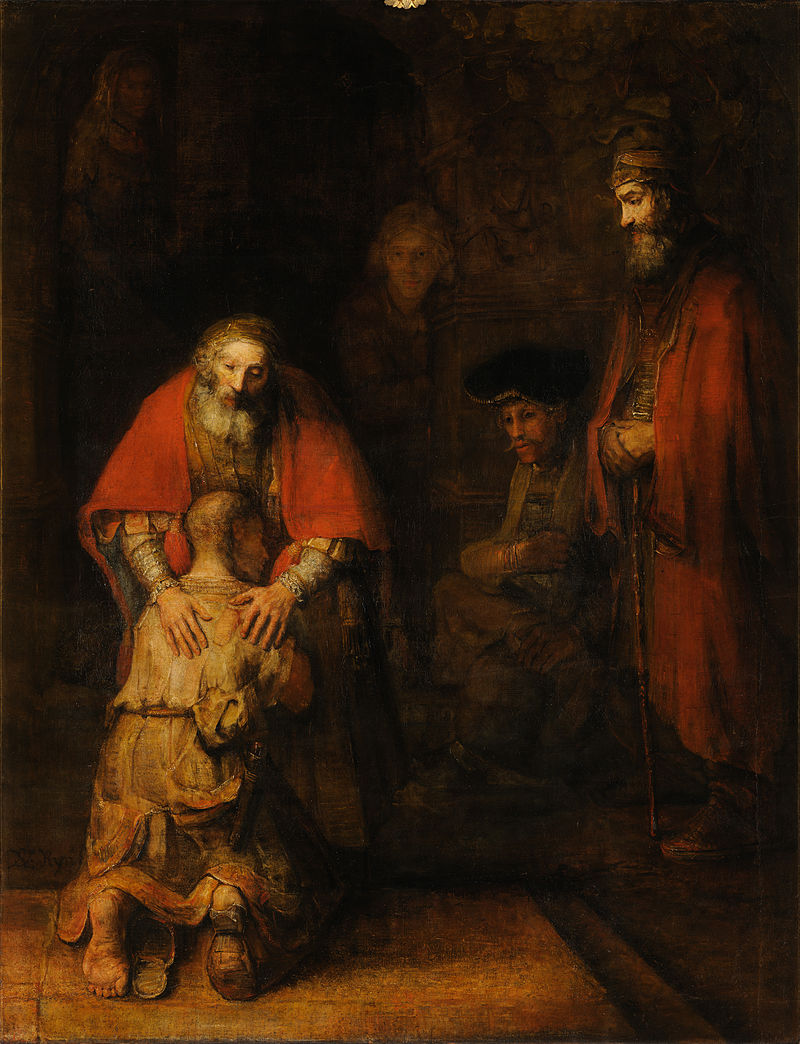
        A musician, an artist:  colorists consummate, each paints images of the world.  The one does so with his music, the other with his brushes.  Last month, in looking at the music of Robert Schumann, we noted its sense of fantasy and wonder, its blend of magic and reality, the way that its melodies transport us to new lands.  When we turn to the work of the Dutch artist Rembrandt Harenszoon van Rijin, otherwise known as Rembrandt, we stumble into an equally remarkable vista, one of profound and telling detail infused with extraordinarily rich and vibrant color.  We often wonder whether our world is really this amazing.


      Perhaps it is.  Perhaps what Rembrandt most does for us to open our eyes so as to allow us to shed our preconceptions about existence, the often utilitarian way that we view being alive, to encourage us to let our imaginations roam to what could be and, perhaps most important, what ought to be.  Maybe Rembrandt is showing us how to look for more than we expect to see.

     To see what is really there.  To see, for instance, in the "Return of the Prodigal Son" (based on the timeless story presented in the gospel of Luke), a father's love, yes, but even more a transcendent God's love for us all.

     It's the ultimate vision of our humanness.

Tuesday, August 1, 2023

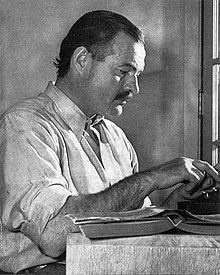
Dark-haired man in light colored short-sleeved shirt working on a typewriter at a table on which sits an open book
Ernest Hemingway

      Isn't truth a funny word?  Most of us appreciate it, most of us desire it. Very few of us, however, can define it.  Philosophers tell us there are essentially two ways of looking at truth.  The correspondence theory suggests that truth is simply that which corresponds to reality.  While this seems logical enough, it raises other questions:  how do we know what is real and how do we therefore know what corresponds to it? 

    Taking a different tack, the coherence theory holds that truth is the sum total of what seems apparent, logical, and right.  Truth is not fixed but is rather what appears to be most correct based on the prevailing evidence.  Yet how do we decide what is most correct and right?

     Though I see virtue in both perspectives, I won't try to reconcile them now.  I merely wish to make an observation about the necessity of truth.  When we insist that truth is relative or a creation of the moment, we are essentially saying that truth does not exist.  If so, we have no good reason to hold that even we exist.  If nothing holds, if nothing is sure, then neither are we.

     We need truth to be truth.  Otherwise, we became like the protagonist of Ernest Hemingway's Farewell to Arms, who, in the final scene of the novel, when he has just watched his wife die giving birth to his child, then stood by as the child died, too, "put on his hat and walked into the rain."

     And unless we let truth be truth, we will be ever walking, too.  Like the protagonist of Ernest Hemingway's Farewell to Arms, who, after losing his wife and newborn son, "put on his hat and walked into the rain."

    The end.

Monday, July 31, 2023

        In my recent travels in the West, hiking through its mountains, I often had occasion to think about the author Herman Hesse.  Hesse's Siddhartha, author Hermann Hesse, a German novelist whose works were highly popular in the soul-searching years of the Sixties and Seventies, recounts the journey of the prince who would later be the Buddha.  As he tells the story, Siddhartha, a young prince of immense wealth and privilege, grew increasingly dissatisfied with his life.  Is there anything else, he wondered, to existence besides material abundance?

    So one day Siddhartha left the palace for the open road.  As he did, he encountered, in succession, an elderly man, a sick man, and a dead man.  He had never seen aging; he had never experienced sickness; he had never known of death.  These sights shattered all of the categories he had established for understanding the world.

    After many months of wandering, the prince arrives at a river, a peaceful, flowing river.  He is struck by the river's steadiness, its rhythms and quiescence, the way it seemed to flow unhindered, unbidden, ever and always free.  And always remaining the same.  

Hermann Hesse - Wikipedia

     So should be, Siddhartha concluded, life:  a single and continuous present, never beginning, yet never really ending, either.  We live into existence as a river.  It's all we need.  In the river, we see truth:  everything is one.

     Some physicists insist that time itself does not exist, that life is simply a series of events with no larger purpose or connecting force between them.  Like, I guess, a river.

    However, if a river is all that life is, we'll never really know it:  once we do, we don't.  We need form, we need boundaries.  In themselves, events do not constitute meaning. 

    And we all want meaning.

    Maybe we really do need a God.

Friday, July 7, 2023

Supermoon / Super Moon - Why and When?

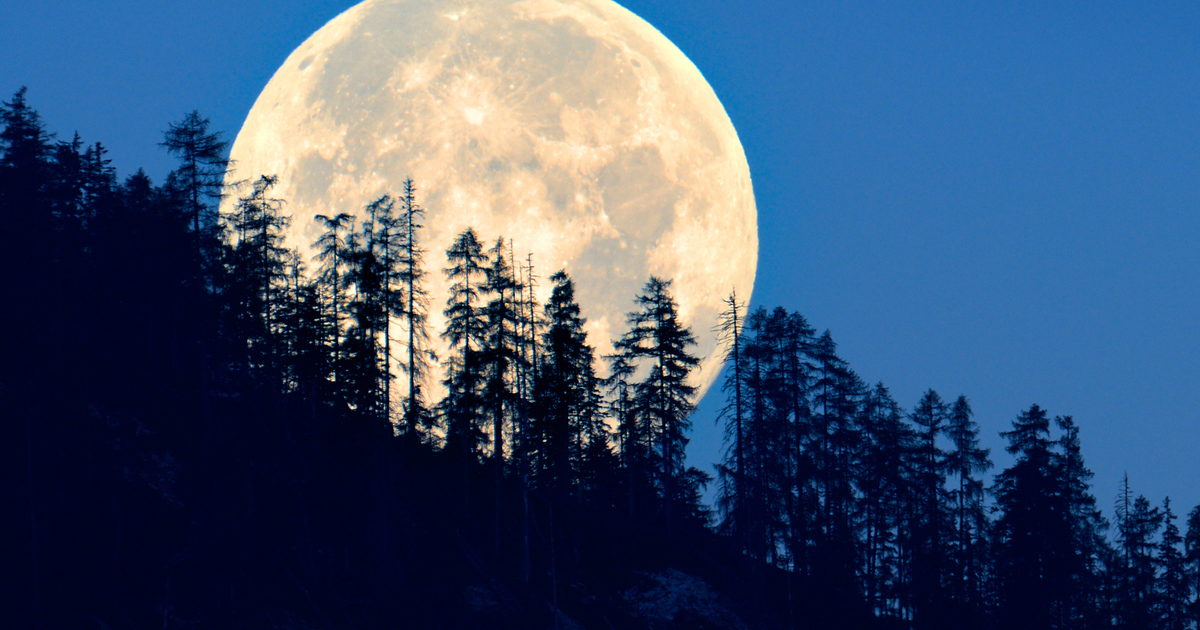
     Did you see the supermoon?  A rare and exciting astronomical phenomenon, a supermoon occurs when the moon, in its elliptical orbit, is at its closest to the earth.    Because of the moon's exceptional proximity to the earth, it appears to be much larger in the sky.  Hence, the moniker supermoon.

    Due to some cloud cover that night, we unfortunately missed seeing the supermoon this year.  But we happily saw many photos of it taken from around the planet.  It's always amazing to see.

    Although our most ancient ancestors did not know what caused the moon to appear so large in the sky, they certainly understood that such an occurrence was special, special in a number of ways.  While we in our so-called "enlightened" age understand why the moon appears to be larger on the night of a supermoon, we still do well to step back from our scientific commitments and marvel at the sight.

    And realize, once again, that it's a surprising world, a surprising world created by, however we wish to think of him, a surprising God.

    By the way, I'll be traveling--exploring mountains--for the next couple of weeks and will not be posting.  Thanks for reading!

Thursday, July 6, 2023

     As most of the world knows, earlier this week, July 4, the United States  celebrated its Independence Day.  It commemorated the day in 1776 that the gathered colonists announced that the thirteen colonies would henceforth be free of the British crown.

Why do we celebrate the 4th of July? Independence Day facts ...

    American writer Mark Twain once observed, "Patriotism is supporting your country all the time, and your government when it deserves it."  As we read of the continuing crackdowns on individual rights in too many other parts of the world, including, I might add, the U.S., we have new reason to consider the wisdom of Twain's assertion.

    As many have said, freedom is only as free as we want it to be.

Wednesday, July 5, 2023

      July:  the month for celebrating independence.  A couple of days ago, July 1, Canada celebrated its Independence Day.  On this day in 1867, Canada officially became independent of the British crown (though still a member of the British Commonwealth), free to pursue its own destiny.  It's cause for much rejoicing.

    With good reason.  As tomorrow I think about America's independence day, I trust that all of us realize anew that freedom is an enormously precious thing.  For as countless people who have lived through times of dictatorship can attest, little do we grasp the extent of our freedom until we no longer have it.

     A number of years ago, I happened to be in Canada on July 1.  It was a day of great celebration, a day off from work, picnics and gatherings, and, at night, fireworks.

    We all celebrate our freedom in different ways.  At the core of it all, however, is our corporate and often unvoiced understanding and conviction that humanness is meeting the challenge of being choice making beings in a world over which we have little control.  We're free, yes, but we're not free to be free.