Monday, November 13, 2023

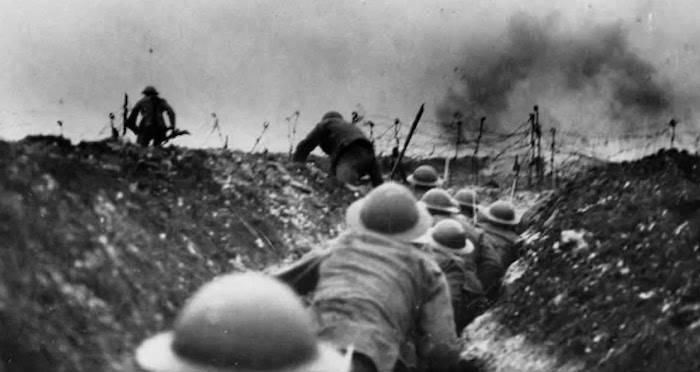
Image result for world war 1 images     Two days ago, Nov-ember 11, was Veterans Day in the U.S.  As most students of World War I are aware, November 11, 1918, marks the day that the armistice of World War I took effect (the eleventh hour of the eleventh day of the eleventh month).

     Despite all that humanity may do to prevent them, wars continue to happen, and many people feel called to or are conscripted to fight in them. Unfortunately, while some survive, far too many do not.  And this doesn't count the untold numbers of civilians who perish as well.  War's tragedy is immense. 
    Veterans Day is therefore a mixed bag, a remembrance of a heartbreaking nexus of duty, honor, suffering, and pain.  When I think about Veterans Day, I therefore think about such things; I think about heartfelt conviction, I think about the slippery nature of sin.  I also think about the beauty of peace and and the joy of human compassion.  And I wonder how God, in Jesus Christ, one day intends to set all these ambiguities right. 

     It's not easy.  It's not easy to know what, amidst the forest of human ambition and emotion, God thinks.  It's not easy to know what eternity, the lens by which all things will be assessed, envisioned, and judged, means.  We live in a riddle.  Yet God is present, in peace as well as war, his love for us ever unchanged.

     And maybe, in all of our human stumblings and beautiful yet flawed rationality, that's what we most need to know.

Friday, November 10, 2023

      Ah, birthdays.  We all have them.  Last week I celebrated mine.


Image result for road into the desert
     Birthdays are an occasion to rejoice.  They re also an occasion to ponder.  Many years ago, when I turned twenty-two, I was in Saskatoon, Saskatchewan.  I had just emerged from four months of backpacking in the Canadian Rockies and was now traveling east, taking a long way back to the States.  Given all that was happening in the world and the majesty of the mountains in which I had been, my birthday seemed a very little mark in a very large canvas.
     
     It still is.  Though I still believe that life is a promise and expectation of river and ocean coming constantly together in a creation I did not really make, and that, furthermore, we--all of us--are poems, beautiful and gripping poems of existence, I also know that unless we are poems set in a framework of transcendent purpose, destiny, and conclusion, we miss the whole point.

    Happy birthday to all.

Thursday, November 9, 2023

 Lucas Cranach d.Ä. - Martin Luther, 1528 (Veste Coburg).jpg

    In addition to October 31st being Halloween, it is also what many people call "Reformation Day."  Five hundred years ago, on the door of a church in Wittenburg, Germany, a Catholic monk named Martin Luther posted ninety-five theses describing what he believed to be serious problems with the way the Catholic church (the only Christian tradition of the time) conducted its affairs.

     Undergirding these theses was Luther's contention that indulgences, rites of penance, sermons, and church attendance aside, what is most important about people and God is that people find God through faith.  He knew that in this material world, we cannot see God visibly.  Yes, Jesus came, died, and rose again, but he's no longer openly present on the planet.  If we wish to know God, he therefore argued, we must believe that, the historical veracity of the Bible notwithstanding, he is there.
     
    Luther's crucial insight was that despite everything people think they need to do, be it rituals, church attendance, asceticism, and the like, to find God, they really only need to do one thing:  believe.
    
    Sometimes, however, that's the hardest thing.

Wednesday, November 8, 2023

     If you are at all familiar with the history of art, you are aware of Pablo Picasso, the famous Spanish painter who is perhaps best known for introducing the world to cubism.  Much has been written about Picasso, and countless museums have mounted exhibitions of his art over the years.  He has achieved a notoriety, good and bad, and fame which few artists have surpassed.

     Prior to Picasso, art, despite its numerous divergences into Impressionism and Postimpressionism and the like, continued to present its images reasonably proximate to the object it was portraying.  But cubism broke up its images, fracturing them, twisting them up and down and around, bending them in ways that they would never be in real life.

Girl Before a Mirror Pablo Picasso     Although some people found Picasso's forays threatening and felt as if his art was making their world less secure, others welcomed Picasso's perspective.  It was simply another way of looking at the human condition.  It underscored that a world that was, oddly enough, wrestling with the ennui of modernity was looking for a way through it, a way to navigate the bewildering--and exciting--angst that it created.  Though Picasso's cubism didn't necessarily solve the problem, it more than made it plain:  we are significant people in, apart from loyalty to a divine being, an insignificant universe.
     
    When boundaries fade, we find new boundaries still.

Tuesday, November 7, 2023

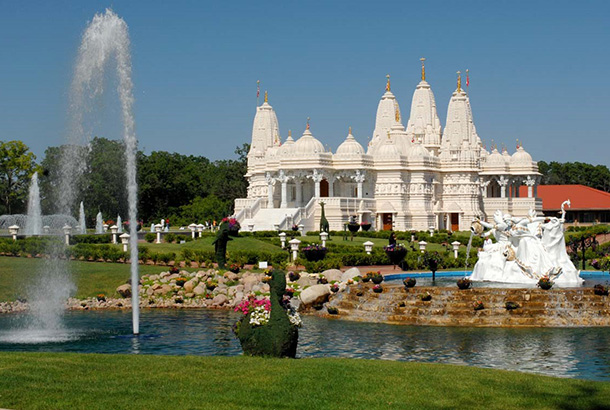
     Sunday marked the beginning of the festival of Diwali.  It is a holiday sacred to over a billion people around the world:  a joyous occasion.  Diwali is known as the festival of lights, the lights of color, brilliance, enlightenment, and happiness:  all that which enters into the mystery and wonder of life and the God who gives it.

    It's apt.  Unless we celebrate life in the framework of higher purpose, its lights becomes little more than momentary confluences and coalescences of dust and plasma, things in which we have found ourselves, raw and unknown, and told we must live.
    
    Enjoy life, enjoy its lights.  Be happy for it.  And rejoice in the fact of purpose, the purpose of a creator.  Light won't shine long in a forgotten universe.

Monday, November 6, 2023

Forest therapy focuses the senses and increases well-being

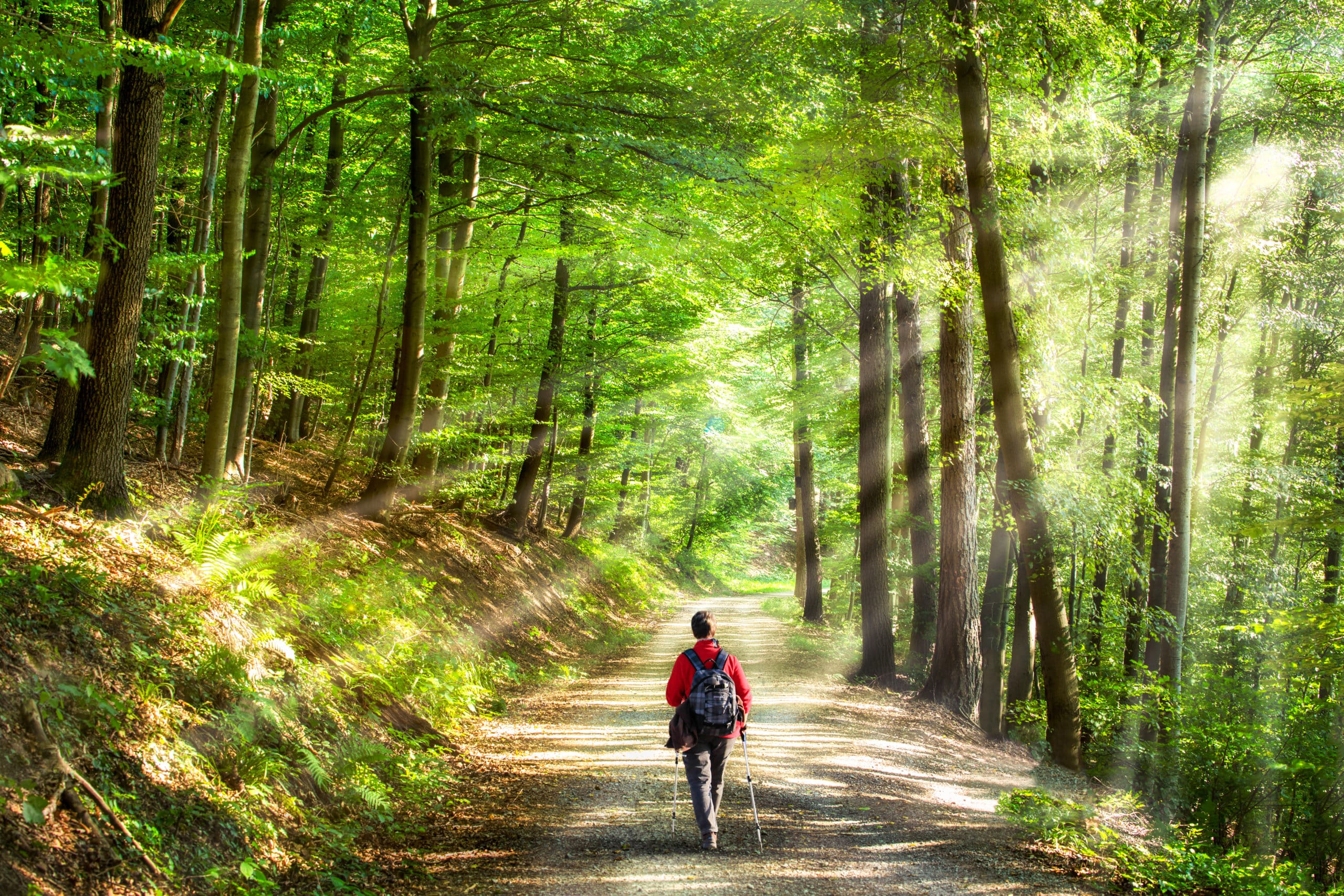
     About a week ago, as I was race walking through a forest preserve near my house, I slipped on some ice and, as timing would have it, landed directly on my face.  Then followed several hours in the emergency room, out of which I emerged with two stitches and a massive dressing.  Happily, no broken bones to speak of.  The upshot was that I was rather wiped out most of last week and am only now getting back on track.

    In the interim, I missed talking about Halloween, the Reformation and, perhaps, at least to me, a big moment, my birthday.  I hope to offer some perspective on these this week.  This notwithstanding, being laid up for a few days, as most times of being sedentary do, sparked a number of thoughts and meditations on the frailty of my (and our) humanness.

    How strong we suppose ourselves to be--until we are not.  In the space of a few seconds, as energized as I supposed myself to be, I was incapacitated.  While I managed to walk the remaining two and a half miles home after I fell, I was nonetheless far from normal.  But in a way, that was fine.  In my recovery, I had unexpected moments to actually stroll through the forest, to see, for instance, the evergreens, still shining and full even as their deciduous counterparts were losing leaves with every passing second.  It made me think about ultimate stability.

    We all long for an anchor, we all long for integration.  We all seek wholeness.  On this planet, however, we will never find it, at least in permanent form.  We will forever be seeking it.  If this world is to be a place where we can at least find wholeness in temporary form, however, it must be a world with meaning.

    And it must be a meaning we cannot assign to it.  Otherwise, it's no meaning at all.

    I'm grateful for a world whose meaning I can assign but never create.

Tuesday, October 31, 2023

     As Halloween, the Celtic Samhain, the night that, in ancient tradition, the spirits and goblins of the inner earth escape, for one bone chilling evening, their chthonic imprisonment and roam about the planet, weaving magic, confusion, and mystery into the lives of those still living, approaches, we wonder.   Why do we think about such things?  Why do we speculate on what might lay on the "other side"?  

    Is there another reality?  Are the facile assumptions on which we have long relied rational and true?  Amidst all its silliness and frivolity, Halloween should make us think that our assumptions may not be what we imagine them to be.  That there is other, that there is more.  There is a beyond, a somethingness which we might not otherwise see.
 
    Perhaps deceased spirits are wandering, wailing about their ignominy.  Perhaps.  Yet how could spirit be without spiritual presence?

    And how could spiritual presence be without light?