Monday, November 27, 2023

 Head and shoulders monochrome portrait photo of Anne Sexton, seated with books in the background

    Do you ever feel as if God is distant?  Or not there at all?  You're not the only one.  The poet Anne Sexton, a Pulitzer Prize winning writer who died in the last century, penned some profoundly constructed words in this regard.  In her "Rowing Toward God," she writes of how she is constantly rowing toward God yet how this rowing is an "awful" rowing that never seems to reach him.

    And even when she thinks that she has reached God, she finds that he is not as friendly or welcoming as she thought he might be.  Moreover, she realizes that, in the end, God holds all the cards ("five aces," as she puts it).  Her ultimate destiny is completely in his hands.

    So Sexton's is an awful rowing, an awful rowing toward a destination which, to her, deeply disappoints, a destination that, to her, is devoid of hope.  Who really am I? she wonders.  If God makes the final call, what is the point?

    Indeed.  Apart from visible exchange with God, we might all wonder the same thing.  In a world which we did not make, a world in which God seems distant, even  nonexistent, and yet holds all the cards, who and why are we?  Is there a reason beyond the moment?

    Only if, as the apostle John wrote, "The Word became flesh and dwelt among us."  Only if God has made himself known.

    The good news is that, in the person of Jesus Christ, he has.

Wednesday, November 22, 2023

        God opens his hands," writes the psalmist, "and satisfies the desire of every living thing" (Psalm 104).  Although we all have much for which to give thanks, perhaps the most important thing for which we can be thankful is that we can give thanks.  We can rejoice that we can be aware of who we are, that we can experience the gracious bounty of the universe, that we can know, really know, that we are beings who can create life, culture, and moral sensibility.  We can be grateful that we are here.

Image result for meadow photo

     Many a theologian has observed that all truth is God's truth.  If so, we can also give thanks for that which enables us to know everything else:  living and personal truth.  Absent this truth, nothing has point.  Give thanks therefore that despite the fractured state of modern spirituality and the numerous political issues that attend this end of November celebration, truth remains.  And that truth is knowable.
     
    We live in truth's materiality yet we exist in its eternality.

    Happy Thanksgiving!

Tuesday, November 21, 2023

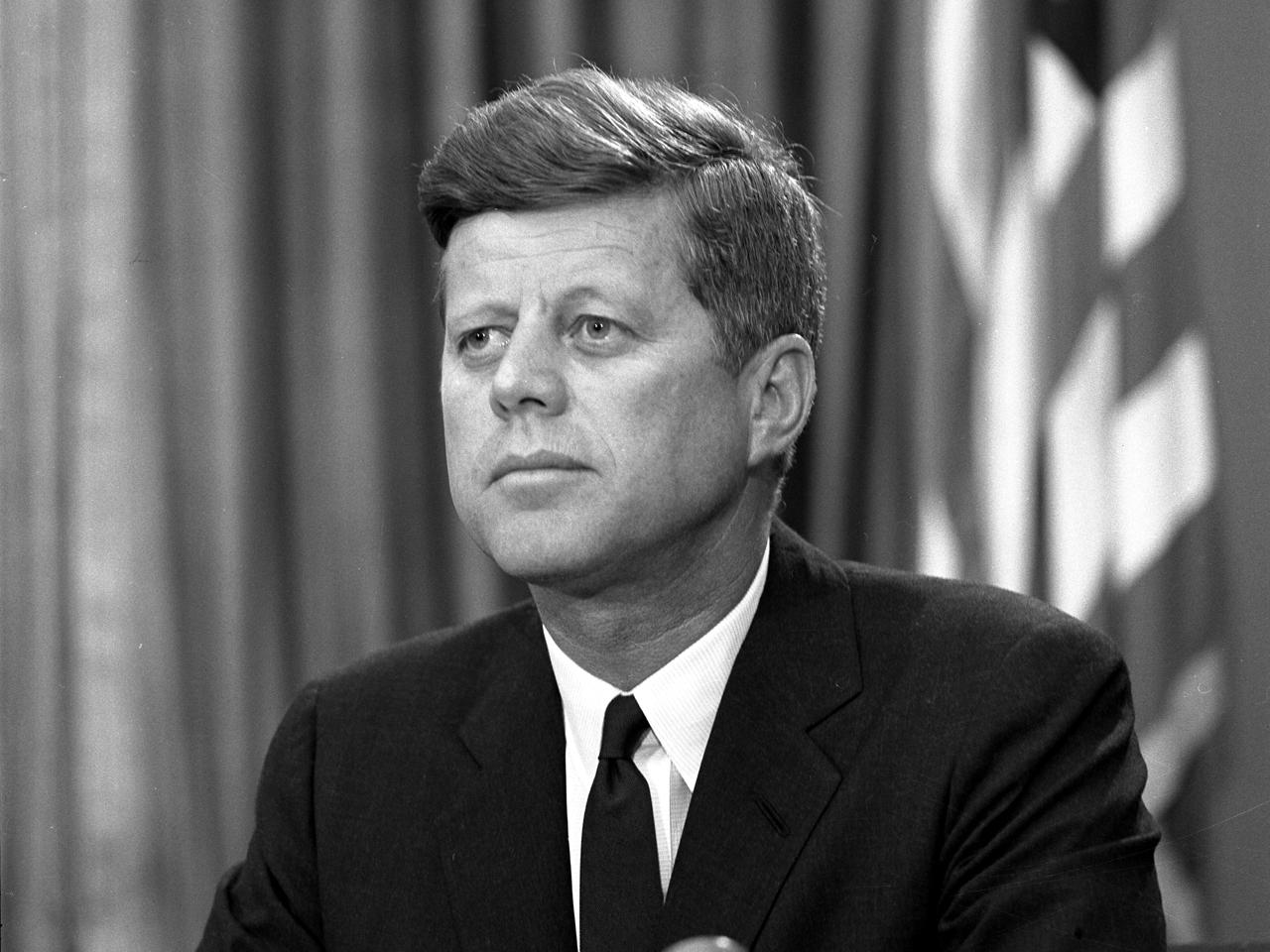
      If you're a Baby Boomer, you remember.  Sixty years ago tomorrow, John Fitzgerald Kennedy, the 35th president of the United States, was killed, gunned down by an assassin in Dallas, Texas.  For those of us who lived through this day, we will never forget it.  Although a number of presidents had been assassinated previously, JFK's occurred in our lifetime, in our time, in our day.  We didn't read about it in history books; we experienced it, experienced it directly and personally, in a profoundly visceral way.  Our world would never be the same.

Image result for jfk

    We live in a frighteningly capricious and unpredictable world.  Though we build our lives on concrete particulars, we construct our life meaning on universals, on hopes and dreams we cannot always see.  We are finite creatures living in a bottomless world.

    Ironically, two other famous personages passed away the same day.  Both were British:  Aldous Huxley, author of Brave New World, C.S. Lewis, writer of many works of fiction and Christian apologetics.  Both contributed much to our understanding of what is possible and, more significantly, what can be true.

    Yet even as we consider JKF's grave in Arlington cemetery, where the flame burns eternal, we realize that
only in transcendence do we see what is true.

Monday, November 20, 2023

     In our family, November is a big month for birthdays.  As you may recall, I had mine a couple of weeks ago.  Last week, we celebrated my wife's.  How funny it is, that despite the seemingly endless points over which people disagree, the vast disparities and differences in income, vocation, and station in the human family, and the diverse political, cultural, and religious loyalties that mark human beings, all of us, every single one of us, has a birthday.  At some point in history, at some unique singularity in space and time, we all were born.

How to Use Clouds to Enhance and Improve Your Images

    It's really rather extraordinary.  For untold millennia we were not here, and then, one day, in the proverbial flash of a moment, we were.  We began.

    And how we all treasure our "beingness".  How we all love and value our lives.  And how much most of us try to hang on to them for as long as we can.  For this reason, even if we are indifferent to them, we appreciate our birthdays. They mean that we are still here.  They remind us that we still "are."

    Yet as we all know, what begins eventually ends.  And what will we do then?  I ask because if there was once a time beyond time out of which time came, there will be a time beyond time into which time will one day end.  We do not live in a vacuum, and neither does existence.

    It's difficult to picture life without death, yes, but it's even more difficult to picture life without a life from which it comes.

Friday, November 17, 2023

       Although we missed All Souls Day in this blog, its point is still worth thinking about.  It's good to remember.  It's good to remember our loved ones who are gone, and it's good to remember what has gone well, as well as what has not.  And it's good to remember existence, even life itself.

    How do we explain what has happened, what has been?  How do we measure the span of our existence?  How do we measure the value of our days?

William-Adolphe Bouguereau (1825-1905) - The Day of the Dead (1859).jpg

    In ourselves, though we may take pride in reflecting on a life we believe to be well lived, a life that has made its mark, how do we really know?  We have only ourselves and our fellow human beings by which to assess.  We measure the unknown by what we know.  And what we know is frightfully little.  Rarely do we ever see the big picture.  Rarely do we grasp the full meaning of our years.  We're finite creatures living in a finite world, a world that, one day, according to all cosmological predictions, will be burned up by an expanding sun, gone forever, never to be seen again.

    Even if we are but dust, we affirm that dust only has value if it has a reason to be.  Absent this, though dust could well be, we have, despite everything in us, no reason to believe it should.  It all just happened.  But why?

    As we remember, as we look back, and as we also look forward, we can think, as poet Robert Browning once wrote, whatever is to come, we come face to face with the fact of existence.  Why must it be?

    Maybe there really is a God.

Wednesday, November 15, 2023

The Vermont Cynic | The humanities are worth saving

     In a book of retrospection, given to him by his children, my engineer brother recounted his experience of school.  Predictably, his favorite classes were math and science.  He had no meaningful memories of his humanities courses!

    Today, many colleges and universities, whether driven by politics, financial need, or simple pragmatism, are reducing their emphasis on the humanities and focusing their resources on programs that, they say, will enable students to earn a reasonable living in today's highly competitive (and materially obsessed) world.

    While I understand the motivation, I believe people are more than numbers and money.  Sure, we all want to live comfortably, and sure, we all want to find meaningful work.  Absolutely.  Yet if this is all that we find important, we are missing the core of who we are:  creatures of moral imagination.  And unless we are exposed to courses offering us opportunities to engage that imagination, we will fail in our efforts to construct a viable society.

    We'll lose our basis for wise and cogent deliberation, we'll miss our opportunities to understand ourselves as we deserve.  We will miss the point of existence.

    It's not about survival and fun.  It's about meaning.

Tuesday, November 14, 2023

Image result for monet haystacks

    Claude Monet:  are you familiar with his work?  You may well be, particularly if you like haystacks.  One of the most famous of the nineteenth century impressionists who, together, transformed the nature of art, Monet achieved perhaps his greatest fame for his series of haystack paintings.  Indeed:  he had a haystack for every time and season.

    Yet Monet was more than haystacks.  He painted a number of pastoral scenes, deeply impressionistic reworkings of the French countryside, masterpieces of the subtly of light and color.  They shine with joy, a joy of happiness, a joy of the very essence of the sublime.

Claude Monet    Consider one of Monet's most well known theses:  "I wish to render what is."  In Monet's work we see an effort to take what "is" and make it as we feel it should be.  Not what we think it should be, but what we feel it should be.  We turn rationality on its head; we elevate emotion over all.

    And in so doing, we capture the heart of who we, and the world, most are.  Although we are indeed rational beings, we are also, in our deepest essence, beings of passion, creatures of viscerality, pathos, and imagination.  So do we embrace the world, so do we embrace its hiddenness, the powerfully ordered transcendence that ripples through it.

     We thank Monet for this insight, that amidst our dogged attempts to understand life rationally, perhaps we do better to grasp it as it most fully is:  the passionate renderings of a profoundly passionate creator.