Wednesday, March 6, 2024


     Do artists paint life as it is or as they feel/believe/sense that it is?  Or as it should be? Although art in antiquity focused on reaching a point where artists  painted closely to the object under observation, as art moved into the nineteenth century, artists began to paint not as things necessarily were but as an object "impressed" them, as they reacted to their experience of it.

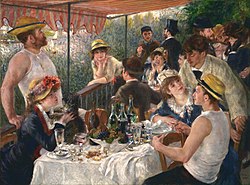
    One of the most famous Impressionists was Pierre-Auguste Renoir.  Born in Limoges, France, in 1841, Renoir celebrated beauty.  He celebrated the beauty of the world, the natural world, yes, but he particularly celebrated the beauty of human beings.  In this, Renoir saw the world not so much as a work of divine creation but as a playground of existential flourishing, a playground into which people had come.  Come to live and enjoy.  Renoir strove to capture this vision of existence, to picture the richness of the lived experience, to render his impression of life into meaningful form.

    Renoir died in 1919, a year after the end of the Great War.  His years had been filled with an astonishing amount of movement and change.  From Romanticism to the Industrial Revolution to modernity to the cultural ennui of World War One, he experienced much, enriching, tragic, and not.  Yet his paintings were studies in optimism, the optimism of the fullness of a remarkable, though sullied creation.

    It's a lesson for us all.

Friday, March 1, 2024

     It is a sad day in Russia today.  It is day of the funeral of long time dissident Alexei Navalny.  We are told that Navalny died of natural causes in a Siberian prison camp.  Really?  I feel as if very few people outside Russia believe this.  A thorn in the Kremlin's side for many, many years, Navalny fearlessly challenged the authorities in Russia over their autocratic and corrupt ways with speeches, videos, and more.  Even after being poisoned by Russian authorities and getting treatment in Germany, he still chose to return to Russia to advocate for the cause of freedom.

    Small wonder that the Russian authorities had him killed.  Pray for Navalny's family:  he left behind a wife and two children, all of whom continue to live in Germany.  And pray for the Russian people, many of whom continue to live and labor under the iron fist of a man whose power to oppress increases by the moment.

alexei navalny

    Even though some counsel gently accepting one's lot as the appropriate response to systematic oppression, it yet seems as if there's another side to the story:  no deserving person should have to live without freedom.

    God didn't make us to live in chains.

Rest well, Alexei Navalny.  Rest well in the hands of God.  And thank you.


    One of the most dazzling musicians of the Romantic Era, Frederick Chopin in his too short life (he died at the age of 39) composed a host of memorable pieces for the piano.  His works are marked by an exuberance of life that bursts with the sounds of memory and contemplation.  We listen to them and think about how his modest Polish origins blended with his relatively cosmopolitan lifestyle (he was well acquainted with Hungarian composer Franz Liszt and the novelist George Sand) to produce melodies that speak to many parts of our souls.

    As Lent continues apace, we find special call to remember Chopin.  We remember his creativity, we remember his vision.  We remember his angst and his too brief existence.  And we realize, again, that we live in a beautiful yet tragic world, that we dance on a very narrow line between being here and not, and that we, human beings, magnificent creators though we be, find our humanness most profoundly when we submit to the mystery of who we may not really believe we are.

    But what we will one day be.

Thursday, February 29, 2024

    A few nights ago, I chatted with one of my nephews about religion.  Long an atheist, he has now come to decide that society needs religion.  Religion, he adds, in a materialistic sense, devoid of any supernatural appendage.  In his mind, religion provides a social fabric, a basis upon which a society can construct a viable sense of itself.

    To accomplish this, he observed, religion posits some type of higher ideal, an ideal that guides and frames social deliberation and exchange.  Like (my words) revelation.
    
    My point is that, despite the efforts of so-called "antifoundationalists" to prove that we do not need any guiding ideal to function rationally, we need a higher vision to make sense of our lives.  I of course argue that this vision is embodied in the words of divine revelation; my nephew, and many others, will contend otherwise.  Either way, we agree that we need a greater compass on our lives.
    
    So whose revelation is right?  All of them?  None of them?  If we strip religion of its supernatural dimensions, we are left with a revelation of ourselves and our ideals, ideals which we and ourselves, and only we and ourselves, assess and judge.  And how do we ultimately know?  It seems that revelation and greater vision are most meaningful if they reflect the vision of a reality out of which this present one comes.

Wednesday, February 28, 2024

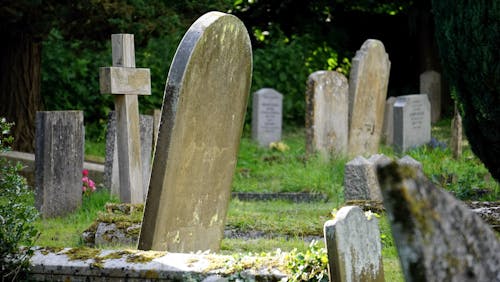
Close-up Photography of Concrete Tombstones

    After a fabulous week exploring and experiencing part of the desert in the American West, I am back to remember and move forward through Lent.  It's appropriate:  the desert is a place of scouring and repentance, a place of enrichment and introspection.  As we spend ever more time pondering the exigencies of our lives, the fleeting puffs of materiality in which we have life and breath, yes, life looks more remarkable than ever.  Sure, it can be befuddling, but it is the only experience, at this point, we have.


    Yet given the wonder of the world, it's easy to rejoice in life without also wondering why life is, why we have it, why this existence has been given to us.  To what end do we live?
 
 
    Put another way, who will we really be when we leave this world:  ashes or creatures of eternity?

Friday, February 16, 2024

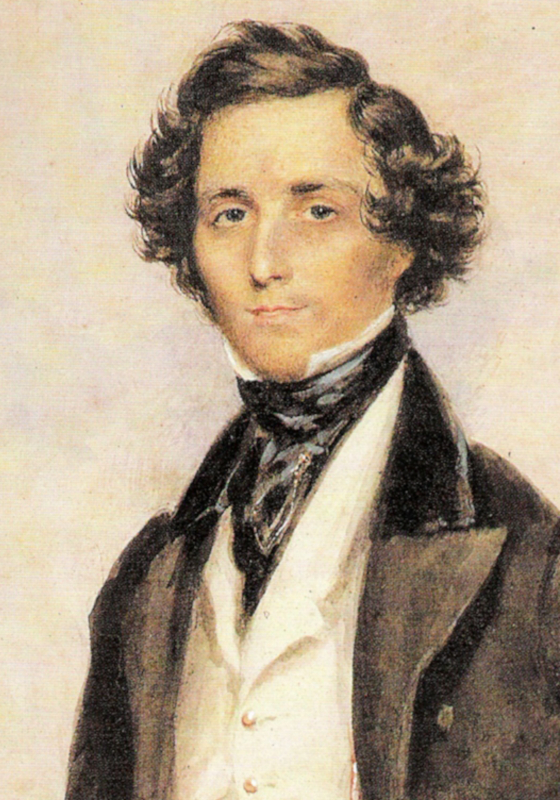
        From Mozart to Schubert to Mendelssohn:  these last few weeks have been filled with numerous musician birthdays.  Their contributions to music and the enriching of the human adventure have been singular and vast.  Born into a Jewish family (although his father separated himself from Judaism before Felix was born) and later baptized as a Christian, Felix Mendelssohn composed in a wide range of genres, choral to orchestral to chamber to operatic, each work distinguished by its melody, passion, and attention to detail.  Some of his most famous, and most recognizable, works include "Hark, the Herald Angels Sing," 

"Overture to a Midsummer Night's Dream," and the "Wedding March."  He was acknowledged as a prodigy early in his life, most notably by Goethe, writer of the timeless story of Faust.  People found his music uniquely captivating.

     As I think about Mendelssohn, I realize, again, the remarkable fact of music.  To form sound, to frame melody, to write song:  there is nothing quite like this  in all the cosmos.
    
    Before composers like Mendelssohn, we can therefore only stand in amazement, astonished that we can emulate, albeit in shattered form, the timeless and ageless marvel of that which empowers and expresses what is.

    By the way, speaking of "that which empowers," next week I'll be traveling in the American West, a region of the country whose extraordinary natural landscapes definitively reflect "that which empowers" all.  much occasion for pondering and contemplation.

    Thanks for reading.

Thursday, February 15, 2024

      Although in many ways Valentine's Day, which some of us are remembering today, has become (or, I might say, degenerated into) a Hallmark holiday, it actually has a measure of legitimate historical origin.  Its name comes from St. Valentine, one of many martyrs in the early years of the Christian Church.  Valentine gave his life for what he believed to be the greater good of God.

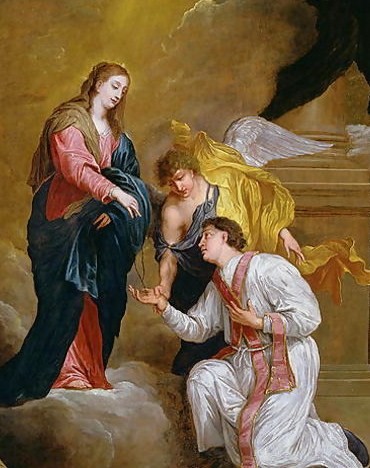
Image result for st valentine    Subsequently, however, as the early Church faded into history, the name Valentine morphed into a day associated with earthly love and romance.  Nonetheless, it's still a good day.  What harm can come from thinking about love?
    
    Years ago, the Beatles sang that, "All you need is love."  In more ways than the Fab Four likely thought at the time, this is one of the truest statements in all the world.  In an impersonal universe, a beautiful but empty cosmos, love remains the greatest thing.
    
    But we must ask a question:  how can love exist in a universe without meaning and therefore no words for it?

    Maybe that's why Valentine was willing to die:  he knew that, ultimately, love cannot be without the fact of God.