Tuesday, December 24, 2024

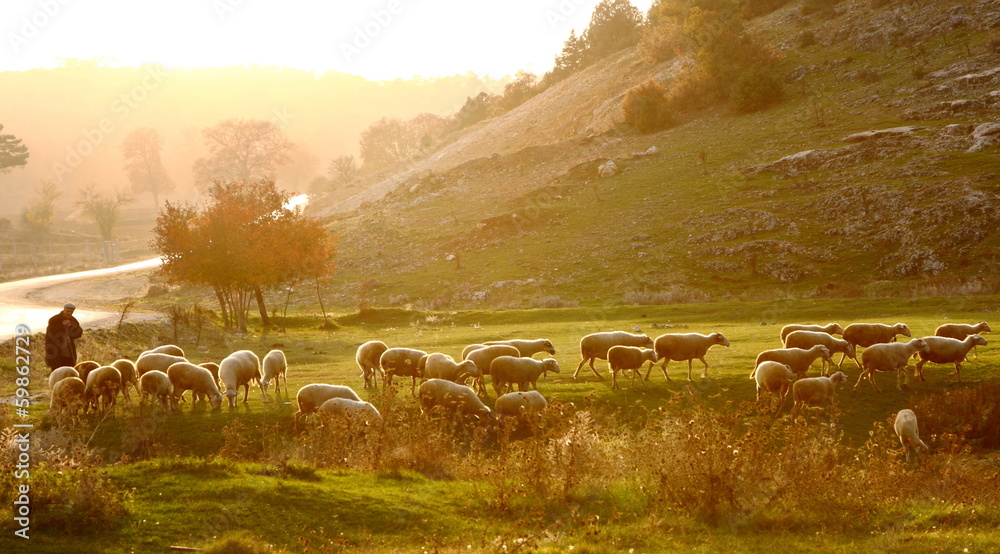
   Shepherd herding sheep at sunrise across the pasture

    Most of us have heard the "Christmas story" countless times.  Across the world for thousands of years, people have read and pondered, over and over, Luke's account of Jesus' birth.  One might almost think that there is nothing new to find in it.

    But there always is.  As I was reading it this year, I found myself struck anew by the thought that the first people to hear about Messiah's birth were shepherds.  In Jesus' day, shepherds were despised, viewed as the lowest of the low, the modern day equivalent of the Roma of Europe.  Few wished to associate with them.  They spent their days--and nights--largely apart from the rest of the people, living lonely lives in the fields and hillsides of the nations.

   But the shepherds were the first to know.  They were the first to be told.  Before anyone else knew, the shepherds knew about the birth of Messiah.

    God remembered those whom the world had forgotten.

    Christmas reminds us that when all is said and done, we should understand that God, the vastness of personal transcendence, is not about greatness.  He's about humility.

    And love.  Love for a humanity who had dismissed and fogotten about him.

    Merry Christmas!

Saturday, December 21, 2024

       If you live in the Northern Hemisphere, you may know that today, December 21, is the winter solstice.  The "shortest" day of the year.  Or as Robert Frost puts it in his "Stopping by Woods on a Snowy Evening," "the darkest night."  Happily, although it may not seem like it, the winter solstice is actually the grand turning point of the year, the day and night in which time and light begin to grow.  It's the end of the light, yes, but its genesis, too.  We lose, yet we win, moving, ever so slightly, toward the greater light to come. 

    I love the winter.  I love how it masks and shrouds, I love how it engages reflection, I love how it sends us into places we would not otherwise go.  And I love how winter helps us "see" what sight can be.  As we trek through these darker days, we come to understand that light is not illumination only.  Light is rather the underlying rhythm of all creation, a continuity of divine favor, a favor that speaks in gloom as well as joy, a favor that underscores the fact of a purposeful planet:  "The Light of the world."

50 Wonderful Winter Pictures — Smashing Magazine      


    Step into the darkness, treasure the light.  Enjoy the marvel of a remarkably consistent--and persistent--personal creation.

Wednesday, December 18, 2024

   Vassily Kandinsky and Abstract Art    

      Defining spirituality is difficult.  If we attribute it to a god, we miss that many unbelievers attest to having spiritual experiences.  If we assign it to a nebulous immaterial presence, we encounter the problem of making something amorphous and undefinable into something that is physically real.  And if we say that spirituality is thoroughly human, we run into the perennial dilemma of understanding how consciousness can emerge from inert matter.

    Wassily Kandinsky, a Russian surrealist painter, thought much about spirituality in regard to art.  He did so as a way of explaining how art overwhelmed what he considered to be the spiritual darkness of Marxism.  In art, Kandinsky said, we feel hints of transcendence, intimations of things we cannot easily fathom, emotional insights that we do not experience otherwise.  We look into another world, a world of purer light, real or imagined, a world that eclipses the rigid (and, to him, meaningless) materialism of the Marxist worldview.

    Kandinsky's art reflects his words aptly.  It is sometimes difficult to grasp, but that's his point:  spirituality isn't supposed to be simple.  If it were, it would be no more than another product of our material human whims.
   
    Maybe that's why the Incarnation is so true yet so befuddling.


Tuesday, December 17, 2024

wind river range | North Western Images - photos by Andy ... 

     "For the people who walk in darkness," wrote the prophet Isaiah, "will see a great light (Isaiah 9:1)."  Isaiah speaks of Messiah, the one who would come to illuminate an Israel darkened by disappointment, abandonment, and sin.  He speaks of the Christ (the Messiah, "the anointed one") who would enlighten and save all those who longed for him.  He speaks of the light that would come.
     
    On the third week of Advent, we remember this fact of Messiah's light.  We remember how, like the rising sun exploding over a frigid mountain ridge, Messiah--Jesus--has brought us light, the light of enlightenment, the light of hope and meaning that shines through the cold of an often Munchian existence.  It is a light that, if we embrace its rising, embrace it as fervently and without reservation, will change our lives forever.
    
    Though we may struggle with the idea of eternality, though we may question the presence of God, we all long for light. We all long for hope and meaning.  We all long for a window into a richer existence.
    
    In an accidental universe, however, richness is impossible, for value and morality cannot be.  Only in the light, the light of transcendence, a transcendence made known in Jesus, Jesus the image and person of God, can hope likewise be.
    
    The light of the world.

Monday, December 16, 2024

       What can we say about Ludwig von Beethoven?  This famous portrait of him captures how many of us see him:  a brooding, brilliant composer.  Beethoven's music comes to us as a force of nature, barreling and twisting its way into our hearts, breaking our souls apart, forcing us to grapple with and contemplate the deeper forces that drive human existence.  We swoon over the viscerally of Beethoven's melodies, we wonder about the power of the humanness and universe which his songs describe.  A Romantic in the purest sense, Beethoven reminds us of other worlds and other things, of the presence and possibilities of transcendence.

portrait

    I thank God for Beethoven.  I thank him for giving him to us, for giving him to show us as we are, beings of mind as much as creatures of heart, living, personal, dynamic entities made to step bravely and meaningfully into the weighty potential and contingencies of life, to take hold of everything that is before us.

    Given the many stories and legends that surround his life, we may never know exactly what Beethoven thought about God.  Regardless, he makes us think of him.

    Beethoven's music intrinsically  drives us to wonder about the mystery of life and the mind of its creator.

    I thank God for using Beethoven to open and unfold for us glimpses of what we, life, and God, can be.

Wednesday, December 11, 2024

Datei:Liesel 22-12-2012 4. Advent.jpg – Wikipedia 

    "For the grace of God has appeared," writes the apostle Paul in the third chapter of his letter to Titus, "bringing salvation to all people" (Titus 2:11).  As we remember the second Sunday of Advent, we can think afresh about the idea that in the historical person named Jesus, we see, in flesh and blood, concrete and visible expression of God's grace, the physical manifestation and display of his truest posture toward humanity.  Jesus' appearance tells us that, above all, God is love:  the grace of God.
    
    We grant each other grace every day, as we should.  Yet it is God's grace that elevates us above the senseless and confusing vagaries of the world in which we live.  It is this grace that tells us that there is hope, a hope that reality is more than what we see, a hope that frames and orders and grants meaning to all we do.  It is a hope that tells us that whatever else we may think about God, what we ought to think most about him is this:  God is loving, God is gracious, and God is for us, for us today, for us tomorrow, for us forever. 
   
    This may leave you nonplussed.  Fair enough.  However, do we really want to believe that this world, this magnificent and bounteous and amazing world, is nothing more than an accident?

Due to traveling and other holiday commitments, I've not been posting regularly.  Now that I'm here fora while, I hope to be more consistent going forward.  Thanks for checking in!

Friday, November 1, 2024

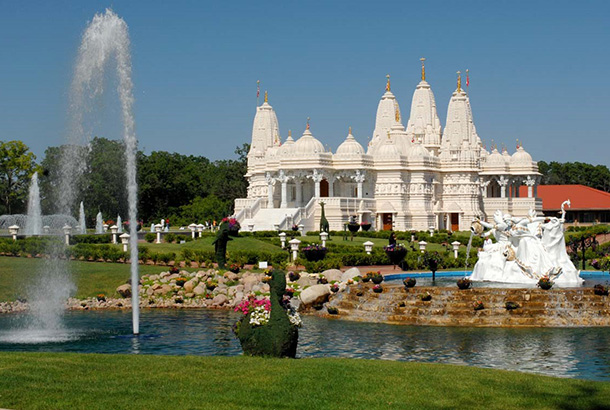
      It's been a big month:  Rosh Hashanah, Yom Kippur, Halloween, Reformation Day, and more.  But as we mark the passage of October into November, we have occasion to think about another big day:  Diwali.  It is a holiday sacred to over a billion Hindus around the world:  a joyous occasion.  Diwali is known as the festival of lights, the lights of color, brilliance, enlightenment, and happiness:  all that which enters into the mystery and wonder of life and the God who gives it.

    It's apt.  Unless we celebrate life in the framework of higher purpose, its lights becomes little more than momentary confluences and coalescences of dust and plasma, things in which we have found ourselves, raw and unknown, and told we must live.
    
    Enjoy life, enjoy its lights.  Be happy for it.  And rejoice in the fact of purpose, the purpose of a creator.  Light won't shine long in a forgotten universe.

    By the way, I'll be traveling for a few weeks leading up to Thanksgiving and will not be posting of a while.  Thanks for reading and see you soon!