Friday, August 10, 2018

Image result for plato     As we rejoice with thankfulness that my wife's brother seems to be all right and is being sent home from the hospital today, I also think about some words from Plato's long ago Timaeus.  In this relatively short text, Plato, once again using the guise of Socrates, ponders how the world began.
     He first establishes that there must be intelligence in order for the cosmos to be the way it is.  Unintelligibility, he notes, could not produce such orderly marvel and wonder.  Ironically, this is also what some of my atheist friends say:  there must be an intelligence (not, they quickly point out, "the" intelligence) out of which or from which the universe found form and being.
     Plato then notes that to this intelligence we must add the notion of necessity.  There must be a reason for the cosmos to be.  There must be a compulsion, an overriding purpose, a sort of force that is driving this intelligence to fathom and create the world and the universe in which it moves.  Intelligence alone will not produce a cosmos.  Many people are smart.  It must have a reason to do so.
     And why else would an intelligence create other than love?  What other necessity would be propelling it to birth a universe?  Sure, one might say, it may be seeking its own aggrandizement or glory, but given who we are and the beauty of the world this seems unlikely.
     I cannot say why John is all right and other people in similar situations are not, but I can say that, if our lives are to have any point, any point at all, we do well to remember Plato's observations.  There is intelligence, and there is necessity.  Ultimately, however, there must be love.
     Once again, I am grateful for the fact of God.

Wednesday, August 8, 2018

     The surprise of existence.  This morning, my wife got a text:  her older brother was in the hospital.  Something to do with his heart (he had a quadruple bypass about five years ago).  When she tried calling for more information, she couldn't get through.  We waited.
     About a half hour later, we heard from his wife.  He had been experiencing arrhythmia  for several hours.  Later in the day, they called 9-11, who bundled him into an ambulance and rushed him away.
     Though John seems to be fine now, we still don't what caused the arrhythmia, nor do we know what we can do to prevent it from reoccurring.  We are left with a great deal of openhandedness.
     As I chatted with a Jewish rabbi friend yesterday, we came to agree that life, however one defines it, is indeed unpredictable and tenuous.  We can therefore deal with life as the fleetingness it is, an accidental eruption in an impersonal universe, or we can deal with life as fleetingness, a fleetingness nonetheless rooted in intention and purpose.
     We were both thankful for the fact of God.

Monday, August 6, 2018

     "Without revelation, the people perish."  Translated as the first part of Proverbs 29:18 in the King James version of the Bible, these few words say volumes about the state of reality.  They tell us that without revelation, that is, communication from God, we miss the point.
World environment day concept: Silhouette humble man standing on cave sunset background     Without revelation, we live in a closed world, a terminal system.  We cannot see beyond ourselves.  We miss the greater meaning without which we cannot make sense of who we are.  Absent revelation, we wallow in the speculations of our finitude, even while we remain fully aware of our tendency to look beyond it.

     As I reflect on the conference I attended last week (more to come on that), I realize, again, that we all know that we need a higher vision to make sense of our lives.  Whether it is of this world or another one that speaks into our present moment, we can agree, I suggest, that we cannot easily live without acknowledging such a vision's necessity in our lives.
     So whose revelation is right?  All of them?  None of them?  If we reject transcendence as a source of vision, we are left with a revelation of ourselves and our ideals, ideals which we and ourselves, and only we and ourselves, assess and judge.  And how do we ultimately know?  It seems that revelation and greater vision are most meaningful if they reflect the vision of a reality out of which this present one comes.

Monday, July 30, 2018

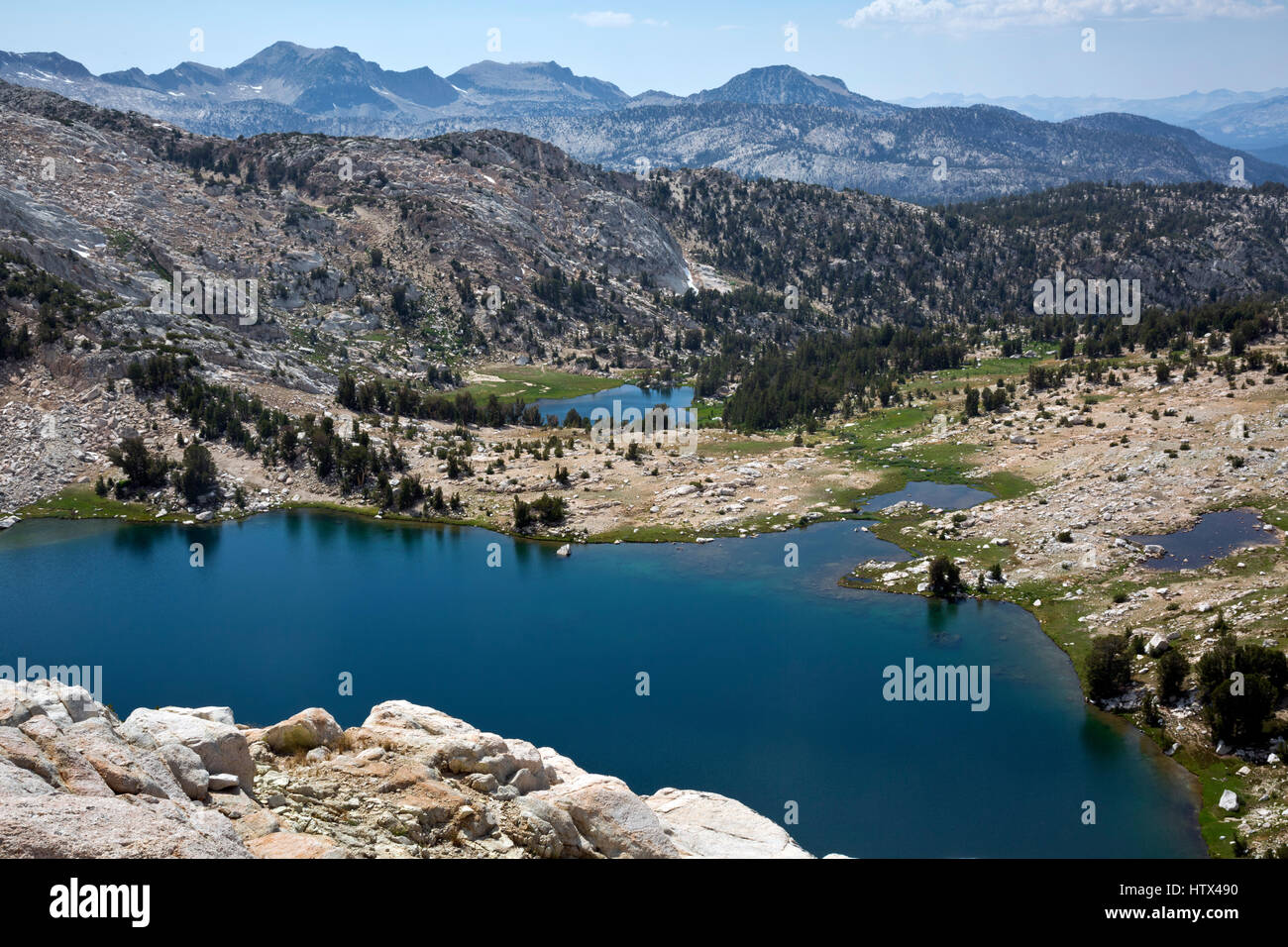
     As I continue to reflect on my most recent mountain sojourn, I think about a marmot whom I saw outside our camp one morning.  Incredibly cute (and quite fat, the result of its summer long quest to pack as much food into itself as it can before the winter snows come), this marmot is synonymous with high altitude mountain elevations.  Although I wanted to protect our food from this particular marmot, I also wanted to enjoy watching it scurry about, digging into the tundra to find yet another tidbit to add to its stash.

Image result for marmot photo     And I did.  Ever alert, the marmot darted in and out of various bushes and rocks dotting the treeless landscape, looking--and finding--what it needed.  How wonderful, how amazing, I thought, that we have land set aside for this little creature to pursue its destiny.  Equally amazing is that we live in a world of such finely tuned balance, that, absent undue human intervention, the animals of the high mountains can live in harmony with each other and the land.  It's a beautiful picture of unanimity and grace.
     Even if the world does function according to the survival of the fittest, I'm nonetheless hard pressed to appreciate it without framing my appreciation in the fact of a God.  A God who, I might add, can only be grounded in love.
     After all, in a world bent on survival, how else could love be?
     By the way, I depart tomorrow to attend a conference, so will not be posting for a week or so.  Thanks for reading!
     

Friday, July 27, 2018

     One thing about which I thought as I voyaged through some of the wilderness areas of the West was that today, July 27, marked the first anniversary of what would become a seven month journey through various permutations of bone fracture, surgery, healing, surgery again, to today, as I continue to celebrate, with tremendous gratitude and joy, my unfettered mobility.  It's been quite a ride.


Image result for dust photos     Did I want to fracture my femur?  Of course not.  Am I happy I did?  Not really.  On the other hand, as I reflect on my lengthy trek through the corridors of the medical profession, I am thankful for the people I met along the way, the wonder of modern medicine (and the enormous privilege of being able to avail myself of it)  and the  that my lifestyle change opened new windows into what it means to be human.

     We are mighty and amazing, yes, but we are also dust, dust that, at any time, can blow away and vanish forever.  We live in such liminality, such narrow margins between here and not.  As I hiked through the mountains, as I took in the plethora of alpine splendor before me, I was reminded, once more, of this stark juxtaposition:  such a glorious world, yet such a gloriously short time in it.
     I'm grateful for transcendence.

Friday, July 13, 2018

     At last night's atheist discussion group, we watched a video of a debate between A. C. Grayling, a British philosopher of considerable renown in the fields of logic, and Daniel Rowe, a rabbi of long standing note and whose graduate studies included work in the philosophy of mathematics.  It was an interesting meeting of viewpoints.
     Given his speciality of logic, Grayling (the atheist) made his case by pointing out the irrationality of God's existence.  Just because the universe exists and therefore has a cause, he said, this does not mean that this cause must be God.
     Fair enough.  However, as Rowe pointed out, given, as his work in mathematics has led him to believe, the impossibility of an actual infinite (to be distinguished from the factual concept of infinity) or, as he put it, "an endless extension" (per Descartes), we cannot legitimately conclude that anything other than an uncaused presence caused the universe to come into being.  Despite the arguments of Lawrence Kraus (see his book A Universe from Nothing), something cannot come out of nothing.
     Maybe so, responded my counterparts in the discussion group, but cannot we just as easily say that, at this time, we still do not know how the universe began?
     We certainly.  But we will always bump into the same problem:  what caused the cause?  It's an issue of infinite regress.  Although I'm willing to accept a degree of agnosticism as to origins, I will at the same time contend that whatever explanation we may eventually find will be fraught with ambiguity.  Either way, we will stumble into that which we cannot understand.

Image result for silver pass sierra nevada photo
a view from Silver Pass, one of the divides we will cross
     Granted, I cannot explain where God "comes" from, and it is indeed facile to simply use God as a solution because we cannot identify any others.  On the other hand, are we citing originative ignorance because even though we claim to be open all possibilities we cannot bring ourselves to admit that the answer might be God?  Or are we genuinely striving to find the most rational solution?
     By the way, I will once again be traveling in the West for another week or so, this time to do a backpack with my siblings, something we have not done in many, many years.  It should be fun.  Thanks for reading!

Wednesday, July 11, 2018

     Yes!  Despite its many malfunctions, the world really is a good place; and despite their many shortcomings, human beings really are good creatures.  I speak of the recently effected--and internationally observed--rescue of the boys soccer team from a cave deep in the underground warrens of Thailand.  It is a stunning testimonial to the care that humans can have for one another:  people literally traveled from all over the world to help.
Image result for thai soccer team rescue photos     And their efforts were successful, very successful:  everyone who was trapped got out. As the Thai SEALs Facebook page noted, "We are not sure if this is a miracle, or science, or what, [but] all the 13 Wild Boars are now out of the cave."
     Indeed.  Regardless of what forces or agencies that we choose to laud for this remarkable achievement, we can all rejoice.  Life, and God, are good.