Tuesday, June 30, 2020

     "It is love that believes the resurrection."  So said the twentieth century philosopher Ludwig Wittgenstein.  Although I do not know the the precise state of Wittgenstein's spiritual heart, I commend him for this insight.  It is both wise and terrifying.Was Wittgenstein a Mystic? - Scientific American Blog Network     It is wise because it understands that unless a person genuinely loves God, that person is not likely to believe in the fact of Jesus' resurrection.  True enough.  It's terrifying because it suggests that, apart from a faith in the factuality of an event that occurred over two thousand years ago, a person is equally unlikely to believe that Jesus rose.  We cannot see Jesus today, we cannot see those who witnessed his rising.  We only have the records, the widely attested and verified historical records, those witnesses left us.  As we must do with all of our past, we are always left to reconstruct, on the basis of the evidence available to us, how and why anything happened.  We weren't there.
     Nonetheless, even if these records are historically accurate and true, one is not likely to accept them unless she decides to believe in and love the one of whom they speak.
     That's how faith works.  Even if we have the evidence, in the end, it is only with love, a trusting love in faith, that we believe.
     Faith never said it was easy.

Thursday, June 25, 2020

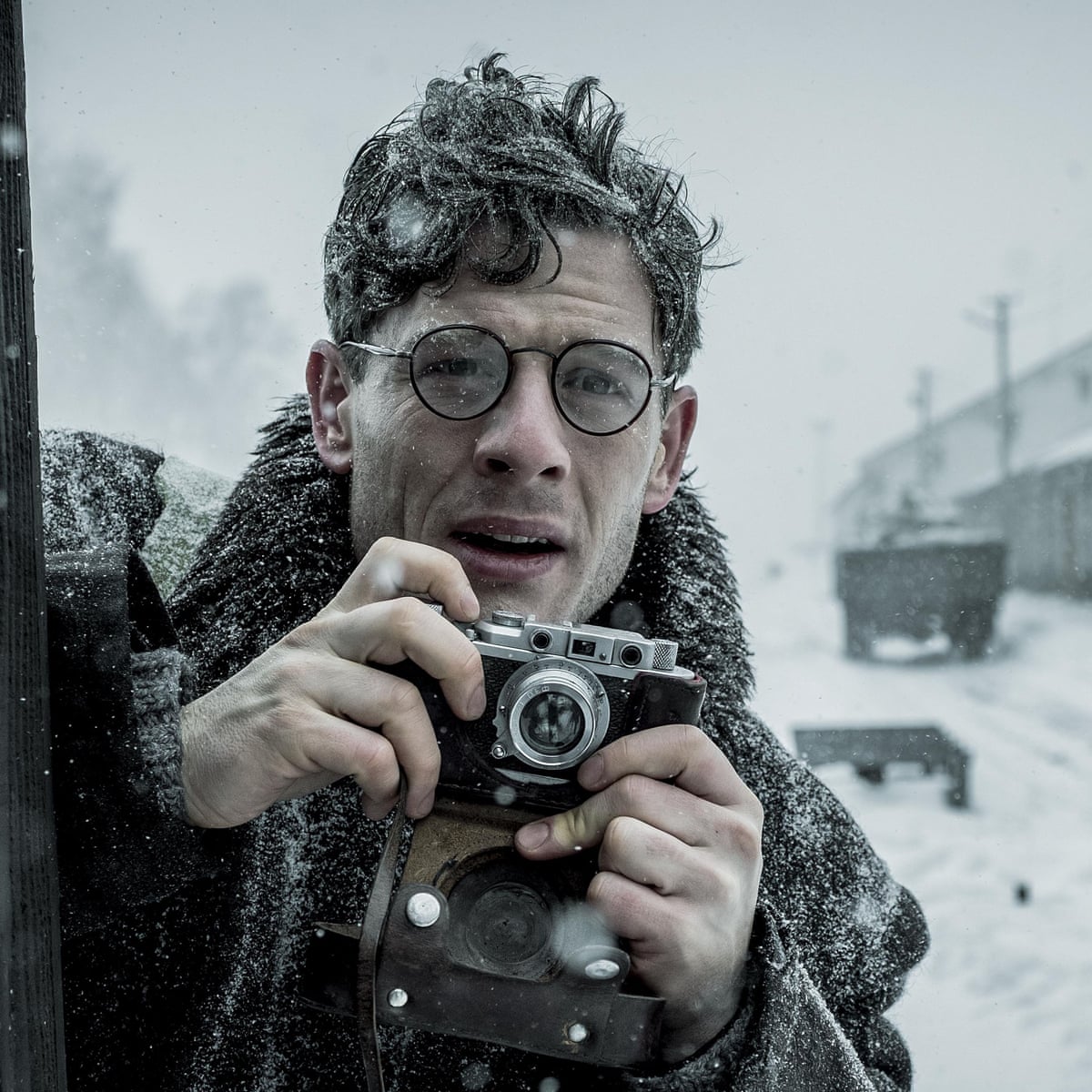
     I've written before about the power of memory.  In reading about a soon to be released movie called "Mr. Jones," I've had occasion to ponder it again.  In a manner reminiscent of Jozef Czapski's Inhuman Land, his account of how he was asked to track members of the Polish Army who had perished in the infamous Katyn forest massacre on orders from Stalin, "Mr. Jones" describes the life of a man who tries to document similar "disappearances" in pre-World War II Ukraine.  It speaks profoundly to the importance of remembering.

Mr Jones review – newsman's heroic journey into a Soviet nightmare ...     

     Had Czapski not gathered the names of the Polish soldiers who were slaughtered in that cold forest, no one would know about them.  Their loved ones would remember them, yes, but the world would never have known about the tragedy:  these soldiers would never have been recognized as part of the larger human race.  Similarly, had not the protagonist of "Mr. Jones" documented Stalinistic atrocities in Ukraine, no one would know of their lives.  No one would know of the thousands and millions of people of whom Stalin once noted, "One death is a tragedy; a million is a statistic."
     Humanity is incomplete without the memory of all of its members.
     And the memory of God.

Wednesday, June 24, 2020

        Are you familiar with Hildegard of Bingen?  Hildegard was a late medieval Christian mystic best known for her Scivias, her collection of visions she received from God.  For those with long musical memories, you may recall that thanks to a choral group recording some of her hymns a couple of decades ago, Hildegard became, briefly, an international singing star.
     You may of course reject that God could have given Hildegard visions.  Fair enough:  although her ecclesial superiors eventually decided that her visions were genuinely of God, they did so on the basis of a worldview which she and they already shared.  In a medieval Europe dominated by Christianity, culturally and otherwise, one would have sought independent verification in vain.
Hildegard von Bingen - Concerts, Biography & News - BBC Music     Be this as it may, however, I invite you to consider one of her vision driven observations. It goes as follows, "But now, O human, you wish to investigate Heaven and Earth, and to judge of their justice in God's disposition, and to know the highest things though you are not able to examine the lowest; for you do not know how you live in the body, or how you may be divested of the body."
     If we look past the references to celestial presences, we see Hildegard making an astute assertion about the human race.  We do not know how we live "in the body."  Sure, we know how the human body works, and sure, we know the essentials of life's rhythms--birth, existence, death--but unless we invest in the legitimacy of "celestial presences," we will never know what this grand adventure of life really means.

     We're still trapped in who we are.

Tuesday, June 23, 2020

     Starry night.  I thought about Dutch artist Vincent van Gogh's "Starry Night" this week as I contemplated a smartphone stand featuring "Starry Night" in a store online recently.  In 1888, van Gogh wrote a letter in which he connected what he called "a great starlit vault of heaven" to what he considered to be the fact of "God."  As I reflect on the countless times I have looked into a crystal clear night mountain sky to take in the millions and billions of stars above me, the Milky Way sweeping before me, the Big Dipper rising to the north, I cannot help but agree with van Gogh.

Vincent Van Gogh Starry Night Repro, oil painting on canvas    

     Sure, some will say, this spectacle is no more than a marvel of evolution, an astonishing picture of the universe's capacity to grow and be.  Though I do not disagree, when I compare the staid skies of the rural Midwest with the starry abundance of the mountain landscapes, I remain awestruck by the mystery implicit in creation's dance of life.  And it is this mystery, this mystery of simultaneous presence and absence, that pushes me beyond the black and white categories of my humanness.  It is this mystery that makes me think that although we may know the universe, we'll never know, fully, life.  It is therefore the stars, the "starry night" that opens our eyes to what life is--and can be--the door to God.
     We're always looking for more.


Monday, June 22, 2020

     Father's Day.  I lost my father, very unexpectedly, many decades ago, to a heart attack.  It was shocking then, and it still is today.  Why did Dad have to go so soon?  Happily, however, I have many, many wonderful memories of my father.  I owe so much to him, not just for taking care of me materially, which he did in abundance, but even more for being such a splendid picture of what life could be.  Dad embodied for me life's astonishing potential, always encouraging me to consider the nearly endless possibilities of existence.  With Dad behind me, I felt as if I could do anything.  His simple words, "Do your best," still resonate with me today.  He was a father, yes, but he was also a friend, a friend whom I miss every single day.
     I am so thankful to God for Dad, so grateful that he and Mom had me, so overwhelmed that God's loving vision bequeathed such a wonderful human being.  Having had Dad in my life underscores for me that although life can be thoroughly confusing, it is nonetheless a fountain of immeasurable joy.  The world is gloriously greater than itself.
     Thanks, God, for Dad, and thanks, Dad, for being my Dad.

Friday, June 19, 2020

     Today, as I mentioned yesterday, is Juneteenth.  It's also the day before the Summer Solstice.  At around 5:00 o'clock, Central Daylight Time, tomorrow marks the apex of summer.   Those of us in the Northern Hemisphere can now, once more, rejoice in the warmth and bounty that seems to burst out of this season of diachronic splendor.  Creatures of technology though we be, we still enjoy the changing of the natural rhythms of the planet.  That's who we are.

Image result for theth albania     The word solstice literally means, "the sun stands still" or "the sun doesn't move."  People who live in the Arctic know this firsthand:  for a couple of months during the summer, the sun never slips below the horizon.  Even though for people who live further south the sun rises and sets every day and night, time still seems to stand still.  Everything seems to shine, grass, trees, flowers, lakes, streams; the sky seems endless, not a cloud to be seen; and the air could not get any better.  The world is perfect, as if heaven, in the broadest sense, has come upon earth, as if a spell, a wondrous and glorious spell has been cast upon the land.
     Despite its troubles, our planet remains remarkably predictable and resilient, the work, however hidden, of a God of love and grace whose fact of presence is beyond our imagination.  In this God is order, and in this order is us:  moral and free beings, free to move, free to seek, free to love.
     Appreciate Juneteenth, enjoy your summer moment.

Thursday, June 18, 2020


     Probably many more people are aware of tomorrow's date, June 19, than were a year ago.  It is the date, in 1865, on which slavery officially ended in the United States.  As some of us know, President Abraham Lincoln issued, in September 1862, the Emancipation Proclamation, making it effective July 1, 1863.  In this document he stated that this time forward all slaves were to be set free.  Unfortunately it was not until the end of the Civil War that this goal was actually accomplished.  Those who took up arms against the Union were not willing to manumit their slaves without a struggle.
U.S. Slavery: Timeline, Figures & Abolition - HISTORY
     And what a bloody struggle it was.  So much suffering, so much pain.  So much blood spilled to defend and, alternately, vanquish a lifestyle built upon the forced labor of others.  It was one of the greatest tragedies in American history, one whose effects are still with us today. Prejudice and oppression die very, very hard.
     This is why remembering Juneteenth, as June 19 is often called, is so important.  It is good to remember, it is good to reflect.  It is good to recall George Santanya's prescient words that, "Those who can't remember the past are doomed to repeat it."
     It is also good to realize where we are from.  We're all from dust, dust made into the image of God, dust made to enjoy, to be, to love.  And one day to die.  I pray that we will always live in profound awareness of our place, a place of humility and grace, a place from which we have absolutely no reason to oppress other human beings.  Ever.