Wednesday, November 9, 2022

2022 United States Senate elections results map.svg

     Unless you've been living in a cave for the last several months, you doubtless know that yesterday was Election Day in the U.S.  Although final results for some races are still pending and no one know just yet what the ultimate outcome will be, it appears that, at the very least, part of the fabric of the U.S. Congress will change, along with the governorships of several states.

    Some people are delighted with the results; others may be weeping.  Still others may be neutral or, alternatively, resigned to whatever happens.  Either way, elections force us to consider, among other things, the nature of power.  While power seems intrinsic to positions of political prominence, focusing solely on the means of power that may attend a particular office misses the point.  Fully expressed, power is not about aggrandizement but humility.  And rulers are not elected to serve themselves but those who put them in office.

    True power recognizes that undergirding this often bewildering world is an order, an order which no human being made.  An order that expresses a larger presence, a bigger reality, a fuller picture.  We did not make ourselves, nor do we live solely on our own offices:  we're contingent, woefully contingent. Hence, it is the wise ruler who grounds his/her work in humility and service.  And it is the even wiser ruler who acknowledges that, in the big picture, he/she is as evanescent as the ocean sand.

    Bottom line, all ye who aspire to political office, recognize your place.

    For it's really very, very small.

Friday, November 4, 2022

     Today, I celebrate my birthday.  And, by many standards, it's a significant one.   How so?


Image result for road into the desert
     The year I turned twenty-two, I was in Saskatoon, Saskatchewan.  I had just emerged from four months of backpacking in the Canadian Rockies and was now traveling east, taking a long way back to the States.  Given all that was happening in the world and the majesty of the mountains in which I had been, my birthday seemed a very little mark in a very large canvas.
     
     It still is.  At the time I turned twenty-two, all I could know is that life was a promise and expectation, an inkling and anticipation, a river and ocean coming constantly together in a creation I did not really make, a creation that, regardless of how I then saw it, could only be meaningful if it spoke of transcendence.

    So it is today.  Otherwise, nearly fifty years later, although I still believe all of us to be poems, beautiful and gripping poems of existence, I now believe that unless we are poems with transcendent purpose, destiny, and conclusion, we miss the whole point.

Thursday, November 3, 2022

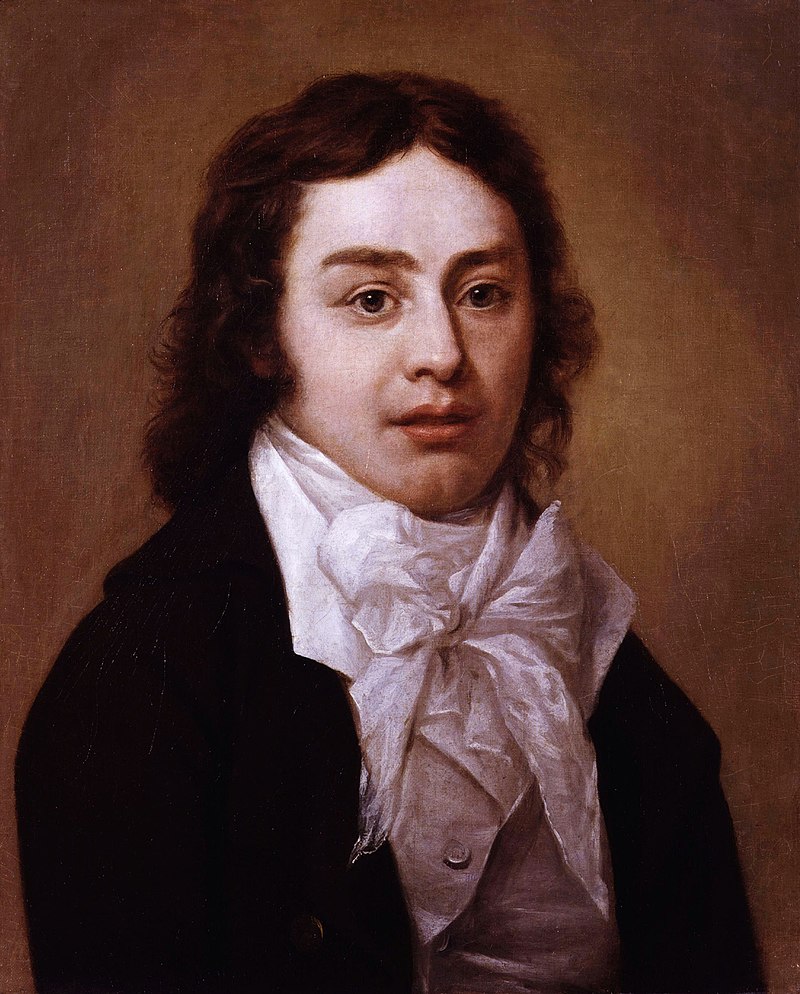
 Coleridge in 1795

     Samuel Taylor Coleridge, the famous British Romantic poet, once observed that imagination is how the self grapples with its perception.  Put another way, imagination is how we give life to what we perceive.

    Writing nearly two centuries later, modern neurobiologists conclude that imagination is the result of metaphoric processes which happen, often unconsciously, in our brains.  It is the product of our innately image making selves.
 
   Writing from another time, the early medieval theologian Augustine suggested that humans use analogy to understand the transcendent, in particular, the person of God.  Confronted with the transcendent and infinite, people tend to think in terms of analogy.  Their finite minds cannot directly grasp the nature of the infinite.  So they resort to analogy and, by extension, the metaphor making ability of their imagination.
    
    We may never "see" the transcendent in this existence.  But we certainly sense that it is, in some shape or form, "there."  We are creatures of an analogical imagination.
    
    It might therefore be easier to understand God than we think.
    
    Thanks, Samuel Taylor Coleridge, for in your own way you point us to the fact of a transcendent presence without which we cannot even begin to grasp who we are.

Wednesday, November 2, 2022

      As we consider the fact of All Souls Day, the day after Halloween, we remember.  We remember our loved ones who are gone, we remember what has gone well, we remember what has not.  We remember existence, we remember life itself.  We ponder the import of memory.

    We also ask, how do we explain what has happened, what has been?  How do we measure the span of our existence?  How do we measure the value of our days?

William-Adolphe Bouguereau (1825-1905) - The Day of the Dead (1859).jpg

    In ourselves, though we may take pride in reflecting on a life we believe to be well lived, a life that has made its mark, how do we really know?  We have only ourselves and our fellow human beings by which to assess.  We measure the unknown by what we know.  And what we know is frightfully little.  Rarely do we ever see the big picture.  Rarely do we grasp the full meaning of our years.  We're finite creatures living in a finite world, a world that, one day, according to all cosmological predictions, will be burned up by an expanding sun, gone forever, never to be seen again.

    Even if we are but dust, we affirm that dust only has value if it has a reason to be.  Absent this, though dust could well be, we have, despite everything in us, no reason to believe it should.  It all just happened.  But why?

    As we remember, as we look back, and as we also look forward, we can think, as poet Robert Browning once wrote, whatever is to come, we come face to face with the fact of existence.  Why must it be?

    Maybe there really is a God.

Tuesday, November 1, 2022

Lucas Cranach d.Ä. - Martin Luther, 1528 (Veste Coburg).jpg

    In addition to October 31st being Halloween, it is also what many people call "Reformation Day."  Five hundred years ago, on the door of a church in Wittenburg, Germany, a Catholic monk named Martin Luther posted ninety-five theses describing what he believed to be serious problems with the way the Catholic church (the only Christian tradition of the time) conducted its affairs.

     Undergirding these theses was Luther's conclusion that indulgences, rites of penance, sermons, and church attendance aside, what is most important about people and God is that people find God through faith.  In this material world, we cannot see God visibly.  Yes, Jesus came, died, and rose again, but he's no longer openly present on the planet.  If we wish to know God, we must therefore believe that, on the basis of the historical veracity of the Bible and the rumblings of our inner heart, he is there.
     
    If people wish to know God, they must set aside what they see for what they cannot, and trust, simply trust, that God is there.

    And that he longs to love and communicate with human beings.
     
    If, and this is a big "if," they wish for him to.
    
    Luther's crucial insight was that despite everything people think they need to do, be it rituals, church attendance, asceticism, and the like, to find God, they really only need to do one thing:  believe.
    
    Yet sometimes that's the hardest thing.

Monday, October 31, 2022

     As Halloween, the Celtic Samhain, the night that, in ancient tradition, the spirits and goblins of the inner earth escape, for one bone chilling evening, their chthonic imprisonment and roam about the planet, weaving magic, confusion, and mystery into the lives of those still living, approaches, we wonder.   Why do we think about such things?  Why do we speculate on what might lay on the "other side"?  

    For many of us, Halloween is a night in which a new reality emerges, sometimes subtly, sometimes violently, always irruptive, always transforming, telling us, reminding us that our assumptions are not what we imagine them to be.  There is other, there is more.  There is a beyond, a somethingness which we might not otherwise see.
 
    Perhaps deceased spirits are wandering, wailing about their ignominy.  Perhaps.  Yet how could spirit be without spiritual presence?

    And how could spiritual presence be without light?

Monday, October 24, 2022

      In considering the history of perhaps the most famous of Scandinavian peoples, the Vikings, we of course remember their well deserved reputation for ferocity.  But we tend to forget that the Vikings were explorers of global renown.  They sailed farther west than anyone before them, traveling as far as Greenland and, eventually, the shores of Newfoundland, establishing settlements which we can still see, albeit in considerably different form, today.  Well before Columbus "sailed the blue," the Vikings had gone to the New World and back.

'Battle of Clontarf', oil on canvas painting by Hugh Frazer, 1826.jpg


     Some centuries after the Vikings' heyday, Genghis Khan and his Mongol armies, whose reputation for cruelty perhaps exceeded that of the Vikings, conquered most of the known world, establishing a kingdom that would last for several centuries.  Yet in so doing, the Mongols brought stability to the Silk Road, that ancient connection between East and West, enabling commerce and exchange between these very different expressions of human culture.  Much happened.  As the Vikings pioneered international exploration, so the Mongols opened the door to the European Renaissance.  Ironically, it took those considered lowest on the prevailing cultural totem pole to enlighten those "higher" to the real truth of the world.
     It's a funny sort of wisdom, really, not the wisdom most people would consider genuinely true.  Yet it changed the course of history, changed it, in large part, for the good.
     It almost makes one think the universe really does have a point.  And a God.