Monday, July 31, 2023

        In my recent travels in the West, hiking through its mountains, I often had occasion to think about the author Herman Hesse.  Hesse's Siddhartha, author Hermann Hesse, a German novelist whose works were highly popular in the soul-searching years of the Sixties and Seventies, recounts the journey of the prince who would later be the Buddha.  As he tells the story, Siddhartha, a young prince of immense wealth and privilege, grew increasingly dissatisfied with his life.  Is there anything else, he wondered, to existence besides material abundance?

    So one day Siddhartha left the palace for the open road.  As he did, he encountered, in succession, an elderly man, a sick man, and a dead man.  He had never seen aging; he had never experienced sickness; he had never known of death.  These sights shattered all of the categories he had established for understanding the world.

    After many months of wandering, the prince arrives at a river, a peaceful, flowing river.  He is struck by the river's steadiness, its rhythms and quiescence, the way it seemed to flow unhindered, unbidden, ever and always free.  And always remaining the same.  

Hermann Hesse - Wikipedia

     So should be, Siddhartha concluded, life:  a single and continuous present, never beginning, yet never really ending, either.  We live into existence as a river.  It's all we need.  In the river, we see truth:  everything is one.

     Some physicists insist that time itself does not exist, that life is simply a series of events with no larger purpose or connecting force between them.  Like, I guess, a river.

    However, if a river is all that life is, we'll never really know it:  once we do, we don't.  We need form, we need boundaries.  In themselves, events do not constitute meaning. 

    And we all want meaning.

    Maybe we really do need a God.

Friday, July 7, 2023

Supermoon / Super Moon - Why and When?

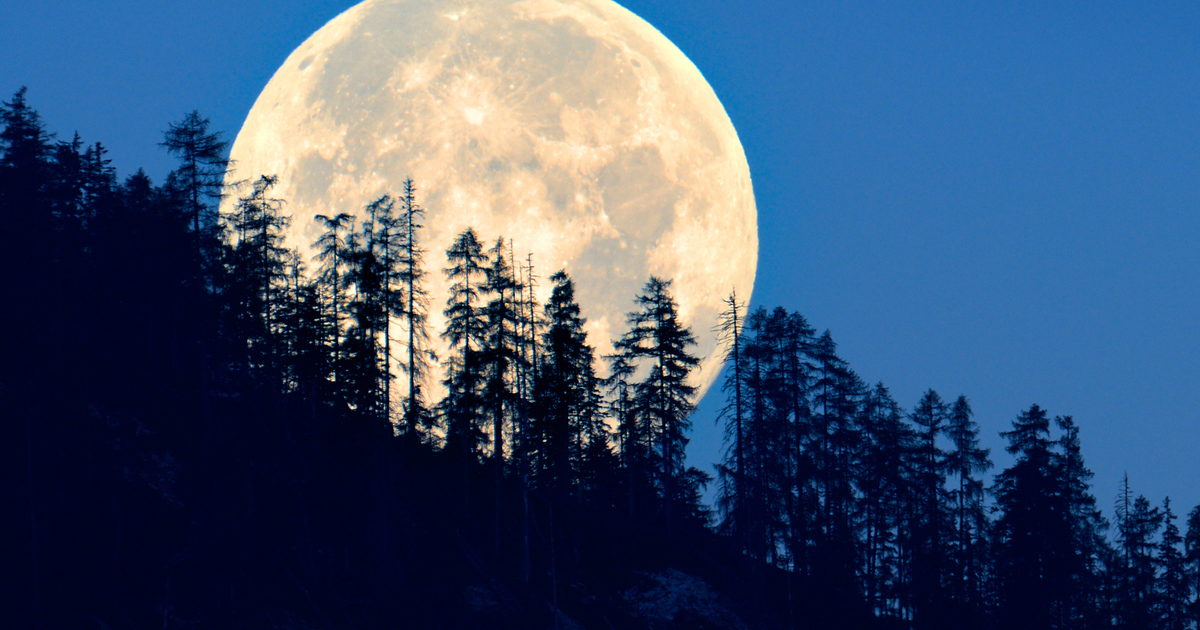
     Did you see the supermoon?  A rare and exciting astronomical phenomenon, a supermoon occurs when the moon, in its elliptical orbit, is at its closest to the earth.    Because of the moon's exceptional proximity to the earth, it appears to be much larger in the sky.  Hence, the moniker supermoon.

    Due to some cloud cover that night, we unfortunately missed seeing the supermoon this year.  But we happily saw many photos of it taken from around the planet.  It's always amazing to see.

    Although our most ancient ancestors did not know what caused the moon to appear so large in the sky, they certainly understood that such an occurrence was special, special in a number of ways.  While we in our so-called "enlightened" age understand why the moon appears to be larger on the night of a supermoon, we still do well to step back from our scientific commitments and marvel at the sight.

    And realize, once again, that it's a surprising world, a surprising world created by, however we wish to think of him, a surprising God.

    By the way, I'll be traveling--exploring mountains--for the next couple of weeks and will not be posting.  Thanks for reading!

Thursday, July 6, 2023

     As most of the world knows, earlier this week, July 4, the United States  celebrated its Independence Day.  It commemorated the day in 1776 that the gathered colonists announced that the thirteen colonies would henceforth be free of the British crown.

Why do we celebrate the 4th of July? Independence Day facts ...

    American writer Mark Twain once observed, "Patriotism is supporting your country all the time, and your government when it deserves it."  As we read of the continuing crackdowns on individual rights in too many other parts of the world, including, I might add, the U.S., we have new reason to consider the wisdom of Twain's assertion.

    As many have said, freedom is only as free as we want it to be.

Wednesday, July 5, 2023

      July:  the month for celebrating independence.  A couple of days ago, July 1, Canada celebrated its Independence Day.  On this day in 1867, Canada officially became independent of the British crown (though still a member of the British Commonwealth), free to pursue its own destiny.  It's cause for much rejoicing.

    With good reason.  As tomorrow I think about America's independence day, I trust that all of us realize anew that freedom is an enormously precious thing.  For as countless people who have lived through times of dictatorship can attest, little do we grasp the extent of our freedom until we no longer have it.

     A number of years ago, I happened to be in Canada on July 1.  It was a day of great celebration, a day off from work, picnics and gatherings, and, at night, fireworks.

    We all celebrate our freedom in different ways.  At the core of it all, however, is our corporate and often unvoiced understanding and conviction that humanness is meeting the challenge of being choice making beings in a world over which we have little control.  We're free, yes, but we're not free to be free.


Friday, June 30, 2023

     In addition to everything else going on around the world this week, we today take note of the celebration of the feast of Eid al Adah.  One of the two great holidays on the Muslim calendar, Eid al Adah celebrates faith.  It celebrates the faith of Abraham, one of the greatest prophets of Islam, and his willingness to obey God unreservedly.  Even when God commanded Abraham to sacrifice his son Ishmael, Abraham obeyed.  He trusted God.

Eid Blessings WDL6855.png

    Would any of us do this today?  As we ponder why we live, why we are here in this bewildering world, and why we live only to die, we do well to consider Abraham's response.  True, the Qur'an states that right before Abraham raised his knife to Ishmael, Allah intervened and provided an animal sacrifice.  Yet this does not eliminate the dilemma:  why did God ask Abraham to do this?  And why would Abraham obey?

    However, given our finitude and innate frailty, we can no more criticize Abraham than praise him.  Whether we like it or not, we're all creatures of faith, be it faith in a broken self or fractured world, or faith in an infinitely trustworthy God.

    Herein is the central conundrum of humanness.

Thursday, June 29, 2023

2023 Sudan clashes.svg

      We in the West live in the shadow of such tremendous disparity.  A few days ago, my wife and I attended a wedding.  It was a beautiful affair, full of life and wonder, overflowing with joy and good will as several hundred people gathered to honor two young people (and their families) who were preparing to join their lives together forever.  It was a grand occasion, one that my wife and I were loathe to leave.

     When, before my morning workout the next day, I picked up the newspaper and glanced at the headlines, my heart sank.  While we were celebrating the riches of an existence that only living in a relatively safe West can bring, across the world, Ukrainians and Russians are battling each other in seemingly endless and absolutely pointless war; two military factions in Sudan, vying for national hegemony, are forcing thousands of innocents into refugee camps; and floods and high waters are slowly inundating the country of Bangladesh.  And that's just the beginning.

    "To those to whom much has been given, much shall be required," noted Jesus.  Those of us who have had the good fortune to live in reasonably safe parts of the world, while we may have the greater material blessings, we also have the greater spiritual responsibility.  What we have should become the foundation of who we are, what we do, and what we give.  After all, what else is good fortune for?
    
    Never do we want to be on our deathbed and wonder whether we could have given and done more.  By then it will be too late.
     Enjoy the gift.
    

Wednesday, June 28, 2023

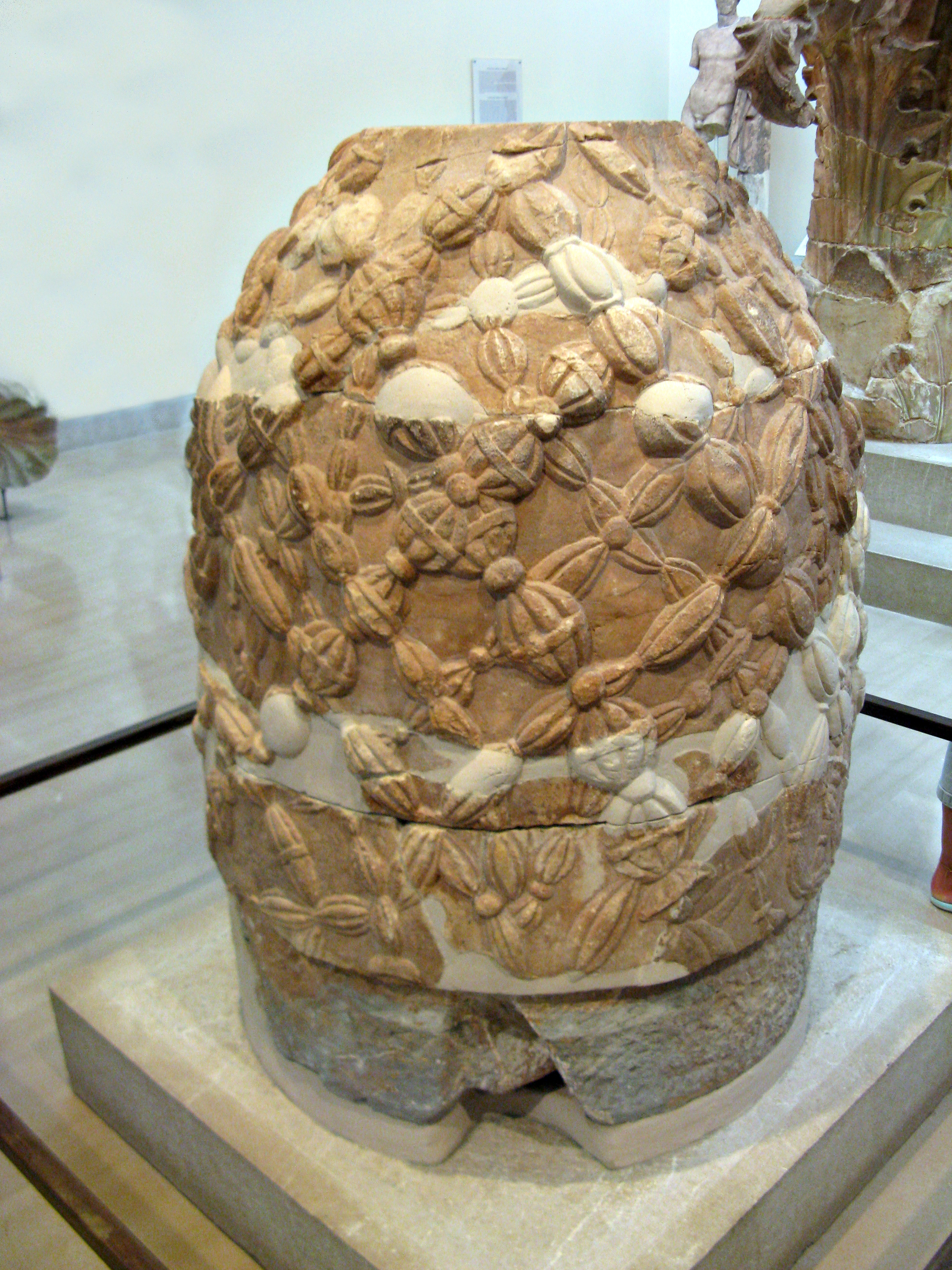
     Omphalos?  What is an omphalos?  A Latin term that appeared often in the annals of ancient Rome, omphalos is best translated as "the center of the world" or the "navel of the universe."  As the proud Romans saw it, their empire was an omphalos, the center, hub, the undisputed lord of the known world.  For them, Rome was the zenith, the highest, the beginning and end of civilization.  Nothing could match Rome, nothing dared challenge it. Why would anyone question the center of the universe?    

Omphalos of Delphi - Wikipedia
     
       
    Yet omphalos cannot be the center unless centering is possible.  And in an ordered yet allegedly meaningless world (an oxymoron for sure), how can centering, a centering of thought, meaning, and belief, be?
    
    Do we really want to deny there is a God?