In a broken world, a world in which things do not always go as we wish them to, a world marked by tremendous joy and tragedy alike, we humans are prone to long for control. Why can we not control the affairs of our lives? Why can we not ensure that we are not surprised by darkness?
 In this season of Lent, we have opportunity to rethink our longing for control. Lent is all about giving up. We give up our time, we give up our pursuits, we give up our lives, we give up control. We recognize that we live in a world beyond our control. We acknowledge that if we try to control everything, we will inevitably end up creating a world of us and us alone, a world without any real point except poor little us. We reduce ourselves to a collection of atoms spinning madly in a nexus of space and time, avoiding everything but ourselves.
 Lent is one of God's ways of telling us that though we are remarkable creatures, entirely capable of directing the course of our lives, we will never understand and control it all. We are finite, we have limits; our marvelous attributes can only take us so far. Sooner or later, we encounter a bump: we realize that we are not so remarkable that we in ourselves can decide what we are or what existence means. How could we? We are only us.
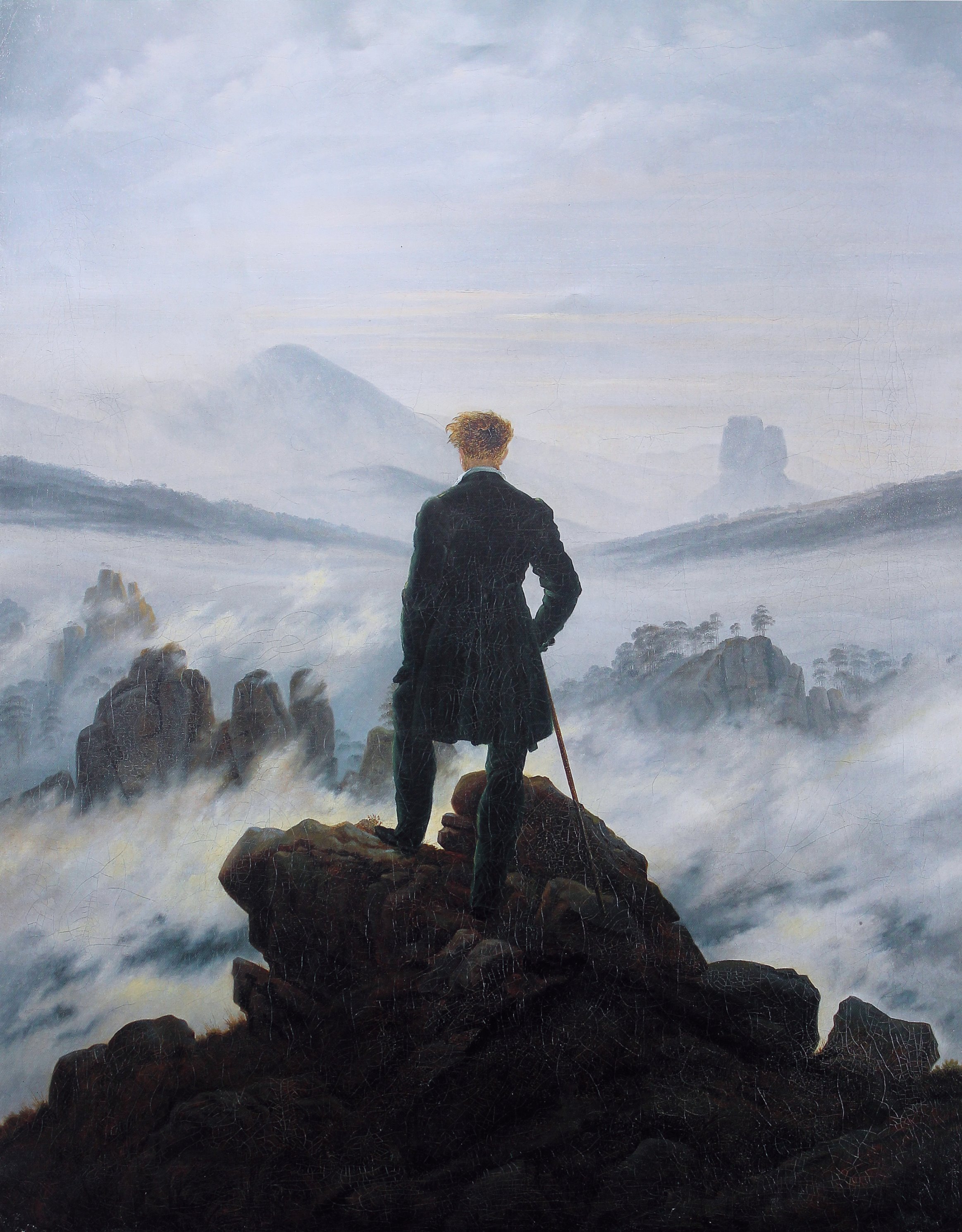
We are like the "Wanderer above the Sea of Fog," standing before the world, watching, planning, and waiting, yet bereft of ultimate control over that which we see.
And that's precisely God's point: in order to gain control, we must give it up. We must give up who we are now to find whom we are destined to be.

No comments:
Post a Comment