 One of the obituaries for the American poet William Merwin, who passed away last month, described him as one who decried what he called this "damnable evanescence." Like many of us, Merwin was frustrated by the limits of our very brief existence on this planet.
At the same time, again, like many of us, Derwin was fascinated, in the truest sense of the ancient word from which it comes, by the transience of this existence, intrigued by its "awfulness" as well as its "awefulness." Our life fuels and empowers us, and our life drags us down: why must it end?
In his "Wild Geese," Merwin writes, "The gibbons call from the mountain gorges the old words all deepen the great absence the vastness of all that has been lost it is still there when the poet in exile looks up long ago hearing the voices of wild geese far above him flying home."
Although we could unpack this for many hours, suffice it to say that, like Caspar Friedrich's "Wanderer Above the Sea of Fog," we daily stand on the precipice of mystery, the mystery of what has been, the even greater mystery of what will come.
Moreover, that it all happens. And we can do nothing about it. Except live and, if we are wise, believe that it is for more than itself.
One of the obituaries for the American poet William Merwin, who passed away last month, described him as one who decried what he called this "damnable evanescence." Like many of us, Merwin was frustrated by the limits of our very brief existence on this planet.
At the same time, again, like many of us, Derwin was fascinated, in the truest sense of the ancient word from which it comes, by the transience of this existence, intrigued by its "awfulness" as well as its "awefulness." Our life fuels and empowers us, and our life drags us down: why must it end?
In his "Wild Geese," Merwin writes, "The gibbons call from the mountain gorges the old words all deepen the great absence the vastness of all that has been lost it is still there when the poet in exile looks up long ago hearing the voices of wild geese far above him flying home."
Although we could unpack this for many hours, suffice it to say that, like Caspar Friedrich's "Wanderer Above the Sea of Fog," we daily stand on the precipice of mystery, the mystery of what has been, the even greater mystery of what will come.
Moreover, that it all happens. And we can do nothing about it. Except live and, if we are wise, believe that it is for more than itself.
Perhaps you've seen the much discussed movie, released by Netflix recently, about notorious serial killer Ted Bundy, who died in an electric chair in a Florida prison in 1989. When I was invited to watch the movie, I hesitated; I was reluctant to expose myself to such abject horror.
Happily, however, the movie did not so much focus on the graphic details of Bundy's crimes as it did the relationships he developed with two women along the way. The first woman he befriended had a daughter, and Bundy cared for them greatly. The second woman was an old friend with whom he got reacquainted and eventually married during his murder trial in Florida. She later became pregnant by him.
Watching these relationships unfold was a bit like reading Dr. Jekyll and Mr. Hyde or grappling with the nature of the Roman god Janus, famously depicted as one with two faces, one good, the other evil. In a rather perversely fascinating way, it made me wonder, again, about the capacity of the human being to balance and, consciously or not, integrate two totally opposite moral positions into what appears to be an outwardly settled life. What kind of creature has God made?
And how does this fit into the idea that humans are made in the image of God? Although I'm not completely sure, I came away from the movie struck, once more, by the complexity of a world created by a divine intelligence yet one enjoyed and exploited by the human being.
Whither does one go?
 Yesterday, we remembered Ramadan. Today, we remember a day now a few days past: Cinco de Mayo. Cinco de Mayo is a celebration of freedom, of liberation, of knowing that one's oppressors are no longer standing over one's lives, dictating one's every move. It upholds human dignity.
 Although freedom is a slippery term, subject to all manner of interpretation, we can at least agree that in its most fundamental form, freedom is essential to being fully human. We cannot be ourselves fully without it. And while many of us hold many varying attitudes, some positive, some otherwise, toward Mexicans, if we insist that we care about humanity, we cannot help but rejoice on Cinco de Mayo. Moreover, if we go further and contend that we are people of faith, people who believe in a loving God, we demean that God when we parody or criticize, in any way, this day.
We cannot laud freedom when we despise those who legitimately exercise it.
Although freedom is a slippery term, subject to all manner of interpretation, we can at least agree that in its most fundamental form, freedom is essential to being fully human. We cannot be ourselves fully without it. And while many of us hold many varying attitudes, some positive, some otherwise, toward Mexicans, if we insist that we care about humanity, we cannot help but rejoice on Cinco de Mayo. Moreover, if we go further and contend that we are people of faith, people who believe in a loving God, we demean that God when we parody or criticize, in any way, this day.
We cannot laud freedom when we despise those who legitimately exercise it.
Ramadan began last night. Ramadan is one of the greatest events in the Muslim calendar. Thirty days of fasting, culminating in the feast of Eid al Fitr, Ramadan is a time for every Muslim to take time to celebrate and reflect on his or her relationship with Allah and the world. It's a season of hope, wonder, mourning, and contemplation, a slice of the year in which Muslims, like any people of faith, focus more intensely on why they live as they do.

You may not agree with the tenets of Islam; you may not like the beliefs most Muslims hold; you may be uncomfortable with Islam in general; you may even be frightened of Islam. Nonetheless, we all must respect and admire the Muslim who pursues Ramadan in a devout way. For thirty days, he or she eats and drinks nothing from sunrise to sunset. Nothing. I often wonder how many of us could do the same. Though I have fasted for as long as five days, I always drank liquids. Never did I do without water, even for a twelve hour period. Consider as well the professional football or basketball player who celebrates Ramadan. Practicing or playing intensely night after night, he forswears all liquid throughout what is often a grueling day. Could any of us do that? It would be very challenging.
 Broadly speaking, Ramadan is roughly akin to the Christian period of Lent and the Jewish Day of Atonement. It reminds us that we live this life as a gift, that we spend our days in the aegis of a God of sovereign love, a God who has sacrificed, immensely, for us, a God who longs for communion with his human creation. We live in the umbra of a beautiful (and often exasperating) wave of experience, balancing what we see and what we cannot. Ramadan helps us ponder whether we live for ourselves and our brethren only, or for the one in whom every human finds his or her life and being, the God in whose inscrutable vision all meaning is summed, the God by whom we find true forgiveness and genuinely abundant life?
In this Ramadan 2019, pray for the Muslim. Indeed, pray for all humanity. Pray that all people will find the full truth of God.
Broadly speaking, Ramadan is roughly akin to the Christian period of Lent and the Jewish Day of Atonement. It reminds us that we live this life as a gift, that we spend our days in the aegis of a God of sovereign love, a God who has sacrificed, immensely, for us, a God who longs for communion with his human creation. We live in the umbra of a beautiful (and often exasperating) wave of experience, balancing what we see and what we cannot. Ramadan helps us ponder whether we live for ourselves and our brethren only, or for the one in whom every human finds his or her life and being, the God in whose inscrutable vision all meaning is summed, the God by whom we find true forgiveness and genuinely abundant life?
In this Ramadan 2019, pray for the Muslim. Indeed, pray for all humanity. Pray that all people will find the full truth of God.
Until the Enlightenment, Western Europe believed that it found truth by listening to the communications of God. Supernatural revelation, the wisdom of the divine, they believed, was the path to truth, the way to discern the boundaries of light and darkness in the human adventure.
After the Enlightenment, however, truth became the product of human reason. Imbued with the "smile of reason," Western Europe set out to create another version of truth. Their own.
 We live in the Enlightenment's shadows, we all share in its legacy. And we are grateful for its commitment to restore the role of reason in human affairs. After all, we are reasoning beings.
On the other hand, something has been lost: mystery. Not the mystery of not knowing everything, but rather the mystery of why we are here. Reason will tell us how we came to be here, but it will not tell us why we are here. And our truth will only tell us what we ourselves can decide is true. It will not tell us why.
So does the biblical writer observe, "Without revelation [communication from God], we lose our way" (Proverbs 29:18). We rightly exalt and employ reason. Yet we should also realize that reason will only tell us so much. At the end of the day, we still want to know why.
We want to see reality as it really is. We want, whether we know it or not, revelation.
We live in the Enlightenment's shadows, we all share in its legacy. And we are grateful for its commitment to restore the role of reason in human affairs. After all, we are reasoning beings.
On the other hand, something has been lost: mystery. Not the mystery of not knowing everything, but rather the mystery of why we are here. Reason will tell us how we came to be here, but it will not tell us why we are here. And our truth will only tell us what we ourselves can decide is true. It will not tell us why.
So does the biblical writer observe, "Without revelation [communication from God], we lose our way" (Proverbs 29:18). We rightly exalt and employ reason. Yet we should also realize that reason will only tell us so much. At the end of the day, we still want to know why.
We want to see reality as it really is. We want, whether we know it or not, revelation.
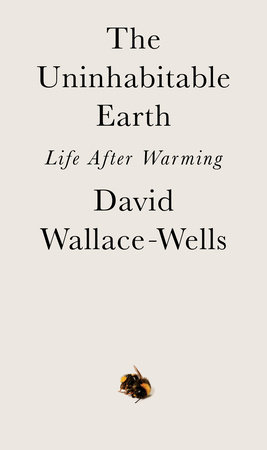 In one of many fascinating statistics which he presents in his recently published book on our ecological crisis, author David Wallace-Wells observes that the world could cut its polluting emissions by fully one third if the richest ten percent of its inhabitants reduced its use of energy to that of the average affluent European.
This is a startling statistic. Ten percent of the global population is roughly 760 million people. Subtracting the approximately 340 million in the United States leaves 420 million. Most of these millions are in other parts of the West and the wealthiest parts of the Global South. Although 760 million people seems like a lot of people, and it is, it is a very tiny number compared with the many more billions of people in the rest of the planet.
In response, some call for efforts to be made to elevate the lifestyles of the other ninety percent to those of the wealthiest ten percent. Fair enough. We should all want everyone to be able to enjoy the fundamental comforts and conveniences that we in the West enjoy as a matter of courses. Yet if we imagine that doing this will solve our problem, we miss then point. The issue is far more profound.
Our world is a gift, a gift of God to us. That said, we then ask, can we, in ourselves, manage a gift of transcendence? As another book, Spiritual Ecology, suggests, spiritual problems require spiritual solutions. And spiritual solutions demand acknowledgement of who we are, that is, moral and spiritual beings.
Otherwise, we are accidental blips managing an accidental universe.
In one of many fascinating statistics which he presents in his recently published book on our ecological crisis, author David Wallace-Wells observes that the world could cut its polluting emissions by fully one third if the richest ten percent of its inhabitants reduced its use of energy to that of the average affluent European.
This is a startling statistic. Ten percent of the global population is roughly 760 million people. Subtracting the approximately 340 million in the United States leaves 420 million. Most of these millions are in other parts of the West and the wealthiest parts of the Global South. Although 760 million people seems like a lot of people, and it is, it is a very tiny number compared with the many more billions of people in the rest of the planet.
In response, some call for efforts to be made to elevate the lifestyles of the other ninety percent to those of the wealthiest ten percent. Fair enough. We should all want everyone to be able to enjoy the fundamental comforts and conveniences that we in the West enjoy as a matter of courses. Yet if we imagine that doing this will solve our problem, we miss then point. The issue is far more profound.
Our world is a gift, a gift of God to us. That said, we then ask, can we, in ourselves, manage a gift of transcendence? As another book, Spiritual Ecology, suggests, spiritual problems require spiritual solutions. And spiritual solutions demand acknowledgement of who we are, that is, moral and spiritual beings.
Otherwise, we are accidental blips managing an accidental universe.
We all wonder what lies between the lines, be it the lines of a novel, television show, movie or, bigger picture, the lines our life. What is our life really about?
 Peter Sacks, an artist and South African emigre to the United States, has for decades been doing art that tries to answer these questions. Study this painting carefully. Notice how the longer you look, the more you see, but that eventually even what you see you are no longer sure you're seeing.
The Japanese novelist Shusako Endo once characterized getting to know God as akin to peeling an onion. As one penetrates ever more deeply into the puzzle that constitutes God, she is peeling, peeling one layer after another, steadily unfolding the mystery. Yet the process is endless: in the end, the onion is still an onion.
We wonder our life, we wonder about death. And we wonder about God. The more we wonder about any of these, however, the more we realize that even when we think we know them, we really do not.
Real meaning is amazing beautiful, but exquisitely frustrating.
Peter Sacks, an artist and South African emigre to the United States, has for decades been doing art that tries to answer these questions. Study this painting carefully. Notice how the longer you look, the more you see, but that eventually even what you see you are no longer sure you're seeing.
The Japanese novelist Shusako Endo once characterized getting to know God as akin to peeling an onion. As one penetrates ever more deeply into the puzzle that constitutes God, she is peeling, peeling one layer after another, steadily unfolding the mystery. Yet the process is endless: in the end, the onion is still an onion.
We wonder our life, we wonder about death. And we wonder about God. The more we wonder about any of these, however, the more we realize that even when we think we know them, we really do not.
Real meaning is amazing beautiful, but exquisitely frustrating.


