Friday, March 6, 2020

     Today marks the birthday of one of history's most remarkable artists:  Michelangelo di Lodovica Buonarroti Simoni, otherwise known as, simply, Michelangelo.  Why do we find  Michelangelo so significant?
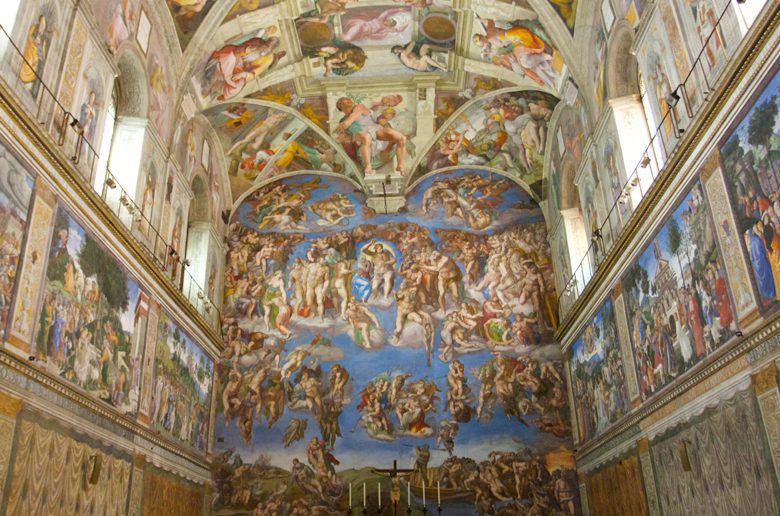
The Sistine Chapel
    
 Like all of us, Michelangelo was a creature of his time, a person working in one of the most fascinating eras in the history of the West:  the Renaissance.  As I have said elsewhere in this blog, the Renaissance was a singular point in the evolution of European thought.  It was a time, a very brief time, when the secular and sacred seemed to fuse together, blending in the most amazing way in all areas of human endeavor.
This was perhaps most notable in the art of the period.  Across the board, people sought to do art as a fusion of unwavering belief in the goodness and creative power of God and their comcommitant belief in their innate creative abilities, abilities given to them, they constantly affirmed, by God.  Deeply committed to the joy of art, profoundly dedicated to the presence and love of God, Michelangelo's astonishingly fertile mind produced some of the most memorable artworks in human history.
     Although much of today's art is very different from the of the Renaissance, the essential truth about its origins remains:  the human heart and mind cannot help but create, be it to the wonder of humanity and its world, the glory of God or, ideally, both.  Michelangelo demonstrates to us that we are awesome beings, beings capable of creating things beyond our imagination.  We are creatures of immense possibility, possibility inherent in a universe created by an infinite God.
     There are no limits to whom we can be.

Thursday, March 5, 2020

     Is property theft?  Pierre Proudhon, the nineteenth French anarchist, thought so.  While most of us who live in the acquisitive and affluent West might recoil at such a suggestion, we might wish to think again.  We of course all like our own possessions and our own space; we all like to think that some things belong to us and no one else.  And woe to the person who tries to take them away from us, be they home, food, family, job, or gun.
     We all must acknowledge, however, that in a planet of limited resources, what one person holds often means that another person does not.  Although in terms of a car or item of clothing this does not seem significant, if we view such things through a more refined sense  it surely is.  In a planet of limited resources, consumption matters.

Pierre-Joseph Proudhon.
     Not that I am suggesting that property is, categorically, theft.  Just that unless we are willing to look at what we have as a gift that perhaps one day we will be asked to give up for a greater good, we undercut the a far deeper purpose of existence:  a flourishing life for all.
     Neither capitalism nor Marxism have room for this type of altruism.  No economic system does.  This type of posture comes only through the heart.  We may quibble with Proudhon's position, but he came to it out of a worldview absent of God.  If there is no God, then, yes, property is theft.  It is Darwinian survival at its worse.
     But if there is a God, property becomes a greater good, not for its owner, but for the world in which its owner lives.

Monday, March 2, 2020

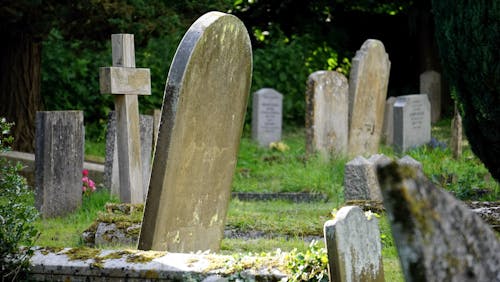
Close-up Photography of Concrete Tombstones
     This past Sunday marked the first Sunday of Lent.  Repentance and circumspection dominate, as those so inclined spend ever more time pondering the exigencies within their lives, the fleeting puffs of materiality in which we have life and breath.  Life looks more remarkable than ever:  a befuddling experience, yes, but the only experience, at this point, we have.

     Given the wonder of the world, it's easy to rejoice in life without also wondering why life is, why we have it, why this existence has been given to us.  To what end do we live?
     In its call to slow down, to meditate and consider, to let go of the immediate, Lent carves multiple inroads into this question, dissembling the perfunctory and expected and normal.  It calls us to not blast life apart without knowing what we are blasting it into, to stop striving for what will not last, and to relax, as the Psalmist says, in the reality of God (Psalm 46:10).  Lent invites us to look at what matters most.  Who will we really be when we leave this world:  ashes or creatures of eternity?

Friday, February 28, 2020

     What are we to make of the desert?  Last week, I led a group of students on a camping and hiking trip to Death Valley National Park.  I began our first campfire together by underscoring the power of the desert in human spirituality.  Whether one is a believer in God, nature, presence and being, the fact of the cosmos, or some combination of these, we can all learn from the desert.  With its vast stretches of emptiness, a bitter and stark emptiness that spreads for miles and miles and miles across mountain and valley and the occasional river and stream, and its ability to separate us from all notions of normality, the desert speaks to us of the power of desolation, the incisive power of desolation to render us more deeply human.
     As countless writers, religious or not, have observed over the centuries, it is often in desolation that we find our most fundamental truths.  Shorn of our customary appurtenances, stripped of our regular sensibilities, and rubbed raw by an arid and unforgiving landscape, we have opportunity, opportunity we do not have otherwise, to see what we usually do not see.  We no longer use a filter.  We peer into the depths, the uninterpreted depths of the creation.
     And we come to know essence, the essence of time, space, and reality, in a way we would otherwise not.  We also come to know ourselves.  We see, in a profound way, who we are, creatures of magnificence and grandeur, yet creatures whose foundations rest in movements and forces beyond our earthly comprehension.  We are dust, absolute dust
     Yet we are dust in a drama, a vast drama, a narrative and story of a purposeful cosmos.
     Otherwise, what is life all about?  It's hard to miss God in the emptiness of the desert.

Thursday, February 27, 2020

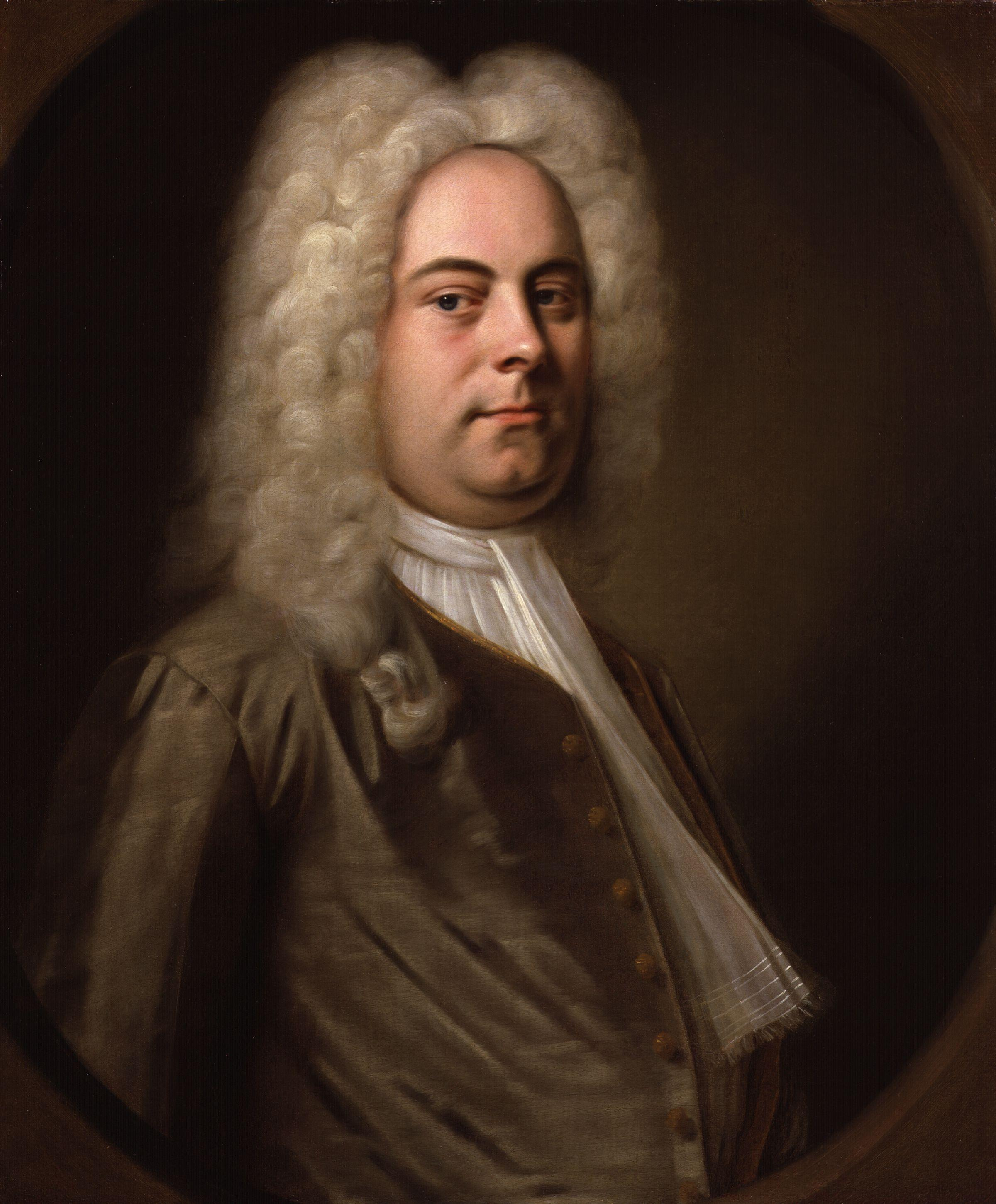
     A few days ago, the world remembered the 334th birthday of George Frederic Handel.  Born in Germany, Handel spent most of his life in London.  He is perhaps most famous for his Messiah, a glorious paean to the salvific love of God.  We frequently see Messiah performed around Christmas and Easter.  Another of Handel's most well known works is his Water Music, a delightful set of processionals often heard at weddings or graduation commencements.
Image result     As I listened to Messiah's "Hallelujah Chorus" recently, I reflected, again, on its power, spiritual as well as political.  As the story goes, when George II, then the British king, heard its opening strains he stood up.  In an era when people sought to emulate, out of respect, what their king did, the rest of the audience stood up, too.
     Perhaps the king stood out of reverence, perhaps not.  Either way, a tradition was established.  To this day, even the most hardened unbelievers will, if they attend a performance of Messiah, stand up for the Hallelujah Chorus. 
     When we review the lengthy span of biblical history which Messiah presents, we realize that, as Handel understood very well, though God may appear to be hidden and unknown, he in fact has been working in the world since its beginning.  He's not a deistic entity.  Transcendent though he be, God is nonetheless thoroughly immanent, constantly speaking into our life experience.
     Only if, however, we listen.
     Enjoy the day.

Wednesday, February 26, 2020

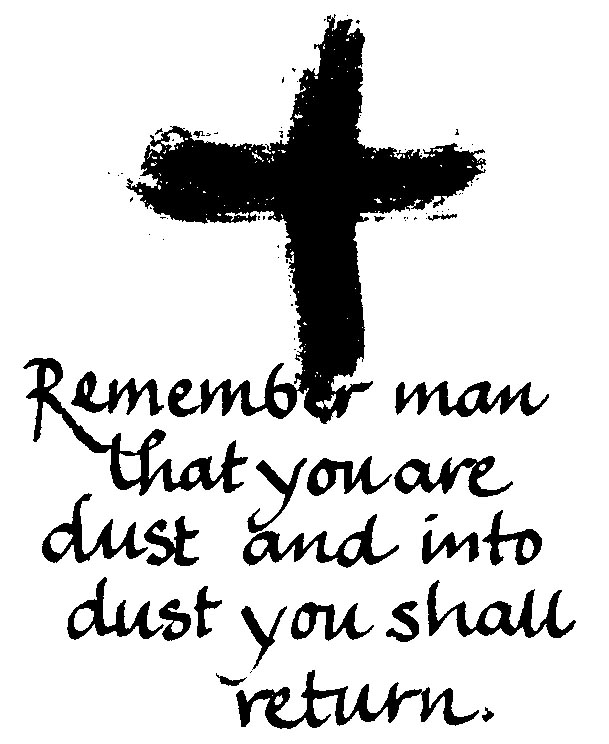
     Today is Ash Wednesday, the first day of Lent.  Ash Wednesday reminds us that, whether we believe in an afterlife or not, we are ultimately no more than dust.  When we die and pass out of this life, what remains of us will soon be no more, too, returned to the earth from which it has come.  Before my siblings and I scattered my mother's ashes atop her favorite mountain in the San Gabriel Mountains of California in October of 2011, we opened the box that contained "her."  All that Mom ever was had been reduced to a small pile of ashes.  All her years, all her love, all her joy, all her meaning, all her hopes and dreams now no more than a bag of ashes.  It was sobering.
Image result for ash wednesday photos     Even more sobering is that one day, every one of us will be exactly the same.  We are so fragile, so frightfully fragile.  What meaning have we?  What is our point?  As we contemplate our mortality, we see ever more clearly how thin the line is between life and death, sentience and dust, fire and ashes.  We are so contingent, so tenuous:  how can we ever hope to be?
     Yet here we are.  This notwithstanding  however, Ash Wednesday reminds us that we are not dust and ashes only, that life is not total absurdity.  It tells us that we are spiritual beings, physical creatures, yes, but metaphysical, too, blessed with spiritual form and vision, creations of a transcendent God.
     Our death is not the end.

Friday, February 14, 2020

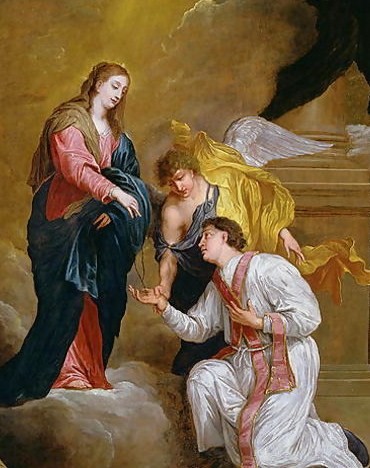
     Although in many ways Valentine's Day, which we remember today, has become (or, I might say, degenerated into) a Hallmark holiday, it actually has a measure of legitimate historical origin.  Its name comes from St. Valentine, one of many martyrs in the early years of the Church, a person who gave his life for what he believed to be the greater good of the gospel and the primacy of God.  It marked a purposeful moment.

Image result for st valentine     Subsequently, however, as Rome faded into history and the Middle Ages began, the name Valentine morphed into a day associated with earthly love and romance.  It still is.  On the other hand, despite the way that various retailers use Valentine's Day to increase sales, doing their best to entice lovers, particularly men, to spend more disposable income than they would otherwise to please their loved one, it's still a good day.  What harm can come from thinking about love?
     Years ago, the Beatles sang that, "All you need is love."  In more ways than the Fab Four likely thought at the time, this is one of the truest statements in all the world.  In an impersonal universe, in a beautiful but empty cosmos, love remains the greatest thing.
     But wait:  how can love be in a universe without meaning or words for it?
     It's hard to imagine love without imagining God.
     By the way, I'll be traveling in the West for the next couple of weeks, and will not be posting.  Thanks for reading!