Monday, October 30, 2023

     It's extraordinarily difficult to speak religion into the public square.  I was reminded of this afresh after I read several articles about the religious beliefs of Mike Johnson, the newly elected speaker of the U.S. House of Representatives.  Although I have no reason to doubt Johnson's description of himself as a born again evangelical Christian, as someone who also considers himself to be a born again evangelical Christian, I do have reason to question how Johnson sees his beliefs working out in his capacity as a public figure.

    Even allowing that some of Johnson's remarks may have been intended either for political soundbites or taken out of context, I still find them troubling.  I find them troubling not only because I do not share the conclusions to which they come, but, bigger picture, I find them troubling because they seem to overlook the very fragile hold we pitiable and finite humans have on the meaning of the biblical text.

    Not one person on the planet has a monopoly, in all times and places, on the precise and absolute meaning of biblical scripture.  Hence, when I read that Johnson proclaimed that God has "ordained and allowed each one of us to be brought here for this specific moment," using words that he is surely basing on his understanding of the absolute sovereignty of God (a truth I readily affirm), I cringe.  Has he really considered the implications of this statement?

    Johnson also states that while the Bible teaches Christian to practice "personal charity," the commandment (the Hebrew belief, one embedded deeply in the Old Testament scriptures, scriptures which Christians almost universally hold to be as true as those of the New Testament, that we must care for the ger, the "foreigner" or "stranger" re:  immigrants) "was never directed to the government."

    Really?  Do not most Americans agree that the American government is a government (to quote Abraham Lincoln in his Gettysburg Address) "to the people, by the people, and for the people" and that, rightly, understood, the government is therefore an extension of the people?  Does charity stop at our front door?

    Again, Mr. Johnson, think carefully about how you frame your beliefs.  You may end up not "Christianizing" America, as seems to be your goal, but instead will fracture it even more than it already is.  Be careful for what you wish for.

    God is a very big God.

    And no, we do not "got this."

Wednesday, October 25, 2023

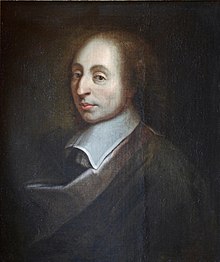
     Yesterday I talked about Samuel Coleridge and imagination.  Today, I talk about another person who grappled with imagination:  Blaise Pascal.  A philosopher and essayist of the seventeenth century, Pascal lived nearly two hundred years after Coleridge.  His time was distinctly different from that of Coleridge.  Nonetheless, Pascal's thoughts about imagination offer us some useful insights as we grapple with the rise of what some commentators have called "expressive individualism," the notion that, divorced from any universal moral anchor, humanity is fit only to express individual identity and nothing more.

    Pascal observed that as much as we would like to suppose that we humans are creatures of rationality, we are ultimately creatures beholden to our imagination.  Our emotions, he noted, play a far greater role in how we live and make decisions than our reason.

    Pascal is on to something.  Yes, we use reason to make decisions, but no, we do not make decisions solely on the basis our reason.  After all, we are creatures of imagination.  And we cannot help it:  it's how we're made.

    So what does this mean today?  Pascal was a person of faith.  Reason, he observed, will take people to the brink of grasping God.  Absolutely.  But it is only imagination that will allow them to move themselves to a position where they are willing to believe in the existence of a being whom they cannot visibly see.

    In a personal universe, imagination is the road to ultimate understanding.

Tuesday, October 24, 2023

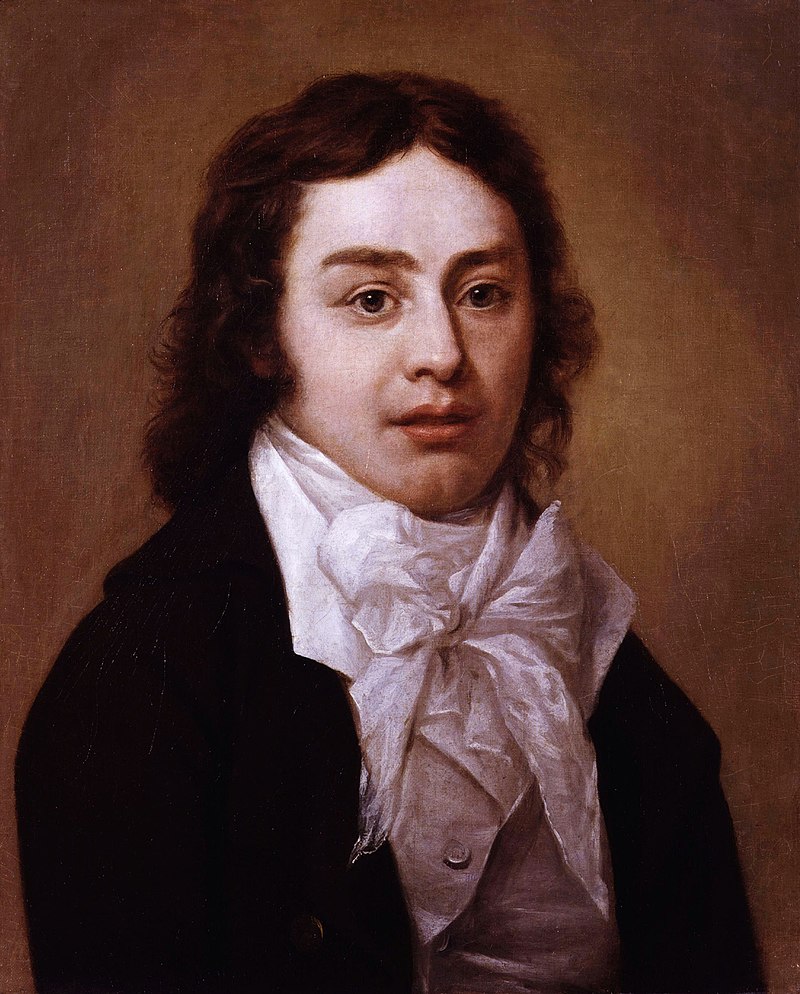
  Coleridge in 1795

     Samuel Taylor Coleridge, the famous British Romantic poet, once observed that imagination is how the self grapples with its perception.  Put another way, imagination is how we give life to what we perceive.

    Writing nearly two centuries later, modern neurobiologists conclude that imagination is the result of metaphoric processes which happen, often unconsciously, in our brains.  It is the product of our innately image making selves.
 
   Speaking out of another time, the early medieval theologian Augustine suggested that humans use analogy to understand the transcendent, in particular, the person of God.  Confronted with the transcendent and infinite, people tend to think in terms of analogy.  Their finite minds cannot directly grasp the nature of the infinite.  So they resort to analogy:   the metaphor making ability of their imagination.
    
    We may never "see" the transcendent in this existence.  But we certainly sense that it is, in some shape or form, "there."  We are creatures of analogical imagination.
    
    Maybe it is easier to understand God than we think.

Thursday, October 19, 2023

      This week, as my siblings and I reminded each other, marks another year, another year since the passing of our father forty years ago.  Despite the span of those decades, we still miss him, and our mother as well.  Time may heal some, yes, but time will never fully overcome the scars its events imprint on our lives.  There are losses that, try as we might, we cannot completely assuage.  Although we learn to live with them, though we may even come to develop a measure of acceptance about them, we will never totally erase them from our hearts.  For always and forevermore, they are embedded in the innermost patterns of our soul.

12"x16" - Lush Mountain Sunset — Mya Bessette

    In 1983, as my siblings and I prepared to leave our mother to return to our lives after saying our final good-byes to Dad, one of our uncles remarked, "Everyone is going back to their lives."  True enough.  But we'd never look at our lives in the same way again.  Nor should we.  We're personal beings who respond to our lives in personal ways.  Our lives continue, yes, but take on more furrows with every passing year.
    
    And God and the universe remain, nearly inscrutable mysteries, the one never ending, the other its ultimate destiny in the first.  As are we.  And what then?
    
     Thank you, Dad.  Thank you for everything.  

Tuesday, October 17, 2023

    Around this time a few years ago, I wrote, using an excerpt from my book Imagining Eternity, about the moment in which I decided that Jesus Christ was undeniably divine, real, and objectively and subjectively true.  

    This week marks forty-nine years since that moment in the mountains outside of the tiny town of Jasper, Alberta, in the heart of the Canadian Rockies.  They are years that I find difficult to fathom or measure; year upon year of believing in and grappling with a person whose fullness I cannot in this life exhaustively assess; year upon year of following and listening to a being who has never made himself visibly known to me; year upon year of trusting in a invisible personal transcendence.

     So why believe?  Why live a life that, as the apostle Paul puts it, is one of faith and not one of sight?  Why be a rational being who is living a life devoted to the non-rational (but not irrational)?  Oddly, I live this life because I see that faith, believe it or not (no pun intended!), is, in light of everything that this life comprises, the most rational thing I can do.  Given the fact of my personhood; the fact of my mind and consciousness; the fact of the universes's incredibly complexity and order; the fact of the moral sense; the historicity and veracity of the Bible; and the millions and millions of people, including me, who have completely changed, in a positive way, their outlooks on themselves and existence in response to what they perceived to be a divine inbreaking or call:  I see no other way to understand existence.
    
    I believe because I cannot believe that, to borrow some words from Carl Sagan in his best selling Cosmos, the world is all that is and all that ever will be.

    Indeed:  if Sagan is correct, why does everyone long for more?

Monday, October 16, 2023

Nietzsche

     Although he died in an asylum at the end of the nineteenth century, the German philosopher Friedrich Nietzsche continues to speak to us today.  I recently came across a rarely published addendum to his work, Will to Power, and share it here.       

    So does Nietzsche write, "All these bold birds who fly out into the wide, widest open--it is true!  At some point they will not be able to fly any farther and . . . But who would want to conclude from this that there was no longer a vast and prodigious trajectory ahead of them.  All our great mentors and precursors have finally come to a stop  . . . and it will also happen to you and me!  Of what concern, however, is that to you and me!  Other birds will fly farther!"

    Although divining the precise intentions of Nietzsche's mind is difficult, it seems that what he is saying here is that even though we one day will "fly" no longer, others will.  The human adventure will continue.  It's a reassuring thought.  By the time he penned these words, Nietzsche, though he was the son of a Lutheran pastor, had come to reject everything about Christianity and its promise of eternal life.  It was a religion for weaklings, he averred.  Better to live bravely and die!

    Maybe so.  Our humanness is indeed wondrous and grand and, to this point, seemingly capable of sustaining progeny, seemingly capable of birthing even more "birds" to extend its experience of existence beyond the present.

    But then what?  Absent an eternal, when humanity is over, it will be as if it had never existed at all.

    Nietzsche's genius was to understand this more deeply than many of those who actually do trust in the fact of eternity.  More than most, he grasped the essence of what life would really be like without God.

Friday, October 13, 2023

     Are you familiar with the Russian band and performance art group Pussy Riot?  Pussy Riot gained international attention in February 2012 when some of its members entered a Russian Orthodox cathedral and performed songs parodying Vladimir Putin and what they considered to be his perverted relationship with church.  Although many roundly condemned Pussy Riot's actions--entering a sacred space and performing rock songs--its point was clear:  Putin, religion, and politics do not mix well.

7 women with bright colored clothes and multicolored knit ski masks over their faces. A woman at the center holds a guitar and one at the back holds a piece of red fabric.

    It's difficult to disagree.  Although three of the band's members were eventually arrested and two of them served time in labor camps in Siberia, they, and the band itself remain unrepentant.  Indeed, at the present moment the band is touring internationally, performing, continuing to speak out against Vladimir Putin and steadfastly promulgating their belief that he is twisting the Russian culture to suit his own political ambitions.  Given Putin's violent actions against political dissent, we should consider them to be extraordinarily brave women.

    We may condemn how Pussy Riot presents its message, but we should not dispute its essential underpinnings:  we cannot put God into a box of our own making.  He, and we, are more than that.