 March 1: the birthday of Frederic Chopin. One of the most dazzling musicians of the Romantic Era, Chopin in his too short life (he died at the age of 39) composed a host of memorable pieces for the piano. His works are full of life yet resonate with the sound of memory and contemplation. We listen to them today and think about how his Polish origins blended with his relatively cosmopolitan lifestyle (he was well acquainted with Hungarian composer Franz Liszt and the novelist George Sand) to produce melodies that dig into our soul.
And in this time of Lent, a time in which we take time to meditate on our fragility and mortality, a time in which we find space to ponder the meaning of our curious conglomeration of physicality and spirit, we remember Chopin. We remember his creativity, we remember his vision. We remember his angst. And we realize, again, that we live in a beautiful yet tragic world, that we dance on a very narrow line between being here and not, and that we, human beings, we magnificent creators, find our humanness most profoundly when we submit to the mystery of doubt, pain, and the realization that we may not know whom we really are.
What is the measure of a life? I have thought about this much as I consider the life of Billy Graham, who passed away last week at the age of 99. For over fifty years, Graham traveled around the world preaching the love and good news of Jesus. Although he made some mistakes along the way (don't we all?), mistakes which he readily acknowledged, he never lost his integrity. Graham exemplified the ideal church elder who, as Paul puts it in 1 Timothy, is a person "beyond reproach." Even now, we cannot really impugn him. For anything.
 Although Graham is gone physically, his spiritual legacy very much remains. He touched millions of lives, lives which will outlive him, lives which will in turn touch millions of other lives, touching them with the news that God, a loving God is very present to us. That in Jesus Christ, God can be known.
We all live for many things, most of them worthwhile. As we should. And when we are gone, many of these things will still exist, will still impact the world. Yet all of these things will, in the big picture, matter little if the universe has no rhyme, reason, or point. One day everything will be gone.
And where will we be?
Thanks, Billy Graham, for showing us there is more.
Although Graham is gone physically, his spiritual legacy very much remains. He touched millions of lives, lives which will outlive him, lives which will in turn touch millions of other lives, touching them with the news that God, a loving God is very present to us. That in Jesus Christ, God can be known.
We all live for many things, most of them worthwhile. As we should. And when we are gone, many of these things will still exist, will still impact the world. Yet all of these things will, in the big picture, matter little if the universe has no rhyme, reason, or point. One day everything will be gone.
And where will we be?
Thanks, Billy Graham, for showing us there is more.
Another day, another musician birthday. Today is the 332th birthday of George Frideric Handel. Born in Germany, Handel spent most of his life in London. He is perhaps most famous for his stirring religious oratorio, Messiah, a glorious paean to the salvific love of God. We frequently see Messiah performed around Christmas and Easter. Another of Handel's most well known works is his Water Music, for which my wife and I have a special spot in our hearts: it was the processional music at our wedding.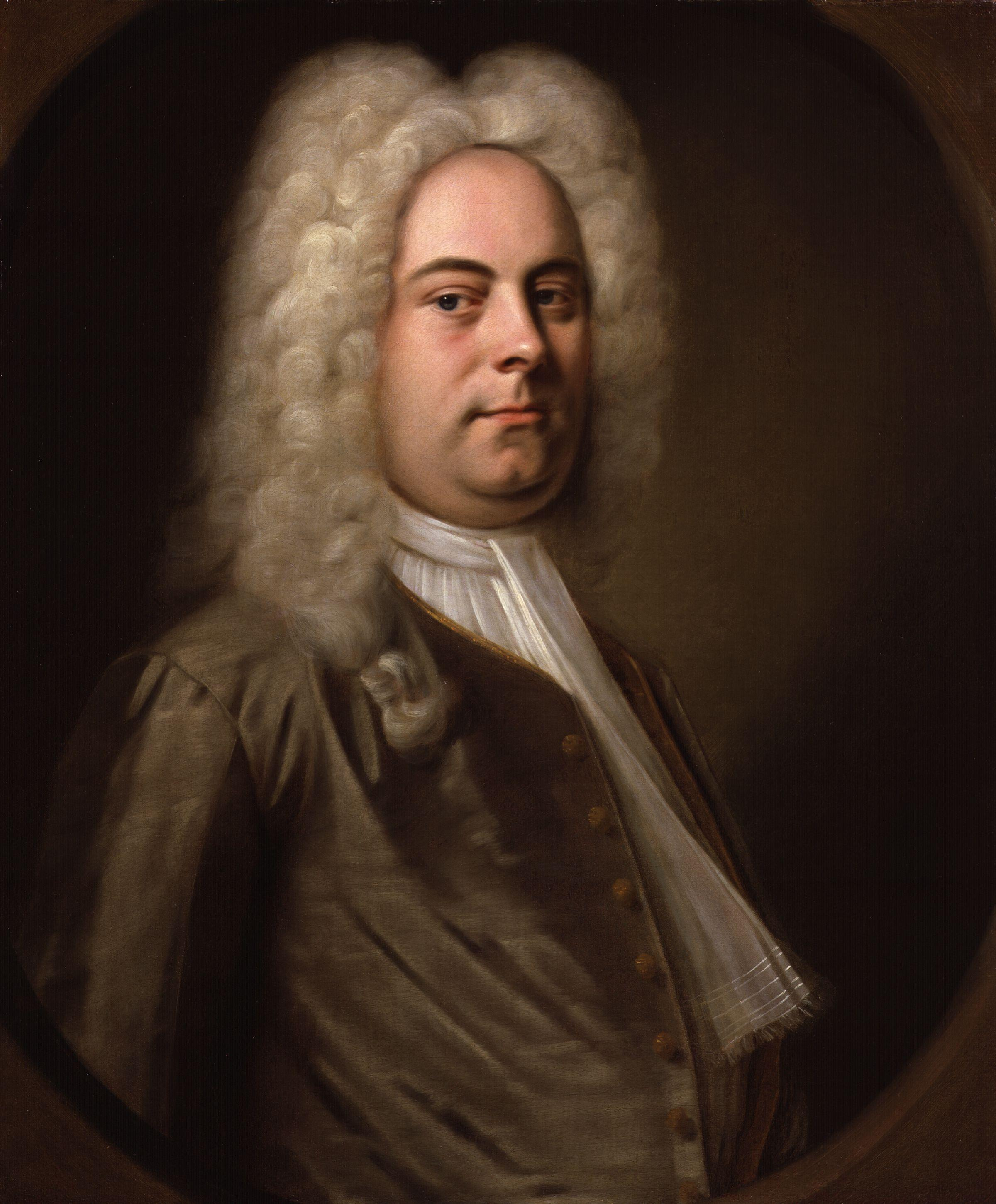 As I listened to Messiah's "Hallelujah Chorus" this morning, I reflected, again, on its power, spiritual as well as political. As the story goes, when George II, then British king, heard its opening strains he stood up. In an era when people sought to emulate, out of respect, what their king did, the rest of the audience stood up, too. Perhaps the king stood out of reverence, perhaps not. Either way, a tradition was established. To this day, even the most hardened unbelievers will, if they attend a performance of Messiah, stand up for the Hallelujah Chorus. Through it all, a long ago custom remains. This notwithstanding, however, when we review the lengthy span of biblical history which Messiah presents, we find new ways to consider the depth of God's purpose in creation. As Handel understood very well, though God may appear to be hidden and unknown, he in fact has been working in the world since its beginning. He's not a deistic entity. Transcendent in essence, yes, God is nonetheless thoroughly immanent, constantly speaking into our life experience. Only if, however, as Handel, quoting words from the fortieth chapter of Isaiah, notes, we level the mountains and smooth the valleys of our hearts to listen. Enjoy the day.
 Jim Bridewell. Unless you're a mountain climber, you have probably not heard of Jim Bridewell. Jim passed away last week at the age of 73. To the end, Jim did what he wanted to do. Like one of his counterparts, the late John Bacchar, who climbed unroped all of his life, Jim lived openly and freely: he let nothing and no one stand in his way.
When I read Jim's obituary, I thought of Ecclesiastes 11:9-10, "Rejoice, young person, during your childhood, and let your heart be pleasant during the days of young personhood. And follow the impulses of your heart and the desires of your eyes. Yet know that God will bring you to judgment for all these things."
God's world is a book, a book waiting to be opened. We human beings walk before unspeakably marvelous possibilities. Life is a wonder beyond imagination.
Yet it's only a wonder because it is of God. What a glorious tension!
Farewell, Jim Bridewell. The mountains shine for you.
Jim Bridewell. Unless you're a mountain climber, you have probably not heard of Jim Bridewell. Jim passed away last week at the age of 73. To the end, Jim did what he wanted to do. Like one of his counterparts, the late John Bacchar, who climbed unroped all of his life, Jim lived openly and freely: he let nothing and no one stand in his way.
When I read Jim's obituary, I thought of Ecclesiastes 11:9-10, "Rejoice, young person, during your childhood, and let your heart be pleasant during the days of young personhood. And follow the impulses of your heart and the desires of your eyes. Yet know that God will bring you to judgment for all these things."
God's world is a book, a book waiting to be opened. We human beings walk before unspeakably marvelous possibilities. Life is a wonder beyond imagination.
Yet it's only a wonder because it is of God. What a glorious tension!
Farewell, Jim Bridewell. The mountains shine for you.
Because so much has been said about the recent school killings in Florida, I hestitate to say anything more. I will, however, make a brief observation. It seems that the discussions about gun control, which I endorse, as well as the affirmation about the presence of the Second Amendment, a fact which is difficult to deny, well intentioned as these may be, miss the point.
That is, Americans should rather be asking themselves what sort of culture we are creating that increasing numbers of people feel as if the only way they can express themselves is by shooting people? What is it about America that induces people to engage in these mass shootings? What have we allowed or done that has created this moral landscape?
A large percentage of Americans, perhaps the largest per capita percentage in the Western world, insist they are religious, and that they, more often than not, believe in God.
Does anyone sense a disconnect? Although I do not pretend to have the full counsel of God, I think I am safe in saying that God would prefer, all things considered, for human beings to think less about their own "rights" and more about the rights of others.
And to think about morality not as an instrument of individual goodness but as a acknowledgement of individual humility.
"Blessed be the Lord God of Israel, the Lord, the God is One." Our Jewish brethren have recited these words for millennia. They live with them, they die with them. Many years ago, I read an account of a Jewish father in a hospital waiting, tragically, for his young son to die (he had leukemia). When the young man breathed his last, all anyone on the floor heard were these words, "Blessed be the Lord God of Israel, the Lord, the God is One."
Foolishness or faith? Reality or illusion? Not long ago, I was snowshoeing through a forest preserve near my home. The morning was early, the sun was struggling to rise. Snow lay heavy on the trees. A few squirrels scampered across my path. Silence reigned. Ensconced in this silence, I thought of the famous phrase, "What if a tree fell in the forest and no one heard it? Did the tree really fall?"
What if I was the only person on earth? Would not I go into conniptions trying to divine why only me? Would not I wonder, day and night, why I was the only one? Would you?
Faith, trust in a bigger, personal picture, shatters the aphonia of the illusion of humanness.
What's in a president? The U.S. has had good and competent presidents, people who genuinely cared about the full range of responsibilities attending the office, and the U.S. has had poor presidents, people who either did not seem to know what they were doing in the office or, alternately, people who severely abused the office with corruption.
 Nevertheless, today, in the United States, is President's Day. Although we remember foremost George Washington and Abraham Lincoln, we also should take a step back and ponder the idea of the presidency itself. No one becomes president by accident, and no one can function as a president totally oblivious to the world--and the God--around him or her.
And that's the point. We may love a president, we may hate a president. In a purposeful world, however, a world infused with point and meaning, point and meaning occasioned by the presence of God, we cannot dismiss him or her as some accidental blip on a pointless canvas.
 But this is difficult: how do we know exactly what God thinks? We surely do not. But we affirm his presence, and we affirm the fact of presidents. And we move across the skein of the universe, secure in its point, yet always wondering what that point ultimately is. We look at presidents through the lens of faith: they're here, yes, but as to prescisely why they are here at this point in time, we dare not claim we know completely.
