Friday, March 22, 2019

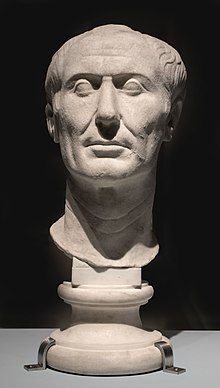
     One day, an attack on a mosque in New Zealand.  And now, almost the next day, the awful aftermath of a cyclone that swept through some of the most impoverished nations on the planet.  Why?
     A number of years ago, I taught at a conference in northern Malawi.  Everywhere I went, I encountered immense poverty.  Mud brick houses, dirt roads, and grass huts.  Stoves were few, cooking over fires commonplace.  Bathrooms?  A screen and a hole in the ground.  Water?  A community pump installed by an NGO a few years before.
image     Sitting in our affluence, we wonder why these things happen, why the worse natural malfunctions come upon those least prepared to deal with them.
     I wonder, too.  So I pray.  I pray and believe in God and the essential meaningfulness of the existence he has given us.  That he is there.
     Does this sound facile?  Sure.  But if we insist on the fact of purpose, we cannot look at life in any other way.
     Pray for the people of Southern Africa.

Thursday, March 21, 2019


H
Image result for bach     Yesterday was the first day of Spring.  Today is the birthday of Johannes Sebastian Bach.  It's fitting that Bach's birthday should accompany spring.  His music is replete with the sounds of singing birds, greening forests, and deeper skies.  Fresh, bright, and resonant with joy, Bach's music echoes the wonder of the newly born creation.
    We thank Bach for this, for what he shows us about life, death, and spring.  We also thank Bach for giving us a glimpse of the greater mystery of this vast, vast--and loved--universe in which we revel.
   
  So did Bach write on every piece of music he composed, "Soli Deo Gloria" (All Glory to God Alone).  Bach knew from whence all things come.
     Enjoy the music!

Wednesday, March 20, 2019

     Believe it or not, today is the vernal equinox, the first day of Spring.  The days are lengthening, the sun is shining, and privations of winter are winding down.  Spring has come.  It must.
      We rejoice in the newness, we rejoice in the verdancy, we rejoice in the appearance of new life.  We rejoice in the power of the earth to, once again, rejuvenate and revive itself for our joy and wonder.  It's like a resurrection.
     The writer of Proverbs 27 observes that, "When the grass disappears, the new growth is seen."  Winter can be hard, winter can be harsh, and winter can be long, very long, rife with dissolution and vanishing, departure and hopelessness.  Even in the most tropical regions of the world, however, though spring, fall, and winter do not occur in the way they do in northern regions, "grass" nonetheless disappears.  Things die, things go away, things change.  And newness comes.  It's the rhythm of existence, the song of life.
Image result for mountain spring photos
     While we may not enjoy winter, personal, meteorological, or otherwise, we walk in winters, small and large, every day, for in winters is the stuff of living, the glorious and aching mess of being alive, the raw material with which God fashions, in ways we rarely foresee, our springs.
     As the apostle Paul puts it in his first letter to the church at Corinth, the seed that falls to the ground cannot germinate unless it, now detached from its moorings, slips into the ground--no longer seen--and dies.  A seed's death is the winter that brings spring.
     Rejoice in the disappearance, rejoice in the newness.  Rejoice in a world that has both.
     Happy equinox!

Tuesday, March 19, 2019

     After hearing about the horrific mosque attack in New Zealand, I sent an email to a Muslim friend of mine.  I told him that we were praying for him, his family, and their brothers and sisters all over the world.
     In writing me back, my friend thanked me, and noted that he and his wife were headed to Pakistan for about a month to tend to some family business.  I wished him safe travels.  As I sent the email, I thought about how much he and I agree, and yet on how much we still do not see eye to eye.
     Nonetheless, in the face of such unspeakable tragedy, we continue to believe in God.  We know that in a dark and capricious world, God, like it or not, remains the sole bastion of meaning.  Though it is very possible to live meaningfully without believing in God, it is not possible to live without God himself.
     Pray for our Muslim brethren.  And pray for the world.

Monday, March 18, 2019

     If you're Irish or have some Irish in you, you may well know what yesterday was:  St. Patrick's Day.  Patron saint of and missionary to the Irish nation, St. Patrick came into a remote and unsettled land dominated by various strands of Celtic religious thought and proceeded to teach and explain the Christian gospel.
Image result
     It seems that he did so rather successfully, too.  Despite what has historically been often very deep cultural rifts among the Irish populace, Christianity is still admired and celebrated throughout the land. God and Jesus remain very important.
     One of the beauties of St. Patrick's Day is that although it is a commemoration of the saint's supposed day of death, it is on the other hand a day of tremendous celebration.  Sure, some people celebrate to excess, but usually even this is done with every good intention:  life is beautiful!
     If we stop here, however, we overlook one of Patrick's fundamental observations.  It is summed up in the following quote:

     "Be still and know that I am God.
      Be still and know that I am.
      Be still and know.
      Be still.
      Be."

     Amidst the "beingness" and celebration, remember from whom it all comes.

Friday, March 15, 2019

     "A point," observed Euclid, "is that which has no part."  And a "line," he further noted, "is a breathless length."
     Can we prove what Euclid called these "definitions"?  No.  We must accept it as, well, the way things are.  We just "know" that it's true.  We just "know" that a point could not be any other way than how he defines it.
     For some of us, such talk is maddening.  We cannot abide accepting things without proof.  Yet all of us, every single one of us, daily accepts all manner of things without any proof.  We could not live otherwise.
Image result for Pi     Yesterday, for the chemists among us, was Pi day.  As you may know, Pi, named after a letter of the Greek alphabet, is, the number 3.14.  The remarkable thing about Pi, however, is that 3.14 is only the beginning of what Pi is.  We could go out to 20,000 decimal places, and beyond, and still not find an end.  Pi's decimals go on and on and on, seemingly forever.
     For this reason, Pi is used in many formulas which determine the areas of various shapes, including the circle.  But we still do not know, really, why Pi is what it is.  It is just is.  And yet in a way very similar to how we use Euclid's definitions, we use Pi without any proof of why Pi is the way it is.
     The beauty of Pi, among many other things, is therefore how it reminds us that there are things that we can prove, things that we cannot prove, and things that elude definitiveness either way.  Yet somehow, some way, we believe them to be true.
     You may believe in God, you may not.  Either way, however, unless you stretch beyond the notion of rational proof and into the realm of "nonrational" understanding, you'll never know for sure.
     It's the greatest mystery of all.
Thursday, March 14, 2019

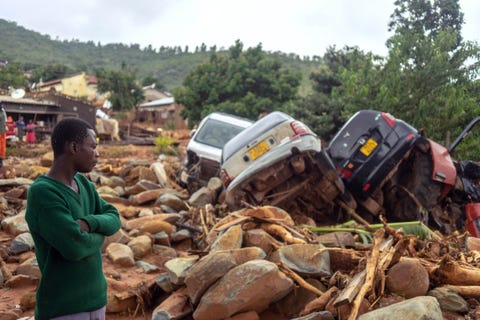
     Tomorrow (at least in the Western Hemisphere), March 15:  the Ides of March.  On this day in 44 B.C., Julius Caesar, a general and would-be dictator of the Roman republic was assassinated, set upon by a group of nearly sixty people, including his supposedly best friend and associate Brutus, and stabbed to death on the floor of the Roman Senate.  It was an ugly demise.
     As the historian Plutarch tells it, some time prior to that day, Caesar was warned by a seer that he would die before the day, March 15, ended.  In a movie made about Caesar a decade ago, he was pictured seeing a crow fly overhead as he traveled to the Senate that day.  In much ancient lore, including that of Rome, a crow was considered to be a bad omen.

Retrato de Julio César (26724093101).jpg

     In his piece "Crossroads" (popularized by the long gone band Cream), the legendary blues singer Robert Johnson paints a picture of a decision to be made, a barrier to be bridged or, to borrow from Caesar once again, a Rubicon to be crossed.  Though the story is that the song describes a pact that Johnson supposedly made with the Devil, we cannot be sure.
     The point is this:  we all have our Ides of March, we all have our crossroads.  We all face, whether we sense it beforehand or not, potentially transforming moments.  How these moments will transform us we usually do not know.  But we understand that each of our moments lingers on the cusp of change.
     But why?  We do so because we believe that the world has meaning.  We believe that what we do matters.  We believe that we are creatures of sense living in a sensory world.      In a solely material world, a world absent of transcendent presence, however, we cannot legitimately claim that what we do matters.  From what would meaning come? 
     Unless this world is personal, unless this world has an ultimate origin in what is not chemical, we cannot have an ides of March.  Caesar--and all the rest of us--would not matter one whit.