As former Beatle George Harrison asked decades ago, "What is life?"
To this, Russian poet Arseny Tarkovsky has an answer. "Life is a wonder of wonders," he writes, "and to wonder I dedicate myself." This of course leads us to another question: what is wonder?
Wonder can be an experience, or it can be a question. We all marvel at things we experience, we all ponder what we cannot know or understand. Such is intrinsic to our humanness. This in turn leads to yet another question: why are we this way? Was it evolutionarily advantageous? Or is it the work of a greater intelligence in us? Or both?
We are surely better off to be able to wonder. Yet if we ascribe our penchant solely to evolutionary advantage, we still do not know what caused our ancestors to grab onto wonder; what prior structures would have had to be in our brains? On the other hand, if we plant our sense of wonder in the work of God, we still are left with "wondering" why God so designed us. What was working in him to do so?
Maybe God is more like us than we think. Maybe we are how we are because God, in his way, is like us. We see this in our history, we see this in the creation. And we see it in the person of Jesus.
And this makes all the difference.
Thursday, April 27, 2017

Monday, April 24, 2017
A few weekends ago, I had opportunity to visit the Art Institute of Chicago. Though I've been to the Institute many times, I never tire of it. On this day, I spent time in the Institute's world famous collection of Impressionism paintings. Long a lover of all things Monet, I dallied many extra minutes in the sections reserved for his strikingly colorful and luminous work.
I looked a long time at Monet's paintings of wheat stacks. I saw one painted of a wheat stack at summer's end, its strands light and dark brown; one of a wheat stack at autumn's end, its tendrils now a haunting pale emptiness; and one of a wheat stack during winter, slumbering, covered in an early snow.


Three paintings, three seasons, three takes, three impressions of the world Monet saw. Not all of his fellow artists would have seen the wheat stacks as he did, and that's the point. "I wish," Monet once wrote, "to render what is." Monet wanted to take what he saw and make it his own, to find himself in it, then take it into his own mental and emotional landscape. He wanted to embrace its possibilities.
As do we. Like the Impressionists, the world may well be before us, as real as any of us, but how we experience it is a reality all our own.
Similarly, although God is entirely real, he is also big enough to ensure that every one of us can experience him as we are, no more, no less. Jesus is the way to God, yes, but how we find him rests completely in who we are.
Open your heart and find yourself in God.
I looked a long time at Monet's paintings of wheat stacks. I saw one painted of a wheat stack at summer's end, its strands light and dark brown; one of a wheat stack at autumn's end, its tendrils now a haunting pale emptiness; and one of a wheat stack during winter, slumbering, covered in an early snow.
Three paintings, three seasons, three takes, three impressions of the world Monet saw. Not all of his fellow artists would have seen the wheat stacks as he did, and that's the point. "I wish," Monet once wrote, "to render what is." Monet wanted to take what he saw and make it his own, to find himself in it, then take it into his own mental and emotional landscape. He wanted to embrace its possibilities.
As do we. Like the Impressionists, the world may well be before us, as real as any of us, but how we experience it is a reality all our own.
Similarly, although God is entirely real, he is also big enough to ensure that every one of us can experience him as we are, no more, no less. Jesus is the way to God, yes, but how we find him rests completely in who we are.
Open your heart and find yourself in God.
Friday, April 21, 2017
As May and June approach, many of us about looking at transitions. Perhaps we are graduating from an educational institution, perhaps we are hoping for a change of pace over the summer, perhaps we are expecting a baby, perhaps we are looking to begin a new job or, conversely, maybe we are looking at loss, the death of a spouse, parent, or other loved one. Or maybe we are simply contemplating a new day.

Yet as Albert Einstein pointed out over a century ago, ultimately, time, and space, are relative. And as quantum mechanics has established, we cannot measure position and velocity at the same time. Even though we live through countless transitions in the course of our lives, we never really know, physically and theologically speaking, where precisely we are--and where, precisely, we are going.
But that's OK. We're here, God's here and, despite our ignorance and life's unpredictability, we keep going, trucking through a meaningful and purposeful universe.
Wherever we are, whatever we encounter, we are walking in the love of God.
Yet as Albert Einstein pointed out over a century ago, ultimately, time, and space, are relative. And as quantum mechanics has established, we cannot measure position and velocity at the same time. Even though we live through countless transitions in the course of our lives, we never really know, physically and theologically speaking, where precisely we are--and where, precisely, we are going.
But that's OK. We're here, God's here and, despite our ignorance and life's unpredictability, we keep going, trucking through a meaningful and purposeful universe.
Wherever we are, whatever we encounter, we are walking in the love of God.
Wednesday, April 19, 2017
Dissent? In many ways, the history of the world is a history of dissent. History is driven by people who decide or dare to think differently, who take issue with what is obvious and apparent, who challenge what is, who refuse to accept the ways things are at a given moment.
 Dissent, however, is wide ranging. It can come in the form of new invention, new political structure, even a new religion. Though in itself, the word "dissent" stirs up connotations of disorder, as many a historian has noted, sometimes disorder is constructive, even necessary to advance the human adventure.
Yevgeny Yevtushenko, a Russian poet who died a few weeks ago in his Soviet homeland, was well known for his dissent. Decade after decade Yevtushenko used his poetry to challenge the mores of the prevailing power structures, to question the legitimacy of how the leaders of Russia were running the government. He was brave, he was strong, he was clear and precise in his words about the powers that be. For this, those of us who live in the relatively free West, can admire Yevtushenko greatly. While dissent is generally available to us, for too many people around the world it is not. For them, to dissent is to incur the wrath of powerful authorities, people who think little about assigning lengthy prison terms or even execution to those who dare contest their hegemony. It is a thoroughly audacious and frequently dangerous enterprise.
Such dissent therefore deserves our support. Although we can debate for many hours about what exactly constitutes a "right," we can surely agree that no government ought to restrict the ability of people to speak and live freely as they choose. God did not make us in his image for fun; he made us in his image so that we could be, like he forever is, free.
Thanks, Yevgeny Yevtushenko, and thanks to all who dare dissent. God loves us all.
Dissent, however, is wide ranging. It can come in the form of new invention, new political structure, even a new religion. Though in itself, the word "dissent" stirs up connotations of disorder, as many a historian has noted, sometimes disorder is constructive, even necessary to advance the human adventure.Yevgeny Yevtushenko, a Russian poet who died a few weeks ago in his Soviet homeland, was well known for his dissent. Decade after decade Yevtushenko used his poetry to challenge the mores of the prevailing power structures, to question the legitimacy of how the leaders of Russia were running the government. He was brave, he was strong, he was clear and precise in his words about the powers that be. For this, those of us who live in the relatively free West, can admire Yevtushenko greatly. While dissent is generally available to us, for too many people around the world it is not. For them, to dissent is to incur the wrath of powerful authorities, people who think little about assigning lengthy prison terms or even execution to those who dare contest their hegemony. It is a thoroughly audacious and frequently dangerous enterprise.
Such dissent therefore deserves our support. Although we can debate for many hours about what exactly constitutes a "right," we can surely agree that no government ought to restrict the ability of people to speak and live freely as they choose. God did not make us in his image for fun; he made us in his image so that we could be, like he forever is, free.
Thanks, Yevgeny Yevtushenko, and thanks to all who dare dissent. God loves us all.
Monday, April 17, 2017
Easter has come, and we can never be the same. In the wonder of Easter, we see light as it was most meant to be: the total and absolute witness of God's love for what he made.
Out of the absolute darkness and nothingness of Good Friday, Easter's light, the greatest light of all, rises. Easter's light is a light that eclipses and encompasses all others, a light that changes history, bends space, and permanently alters all our notions of meaning and time. Easter's light is the light of resurrection.
Nonsensical, unbelievable, unfathomable, yet entirely true, Easter's light, the light of supernality and new life, tells us that though we will one day die, we will live again, forever.
How can life ever be the same?
 |
| "Resurrection" by El Greco |
Out of the absolute darkness and nothingness of Good Friday, Easter's light, the greatest light of all, rises. Easter's light is a light that eclipses and encompasses all others, a light that changes history, bends space, and permanently alters all our notions of meaning and time. Easter's light is the light of resurrection.
Nonsensical, unbelievable, unfathomable, yet entirely true, Easter's light, the light of supernality and new life, tells us that though we will one day die, we will live again, forever.
How can life ever be the same?
Sunday, April 16, 2017
Many of us, regardless of how we see God, like to think that when we and our loved ones die, we will one day, in another life, see each other again. Who would not? It's a wonderful thought, that you will one day see those you love most again.
 Yet consider this: if Jesus did not rise, if Jesus did not conquer death and enable all of us to find new life, we, of all people, as Paul notes in this letter to the Corinthian church, are most to be pitied . . . we are hoping for and believing in something that will never happen.
But Jesus did indeed rise. And all of us, if we want, if we trust in him and the fact of his resurrection, will one day live rise, too. One day, we will all live again.
Happy Easter!
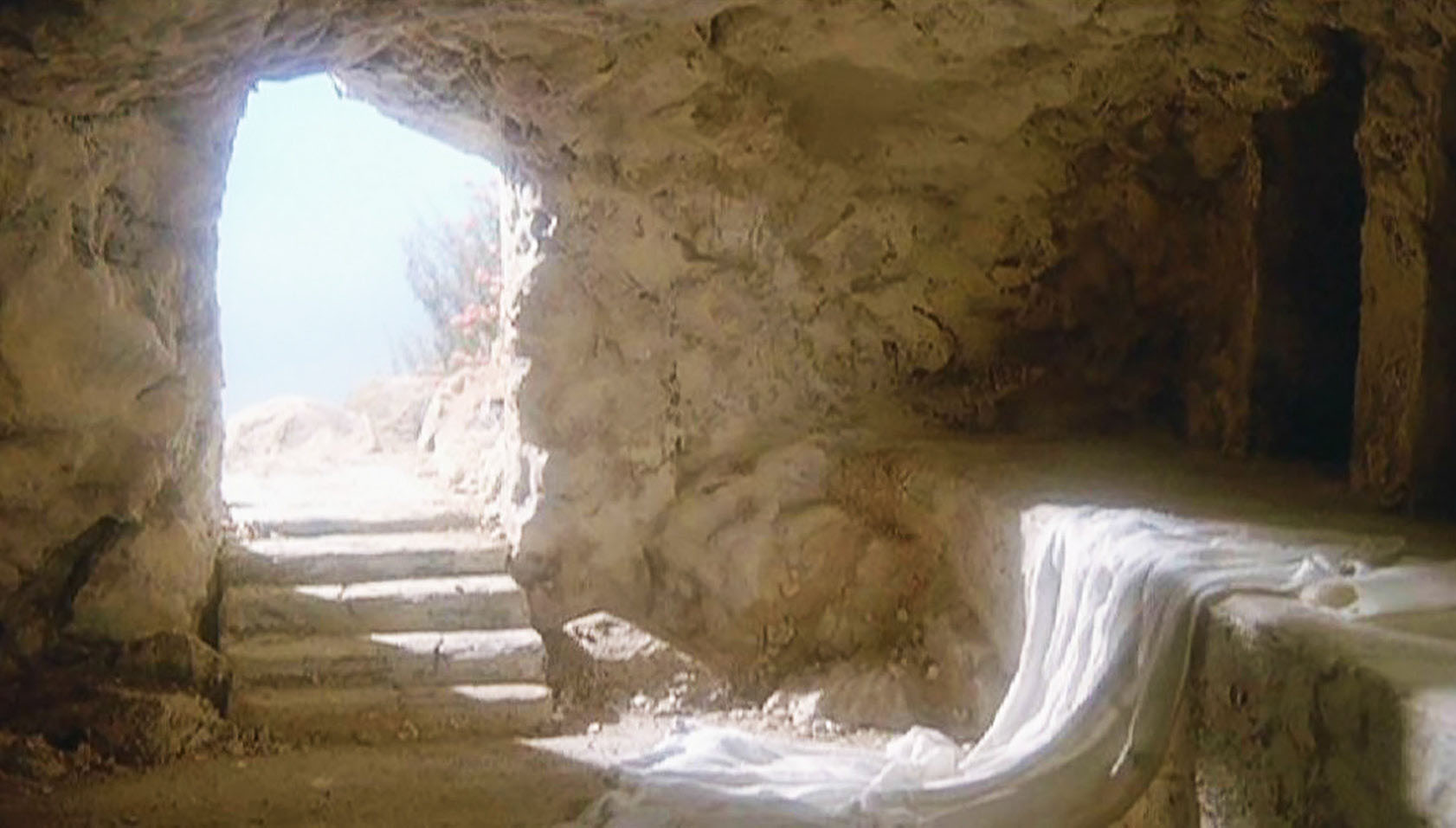 Yet consider this: if Jesus did not rise, if Jesus did not conquer death and enable all of us to find new life, we, of all people, as Paul notes in this letter to the Corinthian church, are most to be pitied . . . we are hoping for and believing in something that will never happen.
But Jesus did indeed rise. And all of us, if we want, if we trust in him and the fact of his resurrection, will one day live rise, too. One day, we will all live again.
Happy Easter!
Friday, April 14, 2017
Do you believe in magic? So sang the Lovin' Spoonful in the American Sixties. It was a paean to wonder, a call to explore, an encouragement to dance outside of what seems apparent and true.
 As a band, the Lovin' Spoonful are long gone. Magic, however, is with us still. Even in the crucifixion of Jesus. In British author C. S. Lewis's much loved the Lion, the Witch, and the Wardrobe, we read that, as the plot unfolds, it seems that in order to rescue one of the "Earth" children who have fallen under the spell of the "White Witch," Aslan, the lion whose outsized presence is felt throughout the story, must die at the hands of the White Witch. Aslan must give up his life for Edmund's freedom.
And Aslan does. Shortly thereafter, however, Lucy sees Aslan again. Somehow, he has risen from death. When Lucy asks how this is possible, Aslan tells her that, "though the Witch knew the Deep Magic, there is a magic deeper still which she did not know."
So it is that in the cross, the cross of Christ, on this Good Friday, we see the fullness of the magic of God. It is a magic of eternal wonder--new life, new life for you, new life for me--overcoming eternal darkness--separation and loneliness from God. It is a magic without end.
Do you believe in magic?
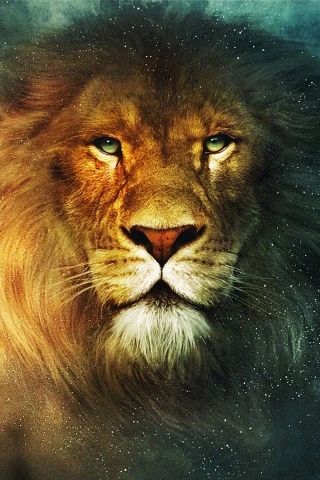 As a band, the Lovin' Spoonful are long gone. Magic, however, is with us still. Even in the crucifixion of Jesus. In British author C. S. Lewis's much loved the Lion, the Witch, and the Wardrobe, we read that, as the plot unfolds, it seems that in order to rescue one of the "Earth" children who have fallen under the spell of the "White Witch," Aslan, the lion whose outsized presence is felt throughout the story, must die at the hands of the White Witch. Aslan must give up his life for Edmund's freedom.
And Aslan does. Shortly thereafter, however, Lucy sees Aslan again. Somehow, he has risen from death. When Lucy asks how this is possible, Aslan tells her that, "though the Witch knew the Deep Magic, there is a magic deeper still which she did not know."
So it is that in the cross, the cross of Christ, on this Good Friday, we see the fullness of the magic of God. It is a magic of eternal wonder--new life, new life for you, new life for me--overcoming eternal darkness--separation and loneliness from God. It is a magic without end.
Do you believe in magic?
Subscribe to:
Posts (Atom)